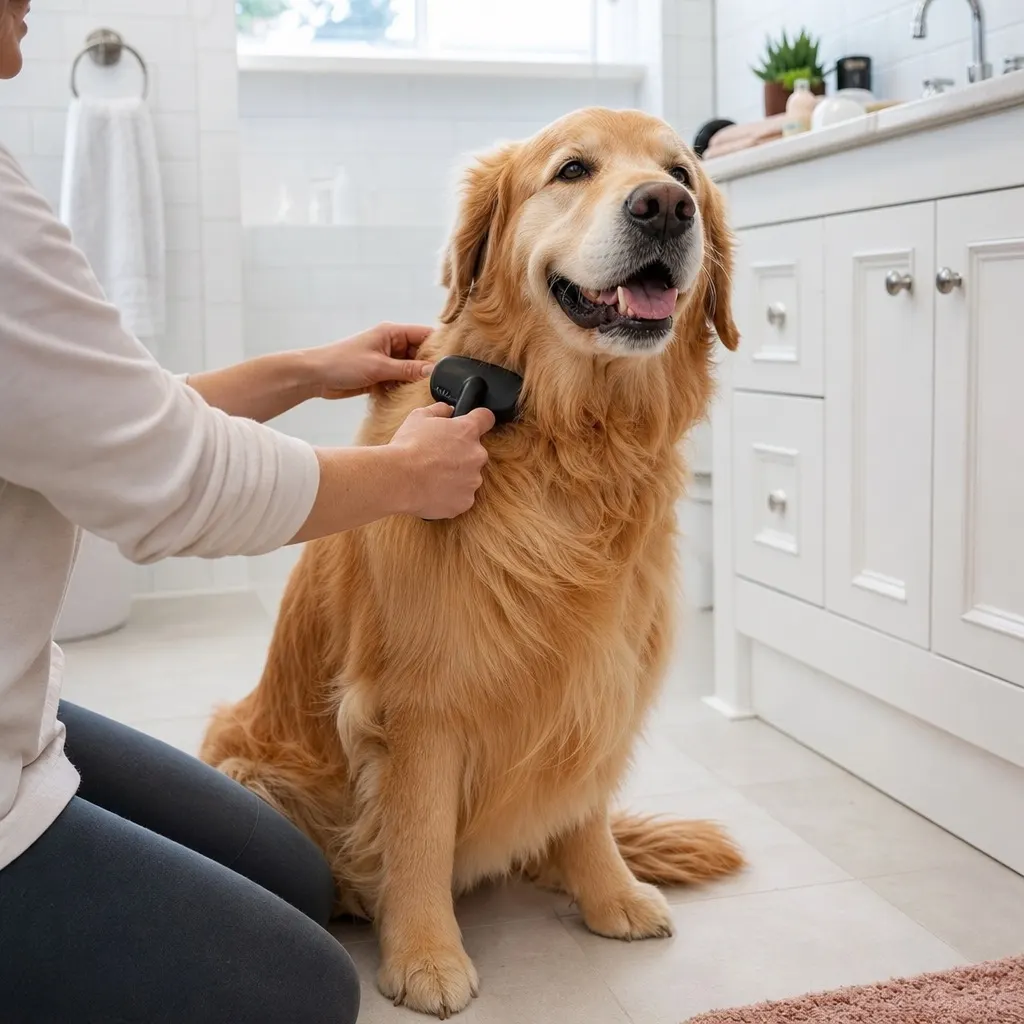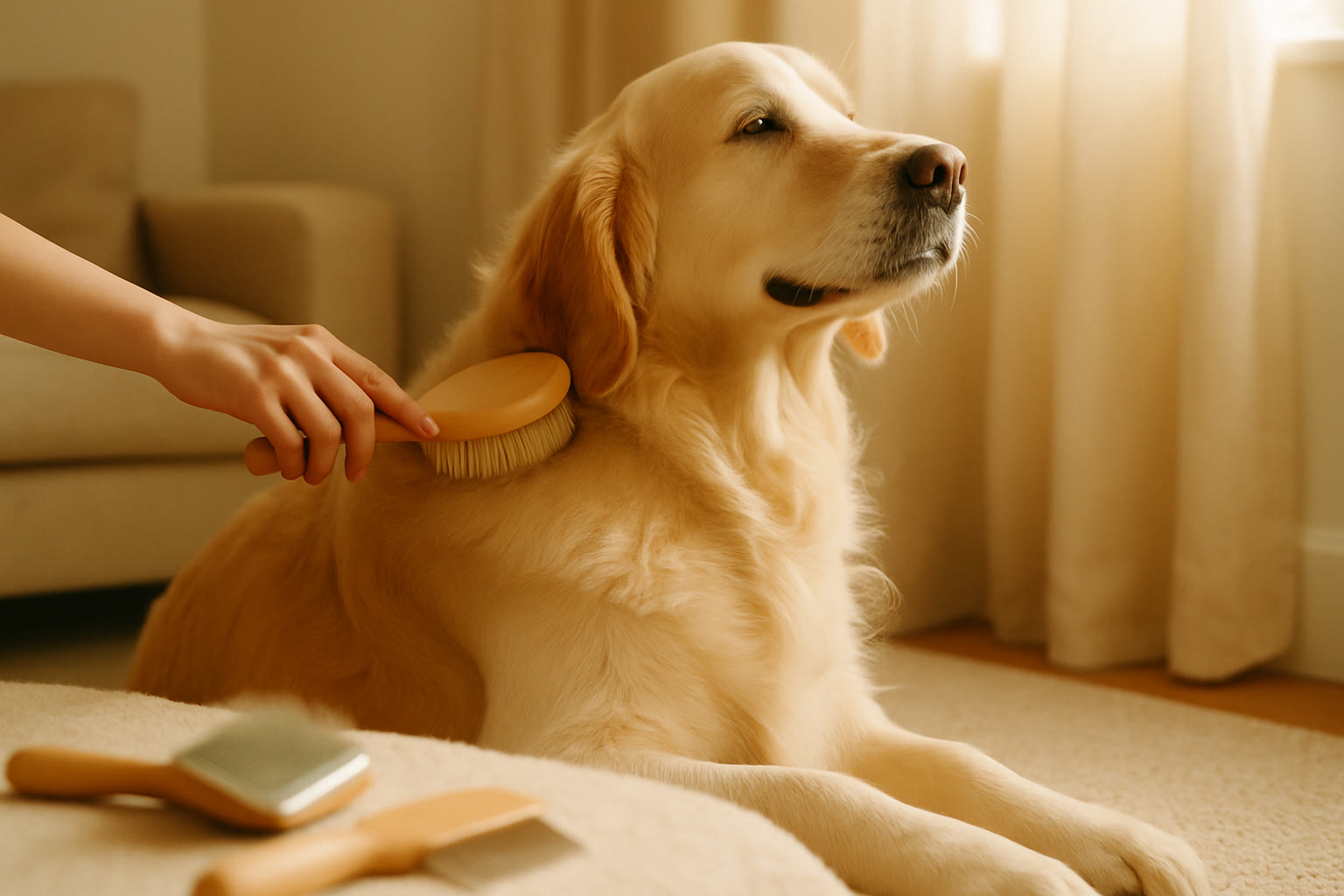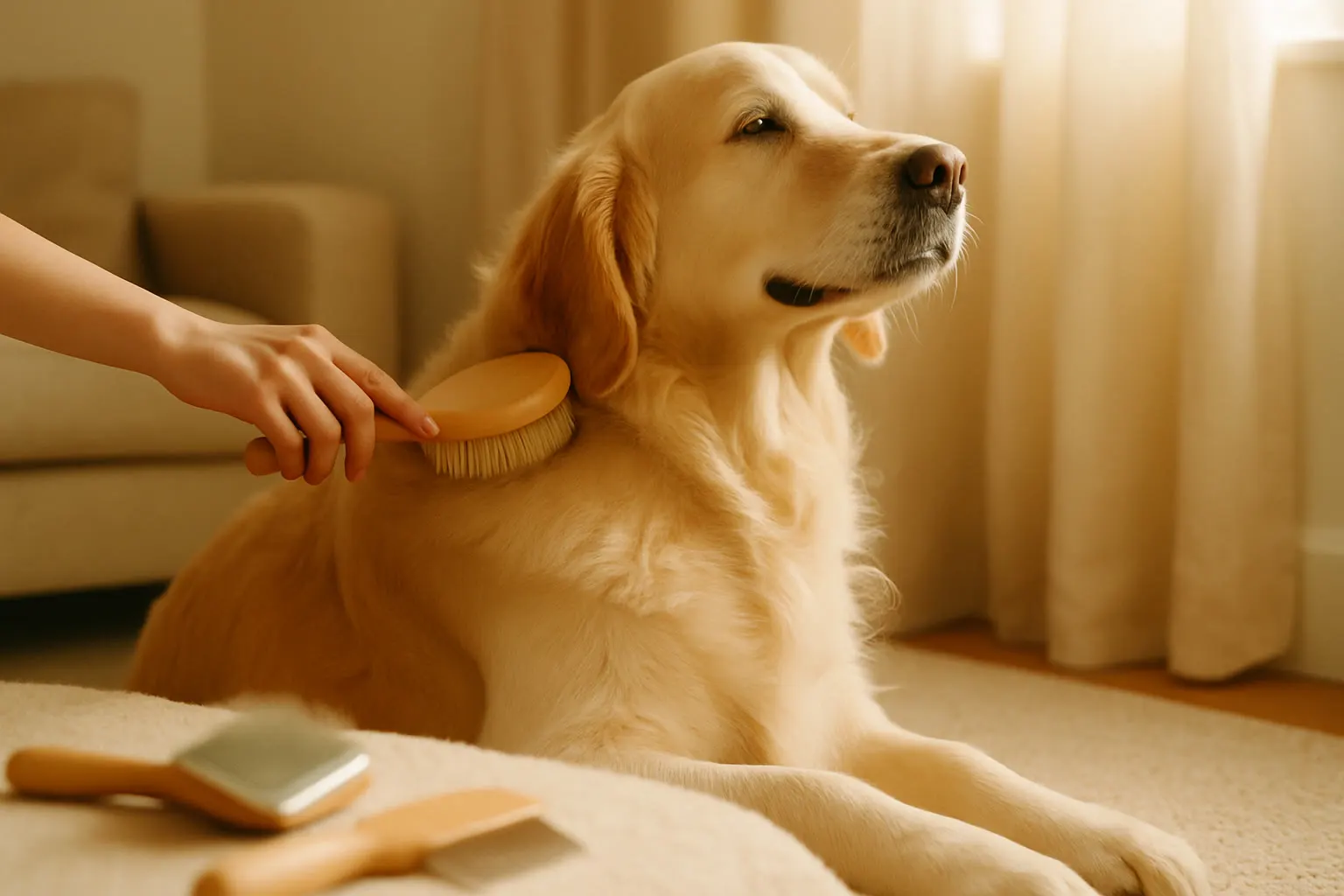
!Good grooming tools make at-home care easier and more effective
Here's the thing about dog grooming: you don't need to be a pro to handle the basics. Regular brushing, nail trims, and basic ear/paw maintenance are totally doable at home with the right tools. And honestly? Your dog would probably prefer it — faster, familiar, less stressful.
The trick is having tools that actually work instead of the cheap stuff that frustrates both of you.
Brushes: Know Your Dog's Coat
Different coats need different tools. Using the wrong brush is like trying to comb your hair with a fork — technically possible, but deeply ineffective.
Slicker Brushes
Slicker brushes have fine, short wires close together. They're brilliant for removing mats and tangles, and they work on most coat types. If you're getting one brush, get a slicker brush.
They're gentle, effective, and useful basically every day. Medium to large size is usually ideal unless you have a tiny dog.
De-Shedding Tools
For dogs with double coats (huskies, golden retrievers, German shepherds), regular brushes miss the undercoat entirely. The FURminator Deshedding Tool is genuinely in another league.
Ten minutes of FURminating during shedding season will result in a pile of fur that looks like you're knitting a whole new dog. Your furniture will thank you. Your vacuum will thank you. Use it once and you'll wonder why you suffered with regular brushes for so long.
Not for every coat type (double-coated dogs only), but if you have a shedder, this is non-negotiable.
Pin Brushes
Pin brushes have longer wires that are more spread out. They're great for curly or long-haired breeds (poodles, doodles, cocker spaniels). They detangle without damaging longer coat without damaging longer coats and are gentler on sensitive skin.
Pin Brush for Dogs — get one if you've got a longer-haired pup.Undercoat Rakes
For thick double coats, an undercoat rake is another option for getting to the undercoat without the intensity of a FURminator. Some dogs prefer it.
Undercoat Rake — good alternative if your dog finds the FURminator too intense.Nail Grinders vs. Clippers (Grinder Wins)
This is the biggest grooming game-changer most people aren't using yet. Nail grinders are genuinely better than clippers for most dogs, and once you switch, you won't go back.
Here's why: nail clippers can split the nail and be uncomfortable. Grinders file the nail smooth and there's less nerve exposure. Plus, many dogs are less freaked out by the gentle grinding than by the sharp cut feeling of clippers.
Casfuy Dog Nail Grinder or similar rechargeable grinder — get one with low vibration and a quiet motor. Let your dog get used to the sound first (have it on without the dog nearby, let them sniff it, reward them for approaching it). Then one small touch, then a quick trim, then done. Build tolerance.It sounds like more work than a clipper, but it's actually faster once your dog accepts it, and the result is so much better. And your dog's nails are healthier with a clean grind vs. a ragged cut.
If your dog absolutely will not tolerate a grinder after patient introduction, okay, clippers are the backup. But try the grinder first — most dogs prefer it once they get used to it.
Dental Chews and Brushing
You can't brush a dog's teeth like you brush yours (unless you have a saint of a dog). But dental chews actively clean teeth and freshen breath.
Dental Chews for Dogs — look for ones with ingredients that actually matter (enzymatic cleaners, texture that scrubs). Ones that are just crunchy treats don't do much.Give one a few times a week and you'll notice fresher breath and better overall dental health. It's not a substitute for professional cleaning, but it genuinely helps.
Ear Cleaning Solution
Many dogs get wax buildup or mild ear issues. Regular ear cleaning prevents this and keeps things healthy.
Dog Ear Cleaning Solution — squirt it in, massage the base of the ear for 30 seconds, let them shake it out (do this outside or in a bathroom), then wipe with a cotton ball. Once a week for maintenance, or more often if your dog swims frequently or has floppy ears that trap moisture.It's a simple step that prevents ear infections. Preventative > treatment.
Paw Balm and Pad Care
Dog paws take a beating — hot pavement, ice, salt, rough ground. Paw balm keeps pads healthy and prevents cracking.
Dog Paw Balm — apply after walks or at night. Especially important in winter (salt) and summer (hot pavement). Soft, healthy paws are happy paws.Also: trim the hair between the paw pads every few weeks if your dog has longer hair. It prevents ice buildup and keeps paws cleaner.
The Grooming Routine That Actually Sticks
Daily: Quick brush-through (5 minutes) to catch mats and check for issues. Weekly: More thorough brushing, dental chew, ear check. Monthly: Nail trim/grind, deep deshedding if needed, paw balm. As-needed: Ear cleaning if they swim or have ear issues, paw pad trimming.You don't need to do everything every day. But staying on top of grooming means fewer mats, healthier skin, better nails, and a more comfortable dog.
Plus? Regular grooming keeps you tuned into your dog's body. You'll notice lumps, skin issues, or other concerns early. That's actually one of the biggest health benefits.
The Real Thing
Most of this is pretty basic and genuinely doable at home. The learning curve is low, and your dog usually prefers being groomed by someone they trust (you) vs. a stranger (professional groomer). Professional groomers are great for thorough cleanings and bath time, but between visits, you've got this.
Get the right tools, start slow, be patient, and you'll be amazed at how easy it becomes.
🐾 Which grooming task have you been avoiding? Pick one tool and give it a try this week.