!A properly set up crate is a safe haven, not a punishment
Crate training gets a bad reputation. People see "crate" and immediately think "jail." But when it's done right with the right setup, a crate becomes your dog's happy place — a safe den where they genuinely want to hang out.The difference between crate training that works and crate training that becomes a nightmare? Mostly gear and setup. Let's talk about what actually makes dogs comfortable and helps training stick.
Choosing the Right Crate Type
Wire Crates
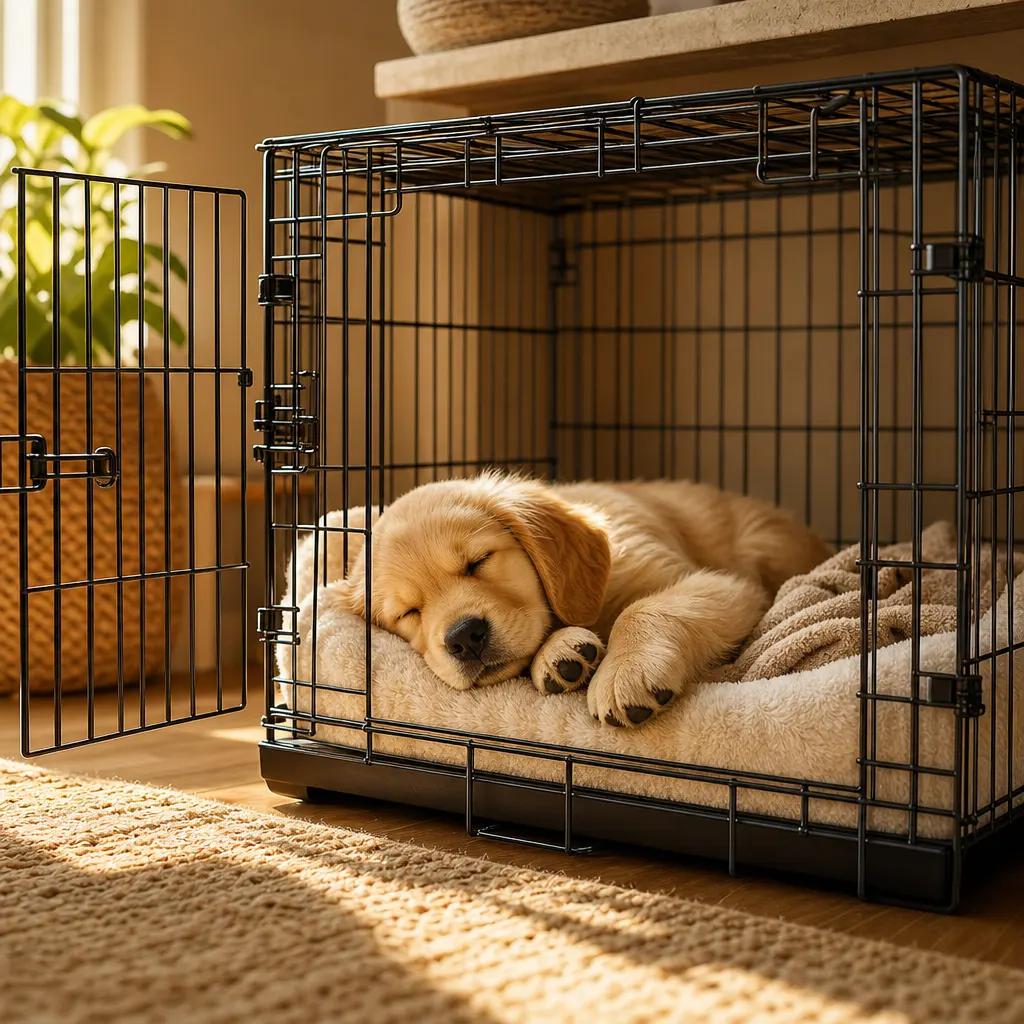
Wire crates are the most popular for a reason. They're durable, well-ventilated, fold up for travel, and you can see your dog without having to open the door. Most dog parents end up with a wire crate as their main crate.
The thing is: a bare wire crate is basically an echo chamber and feels pretty cold and industrial. You need bedding, a cover, maybe a pad to make it feel like a real space instead of a cage.
Wire Dog Crates come with door latches that'll handle your dog's Houdini escape attempts and usually have a removable tray (crucial for house training accidents).Plastic Crates
Plastic crates are enclosed, which makes them feel more den-like (and quieter). They're great for dogs who feel anxious in open crates, and they're easier to clean if accidents happen. The downside is less ventilation and they're bulkier.
They're standard for airline travel, which is genuinely handy if you fly with your dog.
Plastic Dog Crates are your solid choice if your dog needs that enclosed feeling.Soft-Sided Crates
Soft-sided crates are lightweight, portable, and feel less "cage-like," but they're not ideal for serious chewing or intense dogs. They can get destroyed. They're better as supplemental crates or for dogs who already understand crate training and don't see it as an escape challenge.
Soft-Sided Dog Crates are great for travel or second homes, but probably not your primary crate if you're training.Size Matters More Than You'd Think
Get the right size. Too small and your dog feels claustrophobic. Too large and they'll pee in one corner and sleep in another, which defeats the whole house-training purpose.Your dog should be able to stand up, turn around, and lie down comfortably. That's it. Don't get a crate they'll "grow into" — get one that fits them now. You can use a divider panel in a larger crate if you have a growing puppy.
The Crate Pad: Non-Negotiable
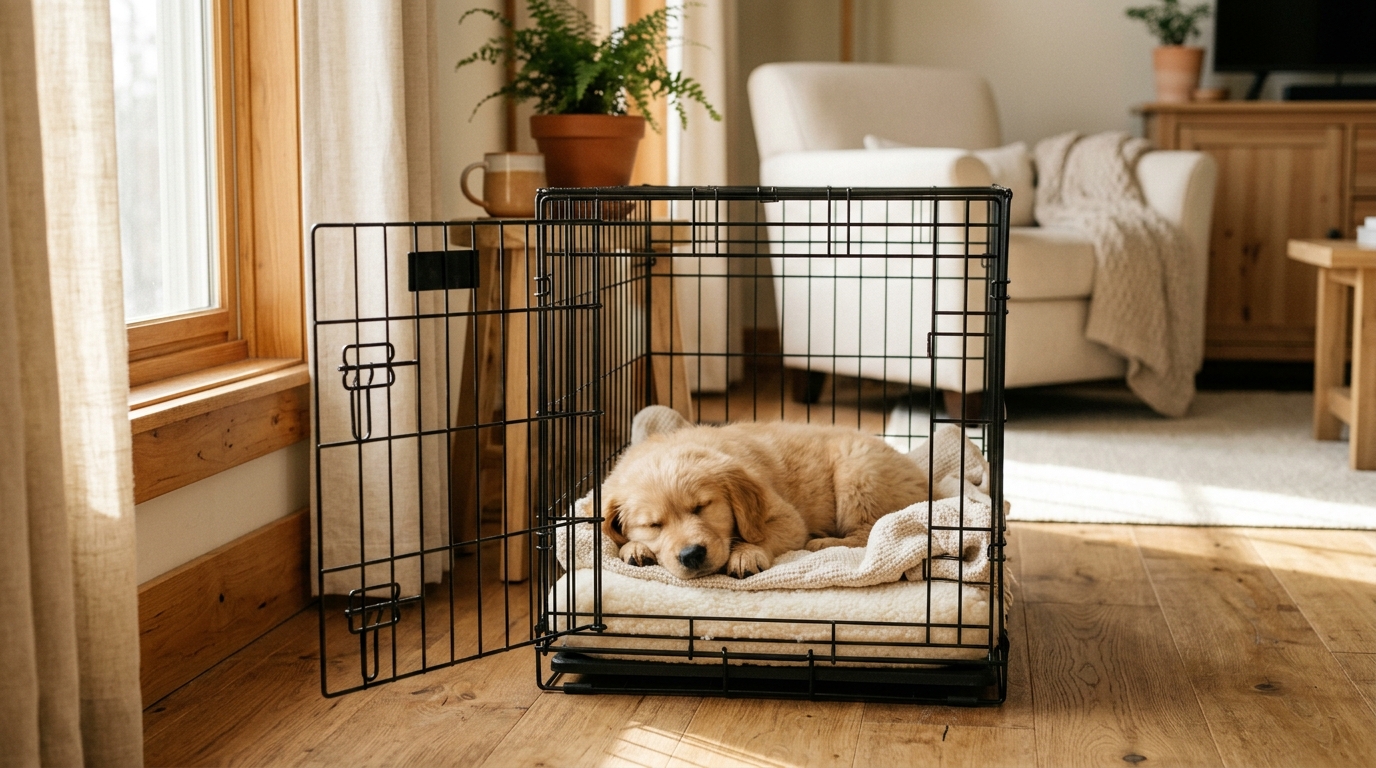
A crate with just the hard plastic tray feels cold and uninviting. Add a good pad and suddenly it becomes a cozy bed they actually want to be in.
Orthopedic Crate Pads are genuinely worth it — they're washable, comfortable, and they make a massive difference in how your dog perceives the crate. You want them thinking "my comfortable bed" not "punishment zone."Pro tip: Get a pad that's easy to remove and wash. Accidents happen during training, and you'll be washing this thing regularly.
A Crate Cover for Calm and Privacy
Not every dog needs a crate cover, but for anxious dogs or puppies who struggle with the transition, a cover can be genuinely calming. It creates that den-like feeling — enclosed, private, a little more peaceful.
It also muffles noise if you're training in a busy household.
Crate Covers for Dogs are simple — basically blankets or fitted covers that go over the crate. Make sure there's still ventilation (don't seal it completely).Chew-Proof Toys for Crate Time
A dog left in a crate with nothing to do becomes a crate-destructive dog real fast. You need something that keeps them occupied without being a mess or a choking hazard.
Kong Classics are the standard here — Kong Classic Dog Toy stuffed with peanut butter and frozen. They'll work on it for 20-30 minutes and it keeps them calm instead of frustrated. Nylabone Puppy Teething Toys are great for young puppies who are teething and need something to chew. Avoid anything with small pieces they could choke on.The goal is occupied dog = calm dog. Never put a frustrated dog in a crate alone with nothing to do. That's how you create crate anxiety.
X-Pens for Expanding the Space
An X-pen (exercise pen) is basically a portable, collapsible fence. It creates a larger space where your dog can have the crate, a potty pad, and some room to move around.
This is brilliant for puppies who need more space than just the crate but still need containment. You can set up an X-pen in the kitchen, leave the crate door open, and the puppy has freedom without having the whole house.
X-Pens for Dogs are affordable and genuinely flexible. Set them up, tear them down, move them around. They're your secret weapon for house training and keeping a puppy contained without feeling like they're locked up all day.Potty Pads for Inside the X-Pen
If you're using an X-pen setup, potty pads inside the pen (away from the crate) teach puppies the concept of "pee area" vs "sleep area." This is genuinely helpful for house training.
Washable Puppy Pads are better than disposables — they're environmentally friendlier and you save money long-term.Making the Crate the Good Place
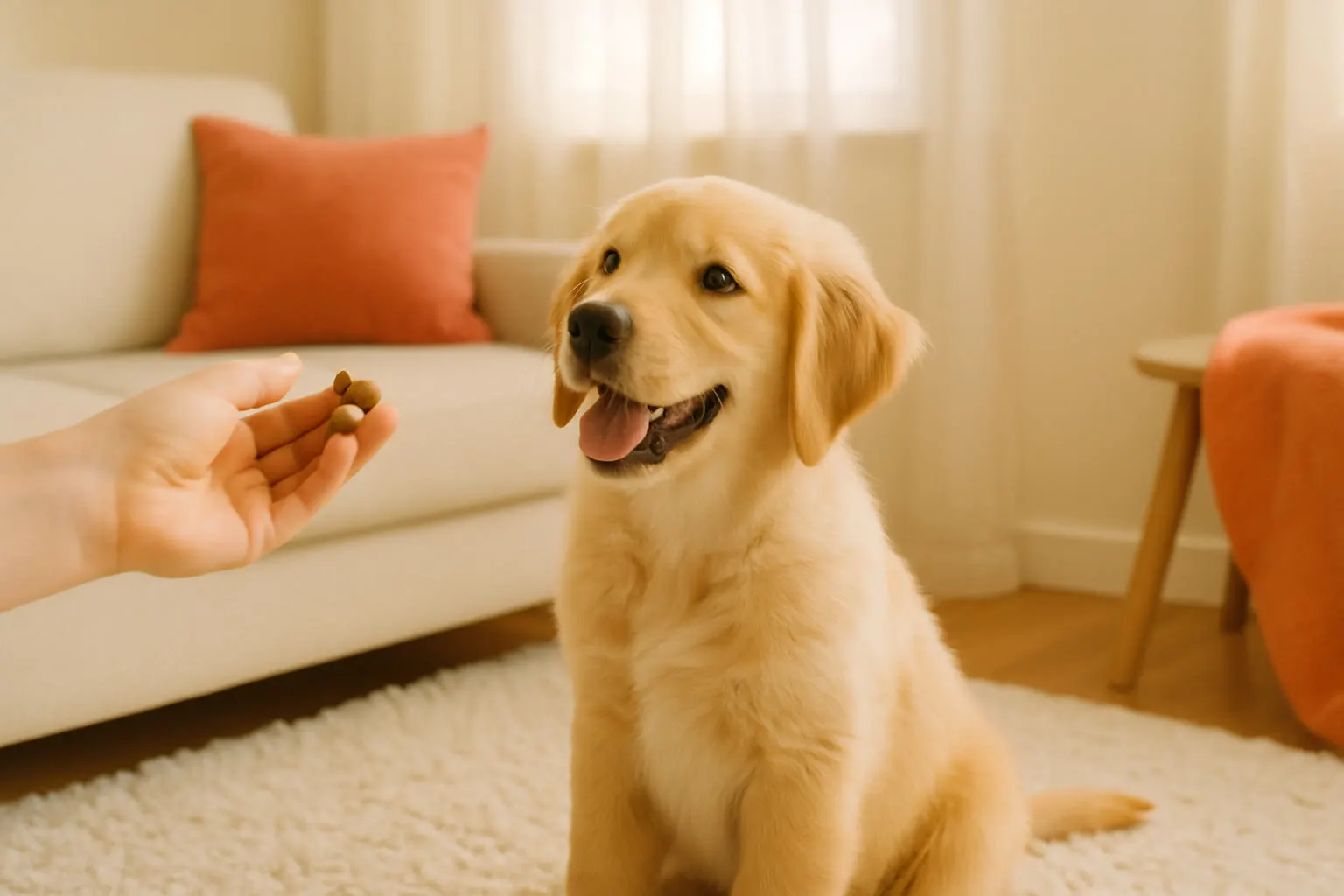
Here's the real secret: the crate should be where good things happen. Treats appear there. Meals happen there. Praise comes from being in there. Never force your dog in, never use it as punishment.
Start by leaving the door open and putting treats inside. Let them come and go freely. Only close the door when they're willingly inside and happy. The goal is your dog seeing the crate as their safe space — not a cage.
The Transition Timeline
Puppies (8-16 weeks): Crate them at night and when you can't supervise. They have tiny bladders, so don't expect 8-hour stretches. Expect accidents — it's normal. Puppies (16+ weeks): Gradually extend crate time. By 6 months, most puppies can handle 6-8 hours overnight and 4-6 hours during the day if necessary. Adult dogs: Should be able to handle 8-10 hours but honestly, no dog should regularly be crated for that long. It's not healthy long-term.A properly crate-trained dog will actually choose to nap in their crate because it's their cozy den. That's the goal.
🐾 Is crate training in your future? Start with the right setup and it'll be so much easier than you think.