A dog crate can be one of the most valuable tools for any dog owner. It's not just a box; it's a den, a safe space, and an essential aid for training and travel. But with so many options on the market, how do you choose the one that’s just right for your canine companion? This guide will walk you through the different types of crates and what to consider to make the perfect choice for your dog's size, temperament, and your lifestyle.
This post contains affiliate links. We may earn a small commission at no extra cost to you.Why a Crate is More Than Just a Box
Before we dive into the types, let's talk about the "why." A crate serves several important purposes:
- Safety: It keeps your dog out of trouble when you can't supervise them, preventing them from chewing on dangerous items or escaping.
- Security: For many dogs, a crate becomes their personal den—a quiet place to retreat to when they feel overwhelmed or just need a nap.
- Training: Crates are indispensable for house training puppies, as dogs are naturally inclined to keep their sleeping areas clean.
- Travel: A crate ensures your dog is safe and secure in the car and is often required for air travel.
Sizing: The Goldilocks Rule
Getting the size right is crucial. A crate should be large enough for your dog to stand up, turn around, and lie down comfortably. However, it shouldn't be so large that they can use one end as a potty area and the other as a sleeping spot—this defeats the purpose of house training. If you have a puppy, look for a crate with a divider so you can adjust the space as they grow.
The Main Types of Dog Crates
Let's break down the most common styles, each with its own set of pros and cons.
1. Wire Crates
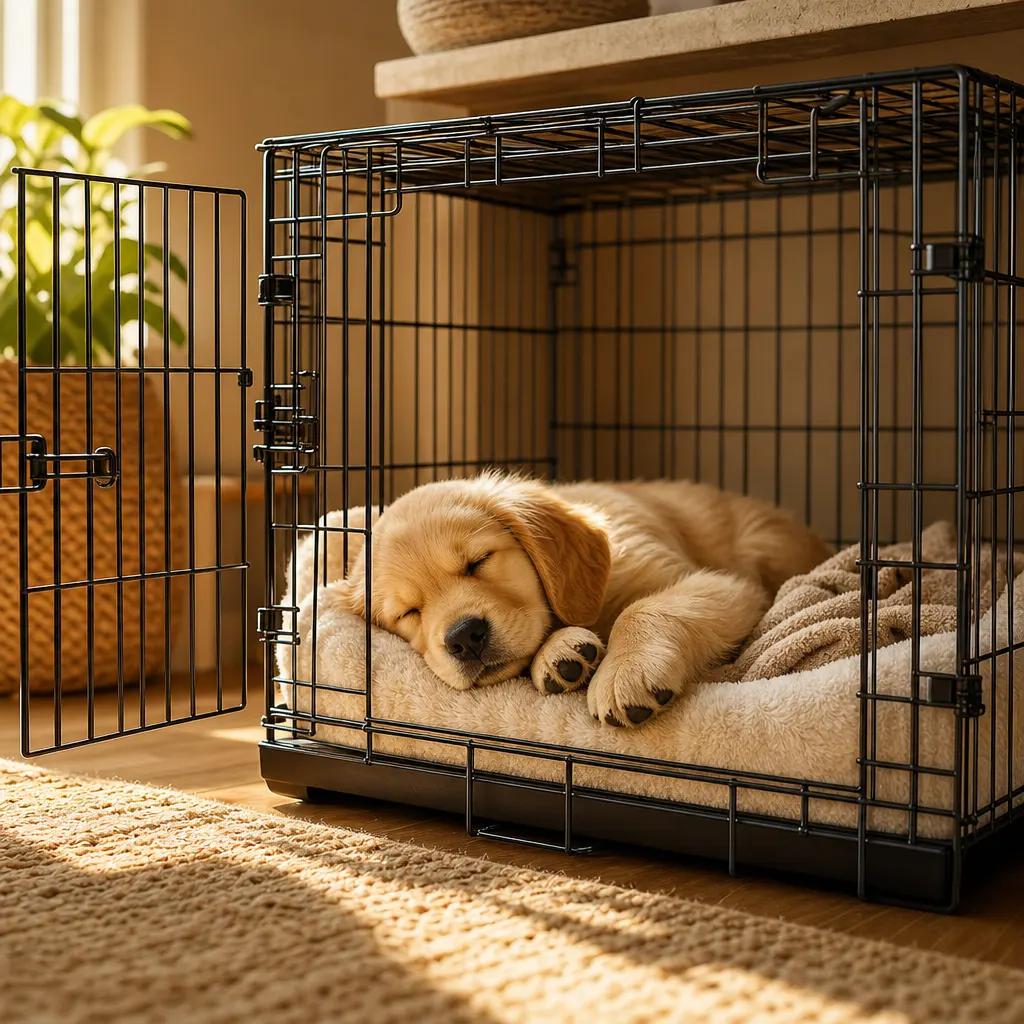
Wire crates are perhaps the most popular choice, and for good reason. They offer excellent ventilation and visibility, allowing your dog to see what's going on around them. Most are collapsible, making them easy to store and transport.
- Pros: Great airflow, easy to clean, often come with dividers for growing puppies.
- Cons: Can be less cozy, some dogs might feel too exposed (though a crate cover can fix this).
- Best for: General use, puppy training, home use.
If you're looking for a versatile and durable option, wire dog crates on Amazon are an excellent starting point. They are sturdy, reliable, and a favorite among trainers.
2. Plastic Crates
Often called "flight kennels," plastic crates are the standard for air travel. Their enclosed design offers a more den-like feel, which can help anxious dogs feel more secure.
- Pros: More private and cozy, portable, approved for air travel.
- Cons: Less ventilation, can be harder to clean than wire crates.
- Best for: Travel, dogs who prefer a more enclosed space.
For frequent flyers or dogs that appreciate a bit more privacy, a sturdy plastic dog kennel is a fantastic investment in their comfort and safety.
3. Soft-Sided Crates
Made from flexible materials like nylon or canvas, soft-sided crates are the ultimate in portability. They are incredibly lightweight and fold down compactly, making them perfect for road trips and hotel stays.
- Pros: Extremely lightweight, easy to store and carry.
- Cons: Not suitable for heavy chewers or escape artists, harder to clean thoroughly.
- Best for: Calm adult dogs, travel, and temporary containment.
Check out the variety of soft-sided travel dog crates available. They are perfect for the dog-owning family that is always on the go.
4. Furniture-Style Crates
Who says a dog crate has to be an eyesore? Furniture-style crates are designed to blend seamlessly with your home decor, often doubling as an end table or console. They are typically made of wood or a wood composite.
- Pros: Aesthetically pleasing, functional as both a crate and a piece of furniture.
- Cons: Expensive, heavy, not portable, and can be ruined by chewers.
- Best for: Style-conscious owners with well-behaved adult dogs.
If you want your dog's den to complement your living room, consider a stylish furniture-style dog crate. It’s the perfect blend of form and function for the modern pet owner.
Making the Final Decision
Choosing the right crate comes down to understanding your dog's personality and your daily needs. A rambunctious puppy will have very different requirements than a calm senior dog who just needs a quiet place to sleep. By considering the options and prioritizing your dog's comfort and safety, you can find the perfect den for your best friend.