Have you ever watched a dog perform a complex series of tricks and wondered, "How did they do that?" The secret is often a small, simple tool: a clicker. Clicker training is a powerful, science-based method that uses positive reinforcement to shape your dog's behavior. It's an effective and fun way to communicate with your canine companion, building a stronger bond along the way.
This post contains affiliate links. We may earn a small commission at no extra cost to you.This guide will walk you through everything you need to get started with clicker training, from the basic principles to your first training sessions.
What is Clicker Training?
Clicker training is a form of operant conditioning. The "click" sound serves as a marker signal, precisely identifying the exact moment your dog performs a desired behavior. This click is immediately followed by a high-value reward, usually a tasty treat.
Why does this work? The click becomes a conditioned reinforcer. Your dog learns that "click" means "a treat is coming!" This clear signal removes ambiguity, helping your dog understand exactly what they did to earn their reward. It’s much faster and more precise than just saying "Good dog!"
The Science Behind the Click
The effectiveness of clicker training lies in its precision. The click marks the behavior the instant it happens. This immediate feedback loop helps your dog make a strong mental connection between their action and the reward. Over time, the sound of the click itself becomes rewarding to the dog, making them eager to figure out how to earn it.
This method is built entirely on positive reinforcement. There are no punishments, harsh corrections, or force involved. It’s about rewarding what you want to see, which makes your dog an enthusiastic and willing participant in the training process.
Getting Started: What You'll Need
The beauty of clicker training is its simplicity. You only need a few basic items to begin.
- A Clicker: These are small, inexpensive plastic devices that make a distinct clicking sound. You can find many varieties, but a simple box clicker with a wrist strap is a great place to start.
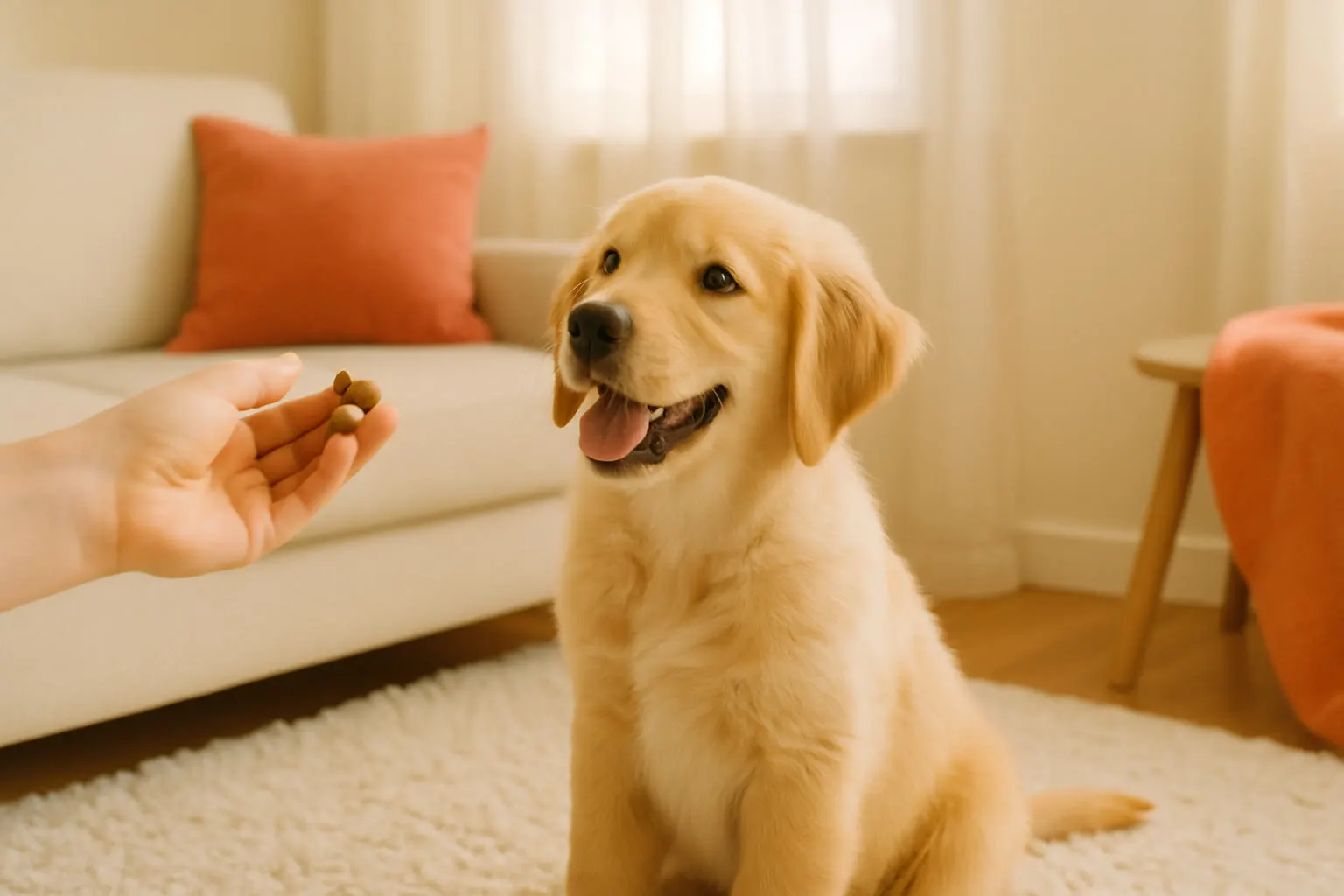
- High-Value Treats: The reward needs to be exciting for your dog. Use small, soft, pea-sized treats that are easy to swallow quickly. You'll be using a lot of them, so keep them small to avoid overfeeding. Something like these soft puppy training treats works wonders.
- A Treat Pouch: To keep your hands free and your treats accessible, a dog training treat pouch is incredibly helpful. This allows you to deliver the reward immediately after the click without fumbling around.
Step 1: Charging the Clicker
Before you can start training behaviors, you need to "charge" the clicker. This simple process teaches your dog that the click sound predicts a treat.
- Find a quiet place with minimal distractions.
- Have your clicker in one hand and a handful of treats in the other (or in your treat pouch).
- Click the clicker once, then immediately give your dog a treat.
- There's no need for your dog to do anything. You are simply building the association: click = treat.
- Repeat this "click-treat" sequence 10-15 times in a row.
- Do a few short sessions of this over a day or two.
You'll know the clicker is charged when you click, and your dog's head whips around, looking at you expectantly for their treat.
Step 2: Teaching Your First Behavior - "Touch"
A great first command to teach is "touch" (also known as targeting). You'll teach your dog to touch their nose to a target, like your hand or a target stick.
- Introduce the Target: Hold your hand out near your dog's nose. Out of curiosity, they will likely sniff it. The very instant their nose makes contact with your hand, click and give them a treat.
- Repeat: Pull your hand away, reset, and present it again. Repeat the process. Click and treat the exact moment of contact. Keep the sessions short and fun, just a few minutes at a time.
- Add the Cue: Once your dog is reliably touching your hand as soon as you present it, you can add the verbal cue. Say "Touch" just before you present your hand.
- Generalize: Start presenting your hand in different positions—lower, higher, to the side—so your dog learns to move towards the target.
Tips for Success
- Timing is Everything: The click must happen at the exact moment the desired behavior occurs, not after.
- Every Click Gets a Treat: Even if you click by accident, you must reward it. This keeps the meaning of the click consistent and powerful.
- Keep Sessions Short and Sweet: Dogs, especially puppies, have short attention spans. Aim for several 5-10 minute sessions throughout the day rather than one long one.
- End on a High Note: Always finish your training session with a successful repetition that earns a click and a treat. This keeps your dog excited for the next session.
Clicker training is a journey, not a race. It opens up a clear line of communication and strengthens the relationship you have with your dog. So grab a clicker, some treats, and get ready to be amazed at how quickly your furry friend can learn.