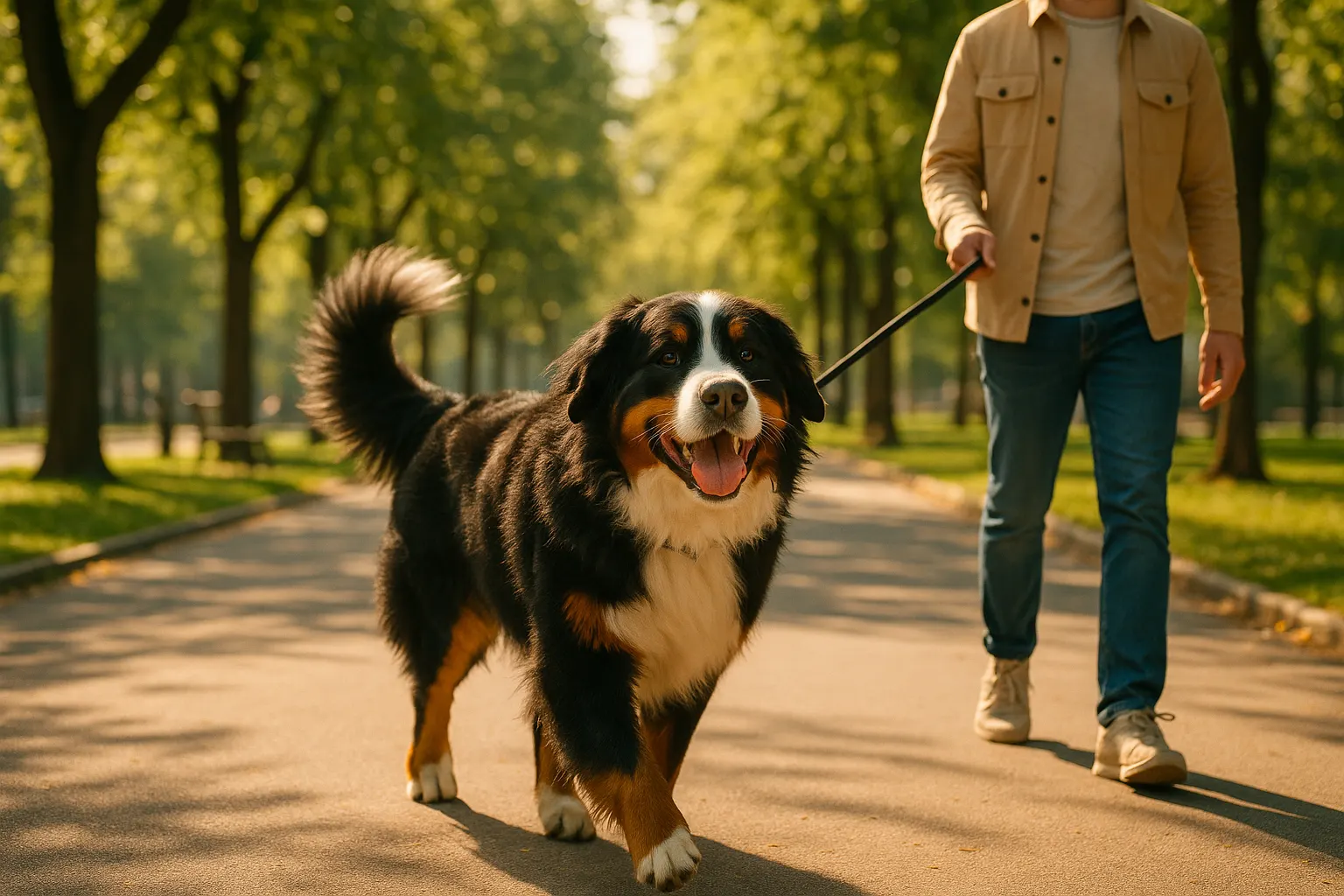
!A medium-sized dog with a modern smart GPS collar on a hiking trail
If you have ever lost sight of your dog on a trail, in a backyard with a busted fence, or in those awful seconds when the front door cracks open — you already know why a smart GPS collar is no longer a luxury item. And if you have ever tried to teach a reliable recall on a long line, or a "leave it" from across a field, you know why a training collar matters too.
The best 2026 smart dog collars do both: pinpoint GPS tracking with sub-10-meter accuracy, plus training tools (tone, vibration, occasionally a low-level static stim) that you control from your phone. This pillar guide walks you through every credible option — what each is genuinely good at, what gets glossed over in the marketing, and a clear framework for picking the right one for your dog.
We update this page quarterly. Bookmark it.
Why GPS + training in one device is the right 2026 setup
Owners used to stack two devices: an AirTag-style tracker on the collar plus a separate e-collar with a remote. That was the 2022 reality. In 2026 it doesn't make sense any more, and here's why:
- Battery management is brutal with two devices. Two chargers, two firmware updates, two failure modes. The first time the GPS dies on a Friday and you find out only on Saturday morning, you'll wish for one device.
- Training data is location-aware now. The best collars in 2026 link the moment you tapped the recall command to the map of where your dog was. That's hugely powerful for diagnosing where recalls fail.
- The hardware caught up. GPS chips, LTE-M modems, and bluetooth tone-vibration modules now fit in a single 50-70g package that rides on a normal collar without your dog noticing.
- The "vibration first" training movement that we covered in our clicker training beginner's guide maps cleanly to what these collars do well — tone and vibration cues that pair with positive reinforcement, not punishment.
Net: one device, three jobs. Recovery, training, fitness data.
How smart GPS collars actually work in 2026
Three technologies stack on the collar:
- GPS / GNSS — the satellite triangulation that places your dog on a map. Modern collars use multi-constellation (GPS + GLONASS + Galileo) for sub-10m accuracy in open terrain.
- LTE-M / NB-IoT cellular — the low-power cellular modem that beams the GPS coordinates to your phone, anywhere there is cell service. This is the "subscription" piece — most collars charge $5-10/month for the data plan.
- Bluetooth Low Energy (BLE) — short-range comms used for the training features (tone, vibration, sometimes stim) and for live tracking when you're within 30m.
When you press "find my dog" in the app, your phone hits the manufacturer's cloud, which queries the cellular network for the latest GPS fix. When you press "vibrate," your phone hits the collar over BLE if you're close, or over cellular if you're not. Round-trip times in 2026 are 1-3 seconds in good coverage.
This matters because the cellular plan — not the upfront hardware cost — is the long-term spend. We'll come back to it.
The 2026 contenders — quick map
Eight collars dominate the 2026 market. Here's the strategic positioning:
| Collar | Strengths | Plan / month | Best for |
|---|---|---|---|
| Fi Series 4 | Best app, longest battery, integrated training | $14.99–$19.99 | Mid-to-large dogs, owners who want one app |
| Tractive GPS DOG 5 | Cheapest plan, EU coverage strong | $6–$8 (annual) | Travelers, multi-country owners |
| Garmin Alpha 200i | Best for hunting/working dogs, satellite SOS | No plan; one-time | Hunters, off-grid |
| Whistle Switch | Health monitoring + GPS | $9.95–$14.95 | Owners prioritizing health data |
| Halo 4 | Wireless fence + training | $11.99–$24.99 | Property owners, no physical fence |
| PetPace Health 2 | Best vet-grade health data | $15–$24 | Senior or chronic-condition dogs |
| Spoton Pro | Wireless fence, no subscription | $0 (after $1.5k hardware) | Large rural properties |
| Dogtra Pathfinder Mini | Hunting + training, no subscription | $0 | Working-dog handlers |
That table is the map. Below we go deep on the four that combine GPS and training cleanly for the typical pet owner.
Detailed look: the four worth your time for GPS + training
1. Fi Series 4 — the all-around 2026 leader
The Fi keeps winning because it does the boring things best: 8-12 day battery, escape detection that pings you within 30 seconds, and an app that doesn't make you want to throw your phone. Its "training" mode is tone+vibration only (no static stim), which most modern trainers prefer anyway — vibration paired with positive reinforcement teaches a "watch me" cue that holds across distractions.
Strong for: off-leash recall training, multi-dog households, suburban escape risk. Watch out for: no static stim — if your trainer recommends that for hard cases, look elsewhere. And the Fi only fits collars 0.75" - 1" wide, so very small dogs and giant dogs may not fit cleanly. Pair with: a proper martingale or wide leather collar sized for your dog's neck — the Fi attaches via a band, so collar quality and width matter for daily comfort.2. Garmin Alpha 200i — for the working-dog crowd
If you actually run a hunting dog or a pack of dogs across mountains, Garmin still owns this segment. The 200i pairs sub-3-meter GPS with line-of-sight VHF tracking that works without cellular — critical in the backcountry — and adds satellite SOS via inReach. The handheld controller is essential to the experience; the Alpha is not primarily a phone app.
Strong for: hunting, search-and-rescue handlers, off-grid working dogs, owners who want zero subscription. Watch out for: the upfront cost is $700-1,000 and the handheld learning curve is real. Overkill for the average pet owner.3. Halo 4 — wireless fence plus GPS plus training
Halo earned its place by combining GPS, training, and a virtual fence in one device. You draw the fence in the app, and the collar warns the dog (tone → vibrate → optional static) as they approach the boundary. For owners without a physical fence or those traveling with their dog, this is genuinely transformative.
Strong for: rural properties, farms, RV travelers, owners replacing buried-wire fences. Watch out for: GPS-fence requires open sky. Heavily-wooded yards can introduce 5-15m wander. Test extensively before relying on it as your only containment.4. Whistle Switch — health-first GPS
Whistle's edge is biometric health tracking — sleep quality, scratching, drinking, calorie burn — combined with GPS and tone/vibration training. If your dog is a senior, has anxiety, or has a chronic condition, the longitudinal health data is uniquely valuable. We covered some of these health considerations in our senior dog joint supplements guide and calming beds for anxious dogs.
Strong for: health-conscious owners, senior dogs, anxious dogs needing data-backed insight. Watch out for: it's not a primary training collar. Stim is absent and the "vibration" is mild.Training fundamentals — make any GPS collar effective
A smart collar amplifies your training; it does not replace it. The owners who get the best results all do four things consistently:
- Pair tone or vibration with a known reward — never stim cold. Use the right training treats so the dog associates the cue with something delicious.
- Practice recall on a long line first. Our piece on teaching reliable recall lays out a 14-day plan that pairs perfectly with a smart collar.
- Walk the same route weekly so the collar learns escape patterns. Modern collars use ML to flag unusual movement, which only works after a baseline.
- Reinforce daily rituals. Dogs read structure as safety; a smart collar gives you data to tighten the loop. See our daily rituals guide for the foundation.
Add to that the right walking gear — harness, leash, and treat pouch — and you have an evidence-based, modern training stack.
The fit and durability questions — what to actually check
Marketing pages rarely mention these, and they matter:
- Neck-size compatibility. Most smart collars are sized for 25-65cm neck circumference. Toy breeds and giant breeds need careful sizing — the collar mass should never exceed 2% of the dog's bodyweight. For an 8-pound Yorkie, that's a hard cap that some big-name collars violate.
- IP rating. IPX7 is the floor (submersible to 1m for 30 minutes). Anything lower will fail with a swimming dog, period.
- Strap material. Look for replaceable nylon or biothane straps — silicone bands chew through in months, especially on retrievers.
- Charging interface. Magnetic puck > USB-C door > pogo pins. Pogo pins corrode in 18-24 months of saltwater and creek exposure.
A practical buying framework
Three questions, in order:
- Is your dog mostly on-property, in town, or in the wilderness?
- In town / suburbs → Fi (lowest friction, escape alerts).
- In wilderness → Garmin Alpha (works without cell).
- Is training a primary reason you are buying?
- Yes, with potential static stim for hard cases → Halo, Dogtra Pathfinder.
- Not really; mostly tracking → Tractive (cheap), Whistle (health-led).
- Are you OK with a subscription?
- No → Garmin or Spoton only — but the upfront cost is $700-1,500.
If you are still on the fence, our broader trendy dog gear 2026 roundup also covers the smart collar segment.
Bonus: the gear that makes a smart collar pay off faster
Two non-collar items move the needle on training outcomes more than the choice of collar itself:
- A 30-foot biothane long line — the indispensable bridge between "off-leash" and "no leash." Pair with the collar's recall vibration cue for proofing recalls in real environments. The Mendota long line is the hands-down standard among trainers.
- A high-value reward pouch — keep treats in reach so the moment after a recall vibrate cue is instant reward. The Doggone Good Rapid Rewards Pouch is what most professional trainers we know carry.
(Disclosure: those Amazon links carry our affiliate tag. We only recommend gear we use ourselves or that working trainers recommend.)
Pitfalls owners run into — and how to avoid them
- Buying based on price, ignoring plan cost. The Fi vs Tractive sticker prices are similar; the plan costs over three years can differ by $200+. Always math the three-year total.
- Not testing the panic-recovery flow. Buy the collar, then drop your phone in airplane mode and walk to the park. If you can't pull a fix from a friend's phone, your recovery plan has a hole.
- Ignoring the dog's reaction to vibration. A small but real percentage of dogs find vibration aversive in a way that interferes with training. Test for two weeks before relying on it as your primary cue.
- Skipping firmware updates. GPS accuracy and battery improvements ship via firmware quarterly. Set a calendar reminder.
- Storing the collar in a drawer when you stop training. Battery cycles are best preserved at 40-60% charge. Don't kill your investment by storing it at 100% or 0%.
Frequently Asked Questions
What is the best smart dog collar for GPS tracking and training in 2026?
For most pet owners, the Fi Series 4 is the strongest all-around pick — best app, longest battery, integrated tone and vibration training, and reliable escape alerts. Working-dog handlers should still consider the Garmin Alpha 200i for off-grid reliability, and rural property owners should look at Halo 4 for the wireless-fence feature.
Do smart dog collars really need a monthly subscription?
Most cellular-connected GPS collars do, because they use a cellular modem that consumes data. Plans range from $6 to $20 per month depending on coverage and features. Two notable exceptions are the Garmin Alpha (uses VHF + satellite, one-time hardware cost) and Spoton Pro (uses wireless fencing without a recurring data plan).
Is a smart collar safe for puppies and small dogs?
Generally yes, with two caveats: the collar should never exceed 2% of the dog's bodyweight, and the strap should fit two fingers under it without slack. For dogs under 15 pounds, look for collars marketed for "small breeds" — many of the standard models are too heavy. Always introduce the collar gradually and consult your vet if your dog has neck or thyroid concerns.
Can a smart dog collar replace a physical fence?
A wireless-fence collar (like Halo 4 or Spoton) can replace a physical fence in some settings — typically open, low-distraction yards in rural areas. We do not recommend relying on one as your only containment for a dog with a known escape habit, in a high-traffic area, or in heavily-wooded yards where GPS accuracy degrades. Use it as a layered system, not a single point of failure.
How accurate is GPS tracking on a smart dog collar?
In open terrain with clear sky, modern collars achieve 3-10 meter accuracy. In urban canyons (tall buildings) or under heavy tree cover, accuracy can degrade to 15-25 meters. Refresh rate also matters — most collars switch to "live mode" with 5-second updates when you press "find" but otherwise refresh every 1-3 minutes to save battery. Always test the worst-case environment before relying on the collar.
Do trainers actually recommend GPS smart collars?
The modern positive-reinforcement training community has largely embraced tone-and-vibration GPS collars (Fi, Halo, Whistle) as legitimate training tools when paired with reward-based protocols. There is more debate about static-stim collars (Dogtra, classic e-collars), which are best used under a certified trainer's guidance. The 2026 consensus: vibration as a marker cue is fine; static stim deserves expert input.
How long do smart dog collar batteries last?
Modern 2026 collars deliver 5-12 days per charge under normal usage, dropping to 1-2 days if you keep the collar in "live track" mode constantly. Cold weather, dense canopy, and cellular dead zones all cut battery faster. Plan to charge weekly and keep a backup charger at any place your dog regularly visits.
Are GPS dog collars waterproof?
The good ones are. Look for at least IPX7 rating (submersible to 1m for 30 minutes). For dogs that swim regularly, IP68 or better is the right floor. Be careful: "water resistant" is not the same as "waterproof," and saltwater is harsher than fresh water on every collar's seals.
---
Dog Tokens reviews are independent and reader-funded. We may earn affiliate commissions on links to Amazon and other retailers, at no cost to you. Last updated 2026-04-28.!Fi vs Halo vs Garmin vs Whistle — feature-by-feature visual comparison
!A long-line recall training session: dog, owner, smart collar, treat pouch in frame