Dog nail trimming is the grooming task most owners dread more than bath time. A sudden yelp, a spot of blood, and a dog who never forgets — it can turn into a standoff that repeats every few weeks forever. It doesn't have to be that way. With the right tools, the right frequency, and a calm desensitization approach, most dogs come to tolerate — even ignore — nail trims within a few weeks.
TL;DR: Quick Answer
Trim dog nails every 3–4 weeks so each session removes just a sliver of growth. Use sharp clippers with a safety guard, go at an angle, and stop well before the quick. If your dog is nail-shy, spend a week just touching paws and handling the clippers with no trimming — then introduce cuts on one nail per session until they're comfortable. Frequency is the real fix: overgrown nails make everything harder and more painful.
Why Nail Length Actually Matters
Long nails aren't just cosmetic. When a dog's nails touch the ground with each step, it shifts their weight backward, putting extra pressure on the wrists and hips. Over time that changes gait and can contribute to joint problems — especially in senior dogs or breeds prone to arthritis. Long nails also snag on carpet and blankets and break painfully.
The target: you should hear no click when your dog walks on a hard floor. If you can hear a click, the nails are too long. For dark-nailed dogs this takes more attention since you can't see the quick, but the rule still applies. See our dog paw care guide for the full paw health picture.
The Right Tools Change Everything
Dull clippers crush the nail instead of cutting it cleanly, which hurts and makes dogs more resistant. Replace them every 12–18 months or whenever the cut starts to feel like it's pulling.
Clipper types
A scissor-style dog nail clipper with a quick-stop safety guard is the easiest for most home groomers. The guard limits how much nail enters the blade, reducing quick-nicking risk significantly. Guillotine-style clippers work fine but require more precision about nail positioning.
For large dogs or very thick nails, a heavy-duty dog nail clipper rated for large breeds gives you better leverage and a cleaner cut without having to saw back and forth.
The one thing you absolutely need nearby
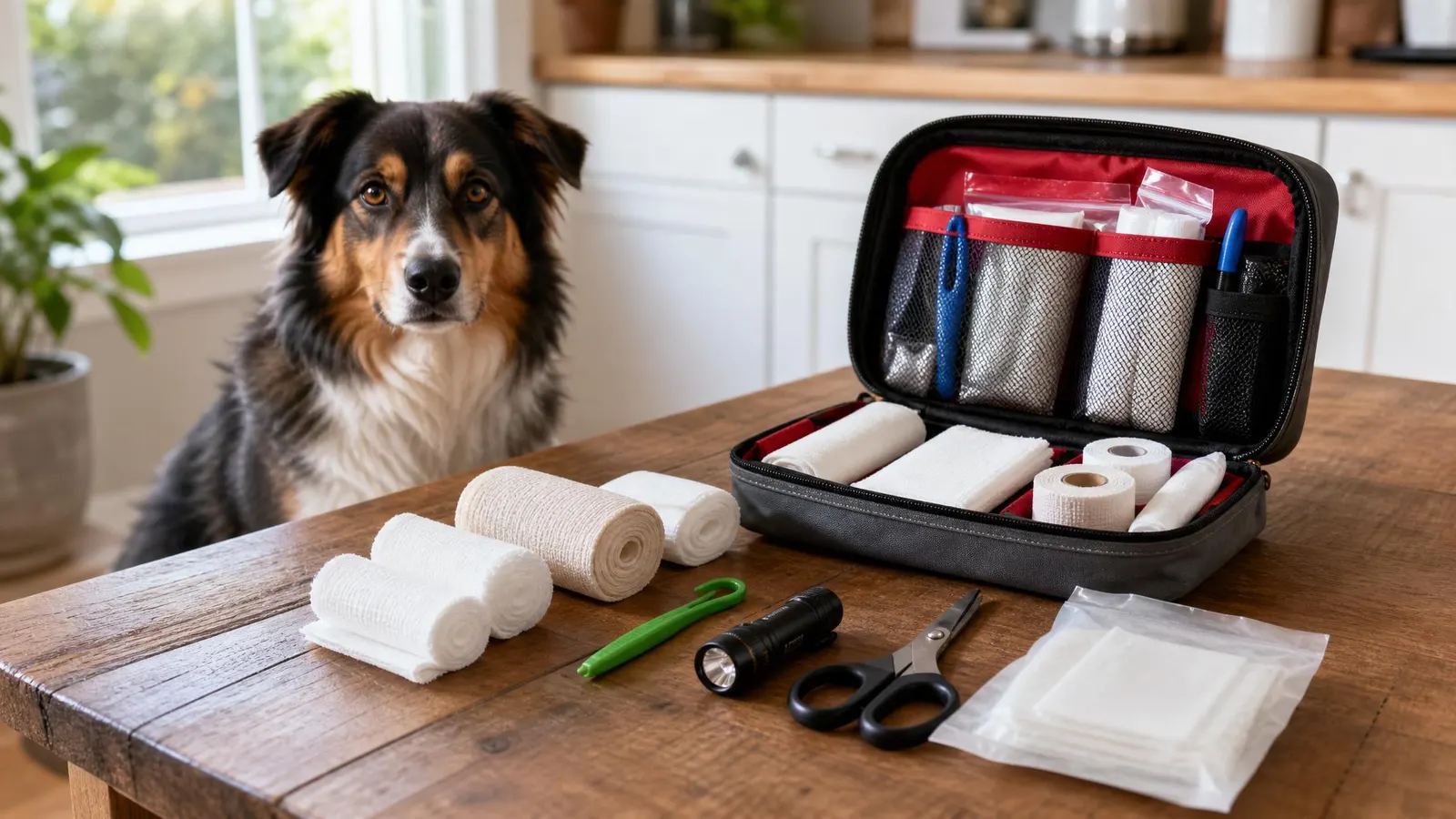
Styptic powder stops bleeding from a nicked quick within 30–60 seconds. Cornstarch works in a pinch. The quick bleeds disproportionately to how scary it looks — a small amount of styptic and gentle pressure fixes it. Keep it visible before you start so you're not hunting for it mid-crisis.How to Actually Trim: Technique for Beginners
Position your dog wherever they're calmest — lying on their side on the floor is usually easier than standing on a table. Have someone hold them gently the first few times if they're wiggly. Keep treats at your hip.
Finding the safe cut zone
On light-colored nails, the quick is visible as a pinkish core inside the nail. Clip 2–3mm below where the pink ends — this is your safety buffer. On dark nails you can't see the quick, so take thin slices off the tip and look at the cut surface. When you see a small dark circle appearing at the center of the nail cross-section, stop — you're close to the quick.
The angle
Cut at approximately a 45-degree angle, angled away from the paw pad. This follows the natural curve of the nail tip and leaves a cleaner edge less likely to snag.
One nail at a time, lots of treats
Especially when starting out, clip one nail and immediately reward. You can do all four paws in one session or split it across two days — what matters is your dog staying below their stress threshold. A dog who checked out calmly for five nails is doing better than a dog who white-knuckled through twenty.
According to the American Veterinary Medical Association, regular handling of paws from puppyhood makes nail trimming dramatically easier throughout a dog's life — but it's never too late to start desensitization with adult dogs.
Desensitizing a Nail-Shy Dog: A 10-Day Plan
If your dog already has a negative history with nail trimming — pulling paws away, trembling, snapping — don't skip straight to clipping. Spend time rebuilding the association first.
Days 1–3: Touch paws for 3 seconds while your dog is calm and relaxed. Treat. No clippers yet. Days 4–5: Bring the clippers near the paw. Let your dog sniff them. Touch one nail with the clipper body (closed). Treat. Still no cutting. Days 6–7: Open the clipper around one nail without squeezing — just the sensation of the tool on the nail. Treat. Some dogs need two or three sessions at this stage. Days 8–9: Clip one nail only. Use a high-value treat (small piece of cheese, chicken) immediately after. End the session. Day 10 and beyond: Add one or two more nails per session as your dog stays comfortable. Build up to a full paw at your own pace.The goal is to never push past the point where your dog is still comfortable. One nail a day done calmly builds a better nail-trim dog than a full set done under protest.
Maintaining the Right Frequency
Trimming every 3–4 weeks is the real game-changer. At this frequency, each session only takes off a sliver of growth, the quick recedes gradually toward the toe, and nails stay short even on dogs who don't walk on pavement. Dogs who go months between trims have overgrown quicks, longer nails, and more anxiety because the session hurts more and takes longer.
If your dog walks on concrete or asphalt daily, natural wear may extend the gap to 5–6 weeks. Apartment dogs or those mostly on carpet often need the full 3-week schedule.
Frequently Asked Questions
What do I do if I cut the quick and it bleeds?
Stay calm — your dog reads your energy. Apply styptic powder or cornstarch to the nail tip and hold gentle pressure for 30–60 seconds. The bleeding almost always stops quickly. After it stops, let your dog decompress with treats and praise. Don't rush to clip more nails that session. One nicked quick doesn't ruin your progress if you handle it calmly.
Can I use a nail grinder instead of clippers?
Yes — a dog nail grinder is excellent for nervous dogs or dogs with thick nails. The vibration and noise take some getting used to (same desensitization process applies), but grinders smooth the nail automatically and make it nearly impossible to take too much at once. The tradeoff is time — grinding a full set takes longer than clipping.
My dog's nails are so overgrown I can't tell where the quick is. What now?
If nails are severely overgrown, the quick has grown long too and you truly can't safely trim back to ideal length in one session. Take small amounts off the tip weekly over 4–6 weeks — the quick will gradually recede as you trim the nail tip consistently. For very severe overgrowth, one visit to the vet or a groomer to assess and trim safely is worth it before switching to home maintenance.