Paws take the most punishment of any part of your dog's body — hot asphalt, icy sidewalks, gravel trails, and carpet burns — yet most owners skip paw maintenance entirely until something goes wrong. Here's how to build a simple dog paw care at home routine that prevents problems instead of just reacting to them.
TL;DR: Quick Answer
Healthy dog paw care comes down to four things: keep nails trimmed short enough that they don't click on hard floors, trim the fur between paw pads to prevent matting and ice-ball buildup, moisturize pads with a dog-safe balm if they look dry or cracked, and rinse paws after walks in extreme weather. Do this weekly or biweekly and most paw issues never start.
---
Why Paw Care Is More Than Aesthetics
Overgrown nails shift your dog's weight onto the back of their paws, causing joint stress that compounds over years — especially in senior dogs. Matted fur between pads harbors bacteria, traps ice in winter, and obscures cuts or foreign objects your dog may have picked up on a walk. Cracked pads aren't just uncomfortable; they're open entry points for infection.
A quick weekly paw check takes three minutes and gives you early warning on all of these. Your dog's paws are worth that.
See our senior dog care essentials guide for how paw health connects to mobility in older dogs.
---
The Four Pillars of At-Home Paw Care
1. Nail Trimming — The Most Skipped Step
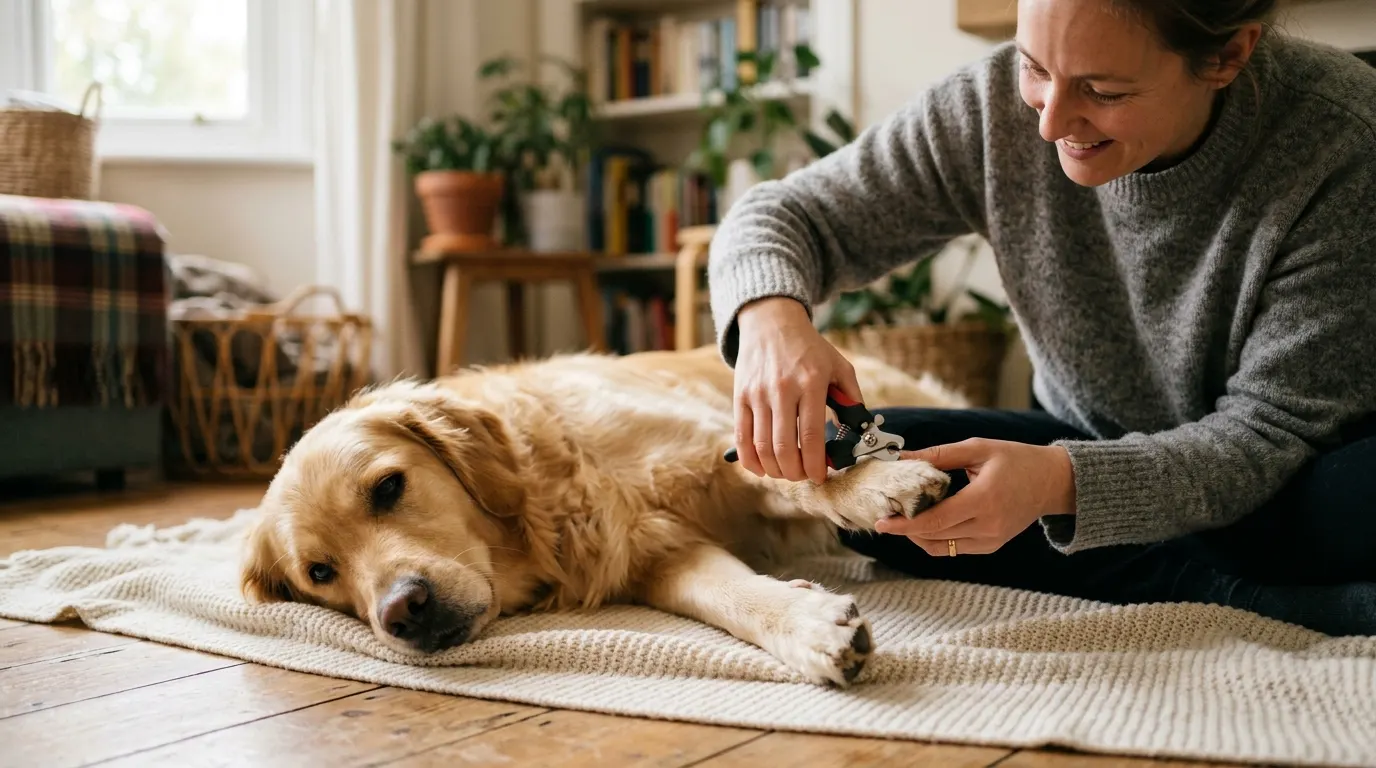
The rule of thumb: if you can hear your dog's nails clicking on your hardwood floor, they're too long. The goal is nails short enough that they clear the floor entirely when your dog stands.
For most dogs, that means trimming every 3–4 weeks. Dogs who walk a lot on pavement may go longer; dogs who mostly walk on grass or carpet need more frequent trims.
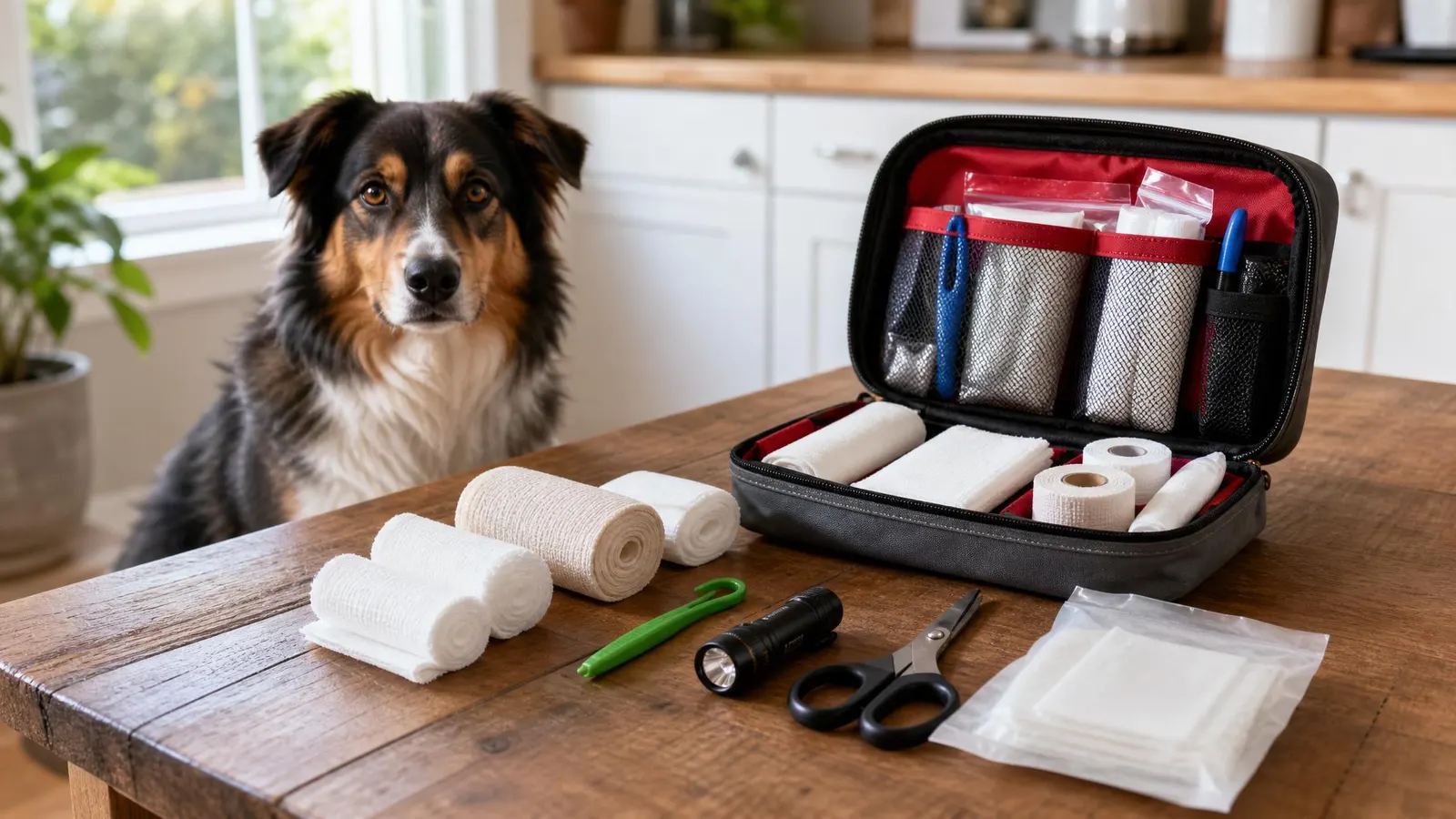
Equipment matters more than technique. A sharp pair of dog nail clippers makes a clean cut with no crushing or splitting. Dull clippers are the main reason dogs flinch — it's not the cut, it's the pressure from a blade that's dragging instead of slicing.Keep styptic powder nearby. If you nick the quick (the pink vascular tissue inside the nail), dab a pinch directly on the end of the nail and apply gentle pressure for 30 seconds. It stops bleeding immediately. Every dog owner should have a container.
The quick-shrinking trick: If your dog's nails are seriously overgrown, don't try to cut them all the way back at once — you'll hit the quick every time because it has grown long too. Instead, trim a small amount every 5–7 days. The quick recedes a little after each trim, and within 3–4 weeks you can get the nails to a healthy length.---
2. Paw Pad Fur Trimming — Often Overlooked
The fluffy fur that grows between and around your dog's pads does two bad things if left untrimmed: it mats (creating painful clumps that pull the skin), and it collects debris. In winter, that same fur traps snow that compresses into ice balls between the pads — extremely uncomfortable and a common reason dogs suddenly start limping mid-walk.
Use a small pair of rounded-tip grooming scissors to trim the fur flush with the bottom of the pads. You're not shaving — you're just keeping it even with the pad surface. Work slowly, hold the paw still, and keep treats coming.
---
3. Moisturizing Cracked or Dry Pads
Healthy dog pads should feel slightly rough but pliable — not hard, not flaking, not visibly cracked. If you see cracks or your dog is licking their pads constantly, dryness or irritation is likely the cause.
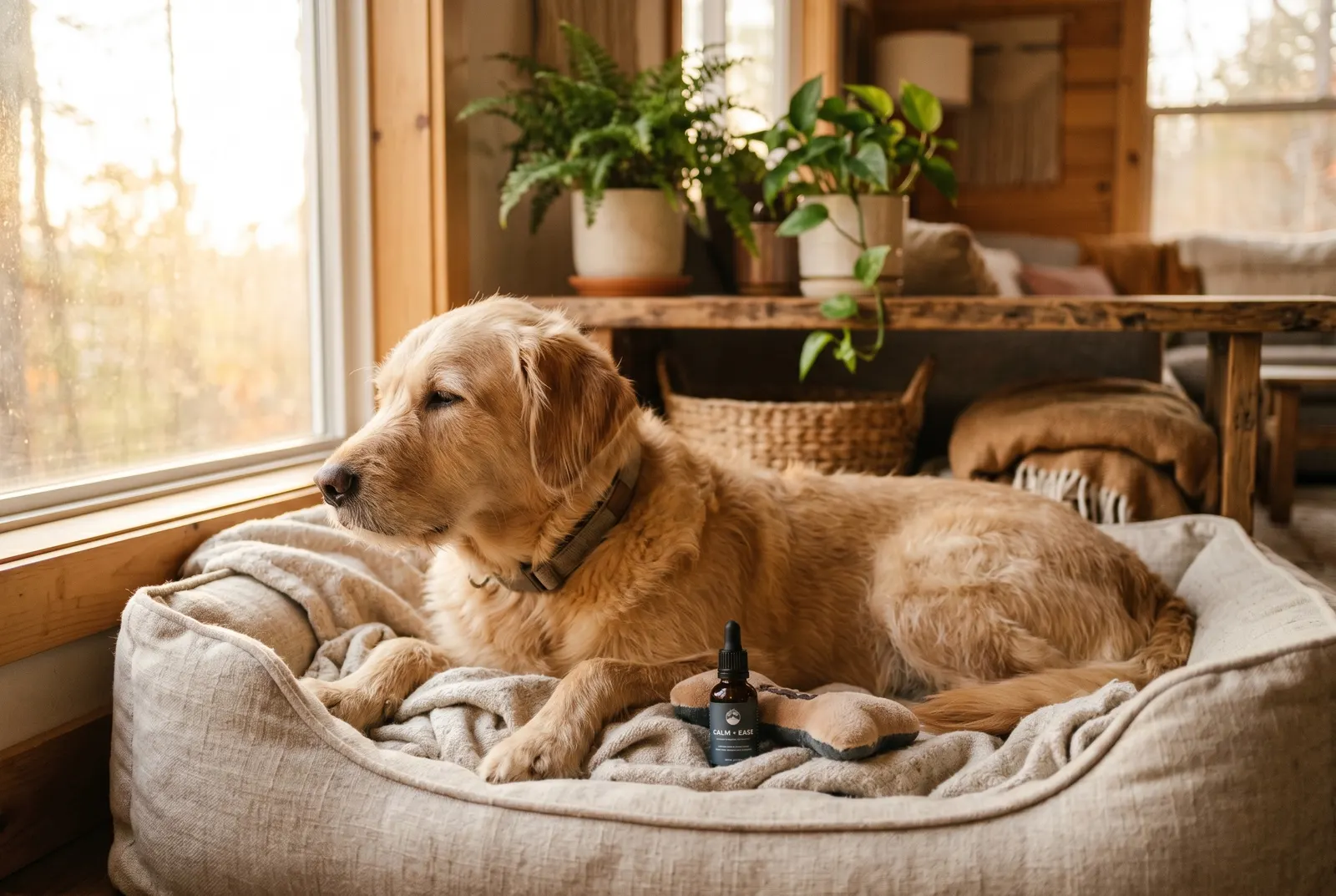
Use dog-specific paw balm, not human lotion. Human moisturizers often contain fragrances or ingredients (like macadamia nut oil) that are harmful when licked, and dogs will always lick their paws after application. Dog paw balm is formulated to be safe if ingested in small amounts. Musher's Secret is the gold standard — it was originally developed for sled dogs running in Arctic conditions and has a devoted following among regular pet owners for exactly this reason. Apply a thin layer, massage it in, and distract your dog for 5 minutes while it absorbs. A small tin lasts months.Apply balm before and after walks in extreme heat or cold for prevention. Once daily if cracks are already present.
---
4. Post-Walk Rinsing and Inspection
This is the one that most owners skip because it adds a minute to every walk. It's also the one that prevents the most problems.
After walks, especially on:
- Salted winter sidewalks — road salt is an irritant and mildly toxic if licked in quantity
- Hot summer pavement — asphalt above 125°F causes pad burns (if it burns your hand after 7 seconds, it burns their pads)
- Trails or dog parks — foxtails, thorns, and burrs hide between pads
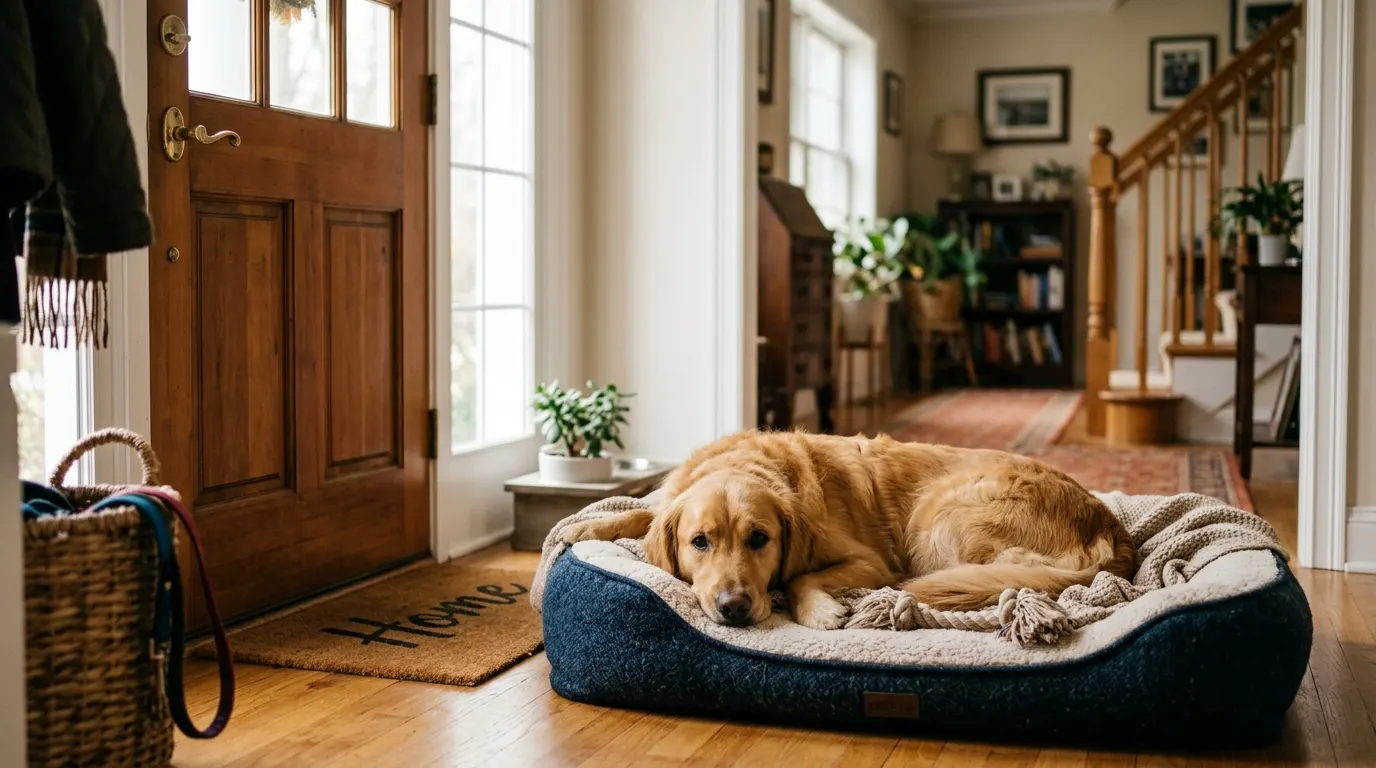
Keep a small container of water and a microfiber paw wipe by your door. A quick wipe-down takes 30 seconds and removes salt, allergens, chemicals, and debris before your dog tracks them inside and before they get a chance to lick it off themselves.
While you're wiping, do a quick visual check: look between every pad for redness, swelling, cuts, or anything embedded in the fur. Catching a splinter or small cut early means a minute of first aid; missing it means a vet visit.
---
Seasonal Paw Care: What Changes by Season
Winter: Pads are most vulnerable. Salt and ice melt chemicals are the main hazard. Apply balm before walks, rinse after, and consider dog boots for dogs with sensitive paws or thin coats. Not every dog will tolerate boots, but most can be conditioned to them over a few weeks with the same slow-introduction approach as toothbrushing. Summer: Pad burns from hot pavement are underappreciated. Walk in early morning or evening when asphalt has cooled. Check pavement temp with your hand. Apply balm after walks on hot surfaces. Spring/Fall: Mud and allergen season. Rinse more frequently. Check between pads after every outdoor excursion — burrs and grass seeds embed easily in moist fur.---
FAQ
How often should I trim my dog's nails at home?
Every 3–4 weeks for most dogs. The click-test works well: if you hear nails on hard floors, it's time. Active dogs who walk on pavement often self-file and may need less frequent trims.
My dog hates having their paws touched. What do I do?
Desensitize slowly — the same way you'd introduce a toothbrush. Start by touching just the leg, then work toward the paw, then individual toes, then introduce the clippers without cutting. Always treat generously. Three minutes of low-key positive conditioning each day beats one stressful grooming session per month.
Is coconut oil safe for dog paws?
In small amounts, yes — it's non-toxic and mildly moisturizing. But it's less effective than a purpose-made balm for serious dryness or cracking, and it can go rancid between uses. Musher's Secret or a dedicated paw balm is the better long-term choice.
---
Paw care is one of those routines that feels like a chore until the day it saves your dog from a weeks-long paw infection. Add it to your weekly grooming checklist alongside brushing and ear checks, and it becomes background noise — three minutes that pay off in a dog that's comfortable and healthy year-round.