The best dog food bowls for senior dogs are stable, easy to reach, simple to clean, and matched to your dog's mobility and eating style. For most older dogs, start with a non-slip stainless steel or ceramic bowl, then consider a raised feeder, slow feeder, or shallow bowl if arthritis, neck stiffness, gulping, or vision changes make meals harder.
This post contains affiliate links. We may earn a small commission at no extra cost to you.Senior dogs do not always need fancy feeding gear. They need a setup that lets them eat comfortably without sliding bowls, awkward bending, sore joints, or rushed swallowing. A better bowl will not fix every health issue, but it can make twice-daily meals calmer and safer.
What Changes When Dogs Get Older?
Aging changes the way dogs move through ordinary routines. A dog who used to dive into dinner may now hesitate because bending down hurts. Another dog may start pushing the bowl across the floor because their stance is weaker. Some senior dogs lose teeth, develop jaw sensitivity, or struggle to see the edge of a dark bowl in low light.
The right feeding station removes friction. Put the bowl where your dog can stand with good footing. Use a washable mat if the kitchen floor is slick. Keep water nearby, but not so close that spilled water turns mealtime into a slip hazard.
If your dog suddenly stops eating, coughs during meals, vomits, loses weight, or seems painful, treat that as a vet question first. The American Kennel Club's senior dog care guidance is a helpful overview of why small behavior changes in older dogs deserve attention.
Best Bowl Types for Senior Dogs
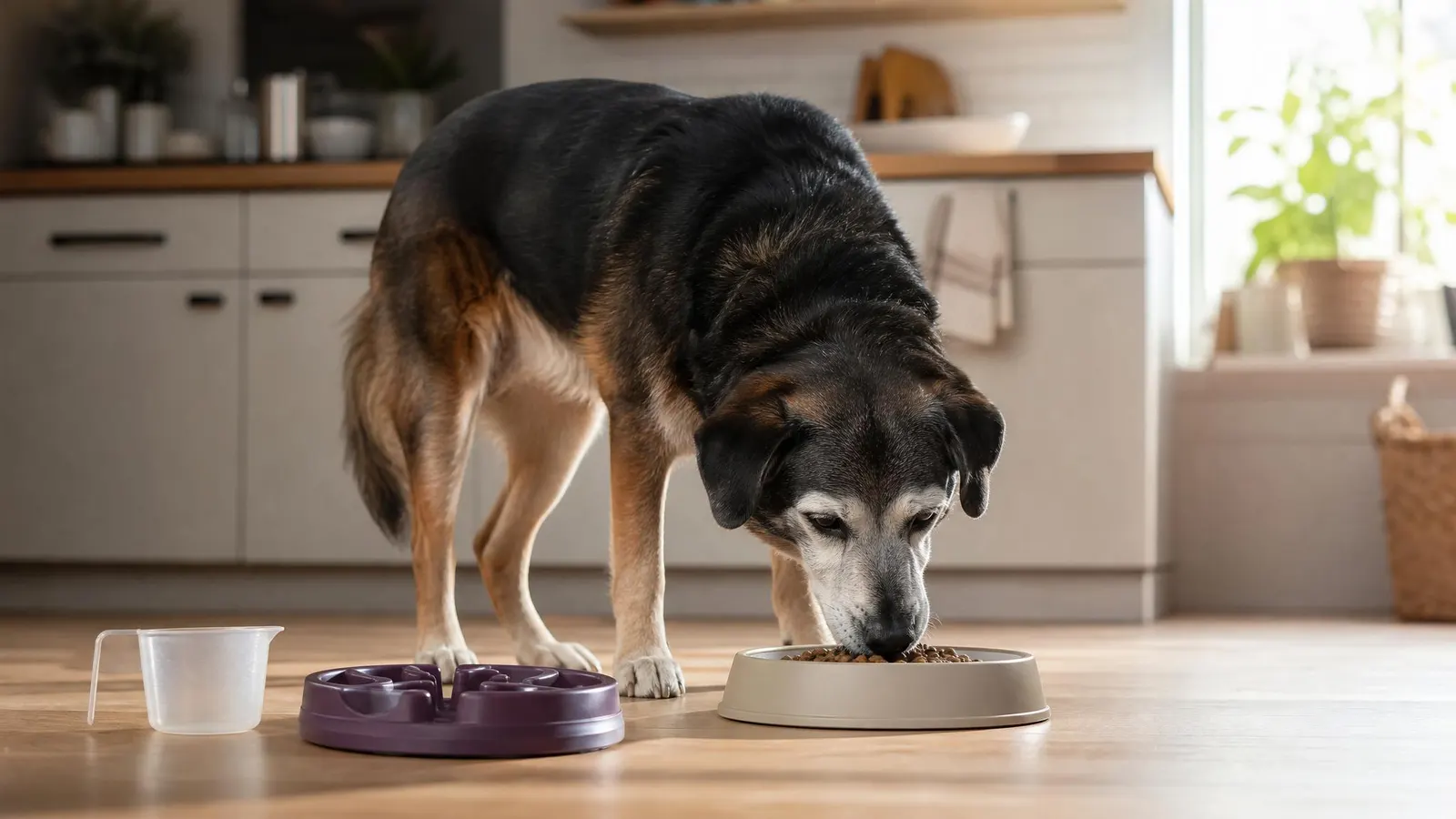
Non-slip stainless steel bowls are the easiest default pick. Stainless steel is durable, dishwasher-friendly, and less likely to hold odor than scratched plastic. Look for a wide rubber base or place the bowl on a grippy mat so your dog does not have to chase dinner around the room. A simple non slip stainless steel dog bowl works for many seniors.
Shallow bowls help dogs with short muzzles, missing teeth, or neck stiffness. They reduce the amount of face-digging needed to reach the last pieces of food. They are also useful for dogs who eat wet food, softened kibble, or prescription diets.
Raised feeders can help some dogs who struggle to bend, especially tall dogs with arthritis or balance issues. The key is moderation. The bowl should sit around lower chest height, not so high that your dog has to stretch upward. If your vet has mentioned bloat risk, ask before switching to an elevated setup. For dogs who are cleared to use one, compare adjustable elevated dog bowls instead of buying a fixed-height stand.
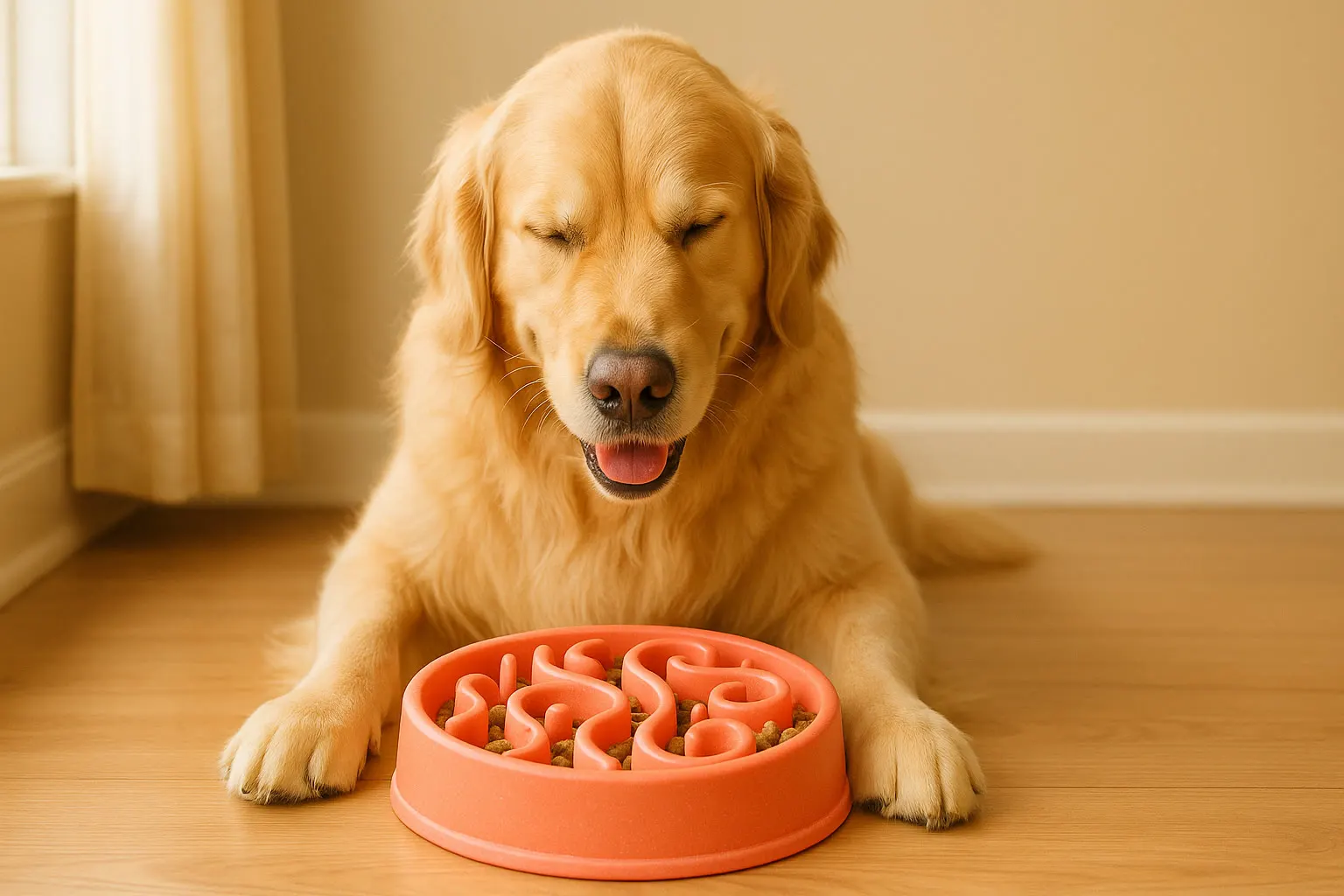
Slow feeders are useful when an older dog still inhales food. Gulping can lead to coughing, regurgitation, and messy meals. Choose a gentle pattern with wide channels, not a maze so tight that it frustrates a dog with dental pain or a flat face. A slow feeder dog bowl should slow the meal down without turning eating into a puzzle your dog hates.
How to Choose the Right Setup
Start by watching one full meal. Does your dog brace their front legs? Do they step back after a few bites? Does the bowl slide? Do they leave food along the edge? These clues matter more than product claims.
For a dog with arthritis, try a stable bowl on a non-slip mat first. If bending still looks uncomfortable, test a modest raised feeder. For a dog with dental issues, use a shallow bowl and ask your vet whether softening food makes sense. For a dog who gulps, use a slow feeder or split meals into smaller portions.
Size matters too. A bowl should hold the full meal without overflowing, but it should not be so deep that your dog has to bury their face. If you feed measured meals, keep a dedicated scoop nearby so portions stay consistent. Our best dog food bowls 2026 guide covers broader bowl materials and everyday options if you are comparing basics.
Cleaning and Safety Details That Matter
Senior dogs can be more sensitive to stomach upset, so bowl hygiene is not optional. Wash food bowls daily, especially after wet food. Wash water bowls daily too, even when they look clean. Biofilm builds up fast.
Skip cracked plastic bowls. Scratches can trap residue, and some dogs develop chin irritation from dirty or worn bowls. Stainless steel and glazed ceramic are usually easier to keep clean, but ceramic should be checked for chips.
Make the feeding area predictable. Good lighting helps dogs with vision changes. A mat with a clear edge can help them locate the bowl. If your dog is anxious around food, give them a quiet corner where they will not be bumped by kids, other pets, or traffic through the kitchen.
FAQ
Are elevated bowls better for senior dogs?
Sometimes. Elevated bowls may help dogs with neck, shoulder, or back discomfort, but they are not automatically better for every senior dog. Use a modest height and ask your vet if your dog has a history of bloat or digestive problems.
What bowl material is best for older dogs?
Stainless steel is the safest everyday default because it is durable and easy to sanitize. Ceramic can also work if it is heavy, non-slip, and free of chips. Avoid scratched plastic for long-term daily feeding.
Should senior dogs use slow feeder bowls?
Use a slow feeder if your dog eats too fast and tolerates the design. Choose a simple, shallow pattern for older dogs. If your dog seems frustrated, coughs, or has dental pain, try smaller portions in a regular bowl instead.
The right bowl is the one that makes your senior dog's meal boring in the best way: steady paws, comfortable posture, clean access to food, and no wrestling with the dish. Start simple, adjust one thing at a time, and let your dog's body language decide what stays.