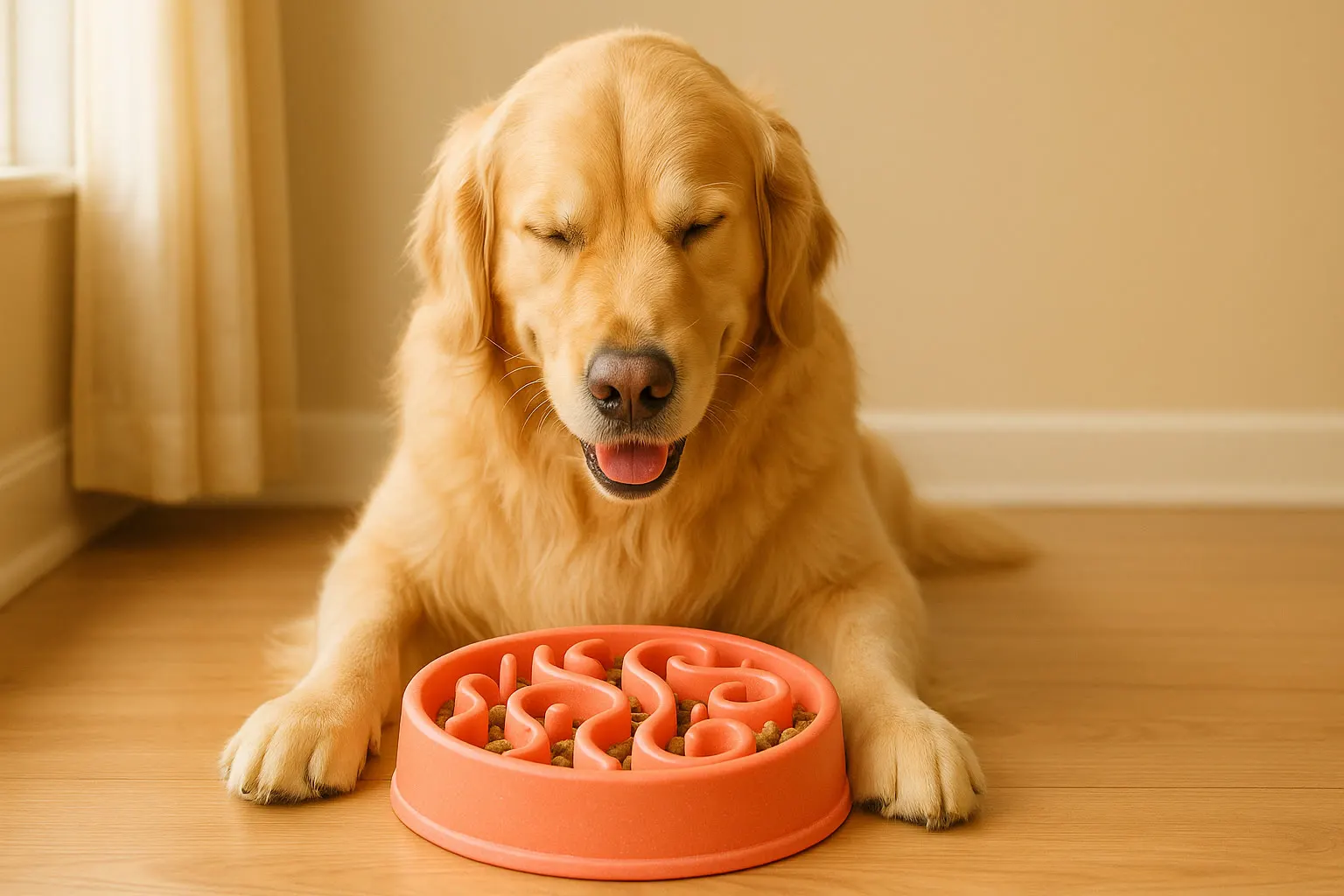
!The right bowl makes mealtime better for everyone
Here's something that took us way too long to realize: what your dog eats from actually matters. Not just nutritionally, but how they eat matters. A regular flat ceramic bowl might seem fine, but once you understand the options, you'll see how much room for improvement there actually is.
The right bowl can prevent bloat in deep-chested breeds, slow down dogs who inhale their food like it's their last meal on earth, and honestly make mealtime a better experience for both of you. Let's talk about what's worth your money in 2026.
The Problem With Standard Bowls
Regular flat bowls are... fine. But they're the baseline. Here's the issue: fast eating is a real problem. Dogs who inhale their food at supersonic speeds are more likely to experience bloat, gas, and general digestive upset. You've probably seen this — that dog who takes 3 seconds to demolish a full bowl, then immediately sounds like they've got an accordion in their stomach.
Elevated bowls help large breeds by reducing strain on their neck and joints, but they can actually speed up eating (not always ideal). And standard stainless steel bowls get cold fast in winter, can be noisy, and don't offer any actual enrichment value.
That's where the right bowl comes in.Slow Feeders: The Game-Changer
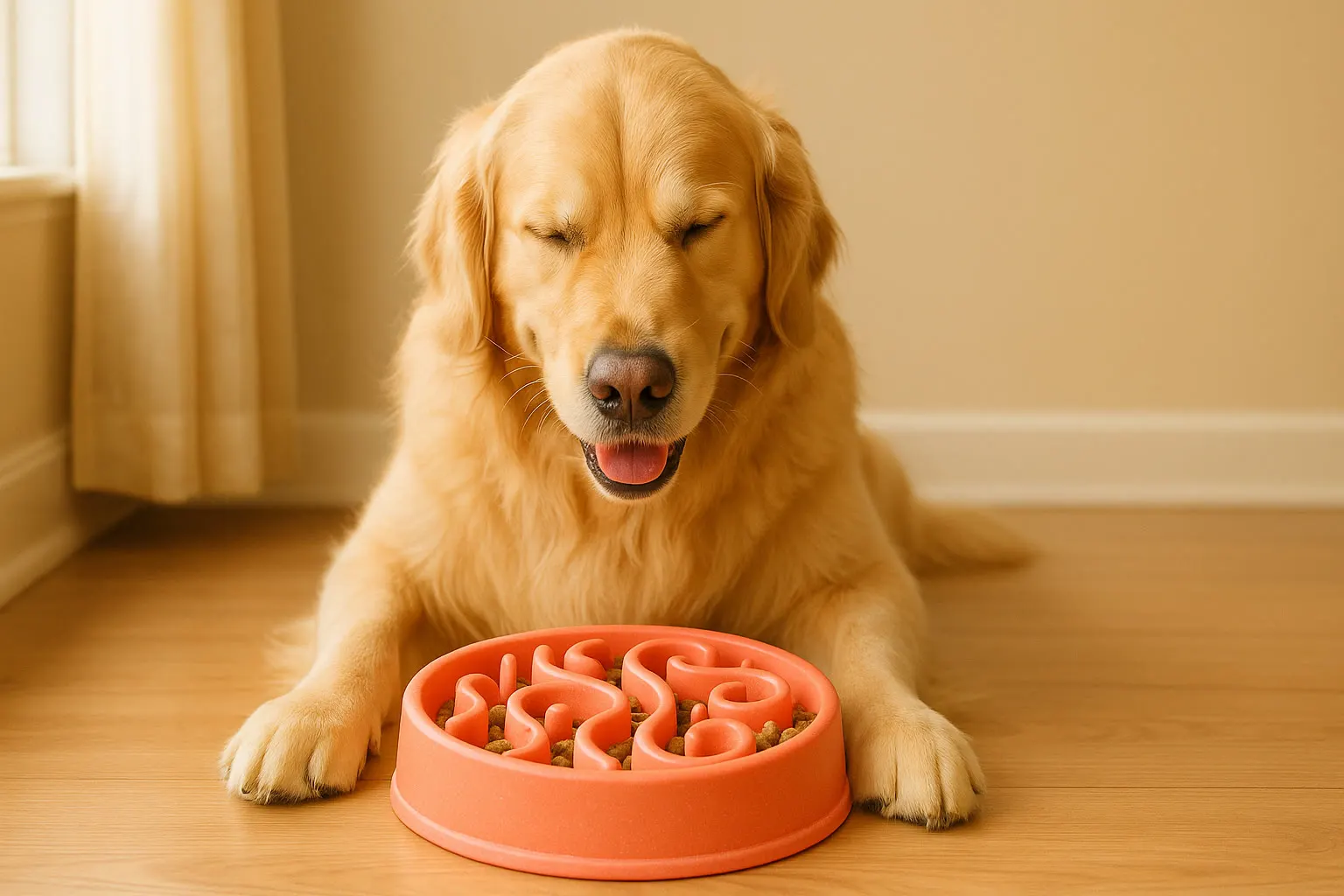
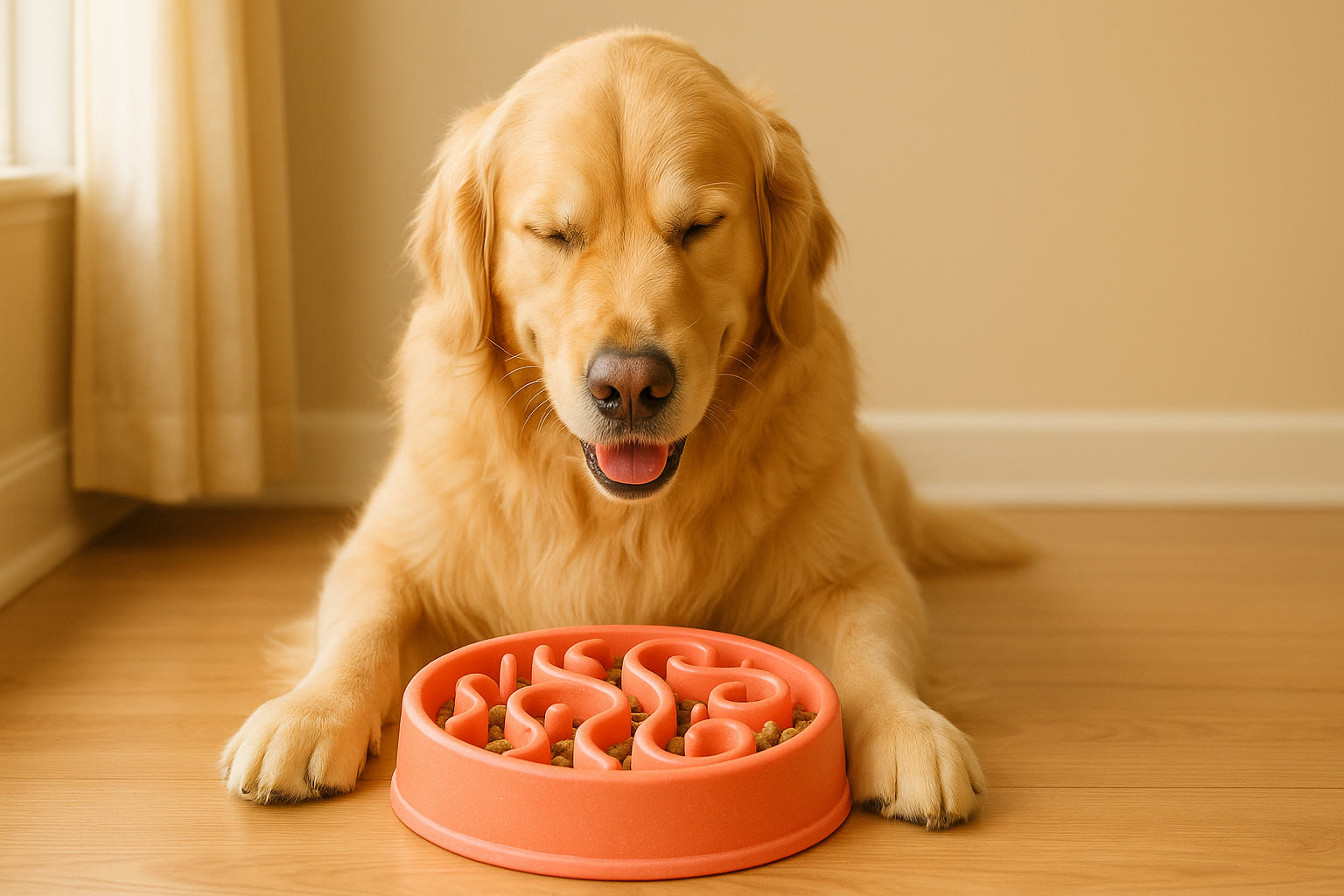
A slow feeder is basically a bowl with built-in obstacles — ridges, spirals, or maze-like patterns that force your dog to work around them instead of shoveling kibble straight into their mouth.
The difference is shocking. A dog who normally finishes in 15 seconds suddenly takes 3-5 minutes. That's longer for their digestive system to process, less gas and bloat, and honestly? More enrichment in their day.
Our top pick: Outward Hound Slow Feeder Bowls come in a bunch of fun designs, are dishwasher safe, and genuinely work. The ridge pattern slows them down without being overly complicated.There are tons of options out there, but the key is finding one with a pattern that's challenging enough to slow them down but not so complicated they get frustrated. You want to see them working a bit, not bashing their face against it.
If your dog is a notorious speed-eater, this single change might be the best $20 you spend this year.
Elevated Bowls for Comfort
Elevated bowls were made for large and giant breed dogs — they reduce the strain on the neck, shoulders, and spine during feeding. If you've got a Great Dane, a German Shepherd, or any deep-chested breed, an elevated feeding station isn't a luxury, it's ergonomic sense.
Even small dogs sometimes benefit from a slight elevation, especially as they age. Reaching down to floor level for every meal gets tiring.
Check out: Elevated Dog Bowl Feeders — stainless steel bowls in an adjustable stand so your dog doesn't have to crouch to eat.Pro tip: If you combine an elevated slow-feeder bowl, you get the best of both worlds — proper ergonomics AND controlled eating speed.
Ceramic, Stainless Steel, or Silicone?
Stainless steel: Durable, easy to clean, doesn't hold bacteria, won't chip. This is the practical choice. It can be loud and gets temperature extremes (cold in winter, hot in summer), but it lasts forever. Most people end up with stainless steel and never look back. Ceramic: Prettier, typically safer material, won't get that weird metallic taste some dogs dislike. The downside is they chip and break, and can harbor bacteria in the cracks. Beautiful until they're not. Silicone: Collapsible, lightweight, great for travel. The downside is they're less stable, can trap food residue, and don't feel as "substantial" to eat from. They have their place, but not for everyday feeding.For everyday feeding, stainless steel is your answer. It's the workhorse.
Puzzle Bowls for Enrichment
If your dog finishes too fast even with a slow feeder, or if you want to make mealtime feel like play, puzzle bowls take things one step further. They're like puzzle feeders that work as actual bowls.
Puzzle Feeder Bowls force your dog to use their nose and paws to navigate the obstacles and get to the kibble. Meal times become enrichment time. It's genuinely brilliant for high-energy dogs or dogs who need extra mental stimulation.The trade-off: they're more of a production. You're not just setting down a bowl and walking away. But if you've got the 5 minutes, it's totally worth it.
Travel Bowls That Actually Pack Flat
If you're on the road with your dog, standard bowls are bulky and annoying. Collapsible silicone bowls are genuinely game-changing for road trips, hikes, or any travel scenario.
Collapsible Dog Bowls take up the space of a sandwich when packed, but expand to full size instantly. Get one for water and one for food — you'll wonder how you ever traveled without them.The Bottom Line
You're putting food in this bowl twice a day, 365 days a year. That's over 700 feeding sessions. Spending a little extra on a bowl that actually serves your dog better isn't an indulgence — it's common sense.
Start with a slow feeder if your dog's a gulper. Graduate to an elevated station if you've got a large breed. Add enrichment bowls if you want to make mealtime more interesting.
The standard flat ceramic bowl has had its day. Your dog deserves better, and honestly, so do you.
🐾 Which of these bowl types is solving a problem in your house right now?