A dog first aid kit should cover the small emergencies you can handle calmly while you decide whether your dog needs a vet. Start with gauze, self-adhering bandage wrap, saline rinse, antiseptic wipes, tweezers, a digital thermometer, tick remover, gloves, and your vet's phone number. Keep the kit in one labeled bag so you are not searching drawers while your dog is bleeding, limping, or panicking.
This post contains affiliate links. We may earn a small commission at no extra cost to you.First aid is not a replacement for veterinary care. It is the bridge between "something happened" and "we are getting the right help." The goal is to clean, protect, stabilize, and prevent a small problem from becoming worse.
Here is the practical dog first aid kit essentials list worth building before you need it.
Start With Wound-Care Basics
Most dog first aid kits are used for ordinary problems: scraped paws, torn nails, small cuts, hot spots, and mystery bleeding after a rough play session. For those moments, you need simple supplies that help you see the area and keep it clean.
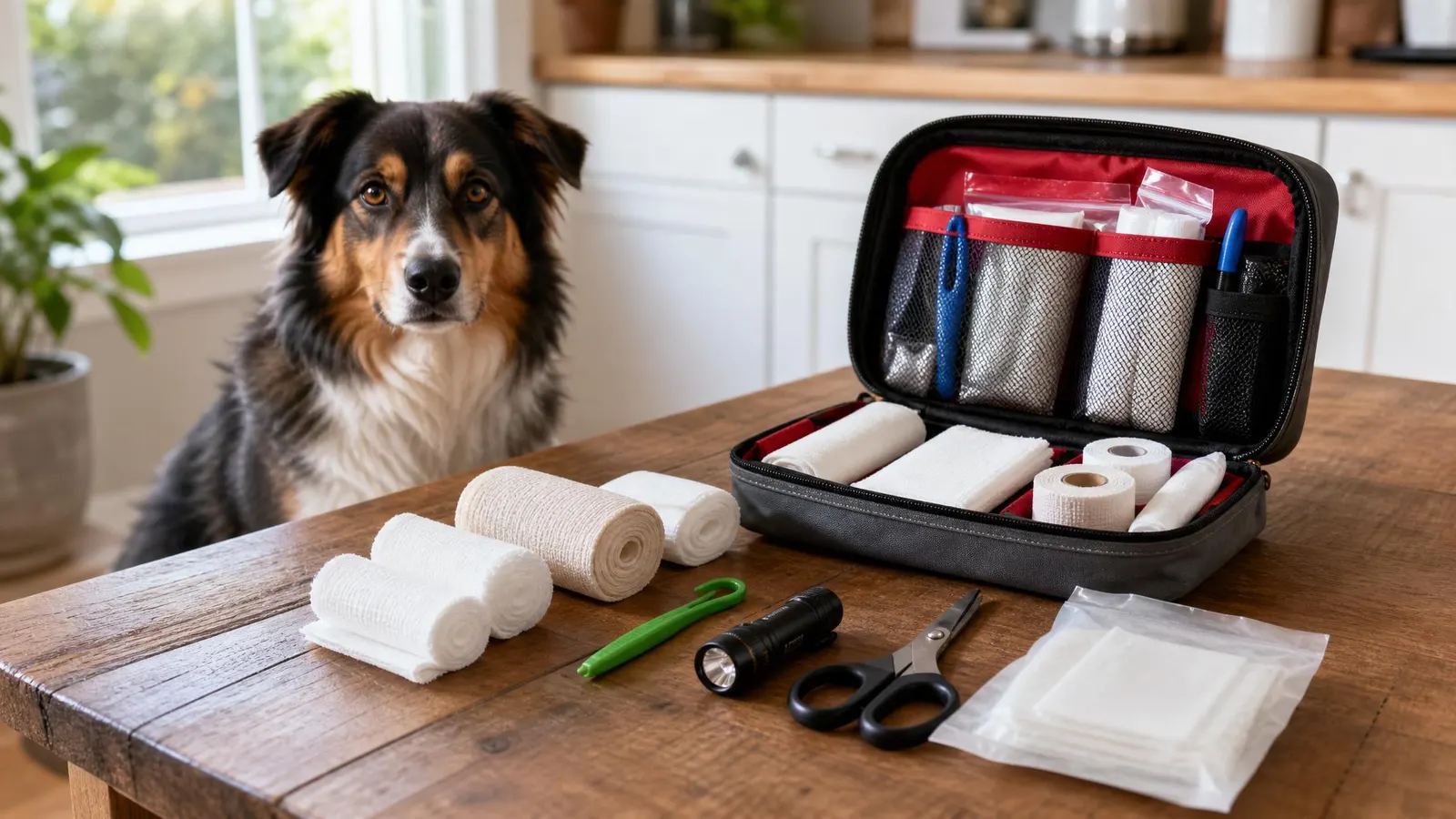
Pack sterile gauze pads, rolled gauze, nonstick pads, and self-adhering vet wrap. A pet first aid kit can be a good starter, but check it carefully because many premade kits are light on the items dog owners actually use most.
Add saline wound wash for flushing dirt from shallow scrapes. Skip hydrogen peroxide unless your veterinarian specifically tells you to use it, because it can irritate tissue and slow healing. Pet-safe antiseptic wipes are useful for cleaning around minor cuts, not deep punctures.
For paw issues, keep a small towel, blunt-tip scissors, and paw-safe balm nearby. If paws are a recurring problem, our guide to dog paw care at home covers wiping, checking pads, and spotting irritation early.
Add Tools for Ticks, Nails, and Temperature
A few small tools can make a big difference. Tweezers help remove splinters or debris. A dedicated tick remover tool is better for ticks because it helps lift the tick cleanly without squeezing the body.
Pack a digital rectal thermometer and label it for pet use only. A dog's normal temperature is usually about 101 to 102.5 degrees Fahrenheit. A reading that is very high, very low, or paired with collapse, pale gums, vomiting, or confusion means it is time to call a vet immediately.
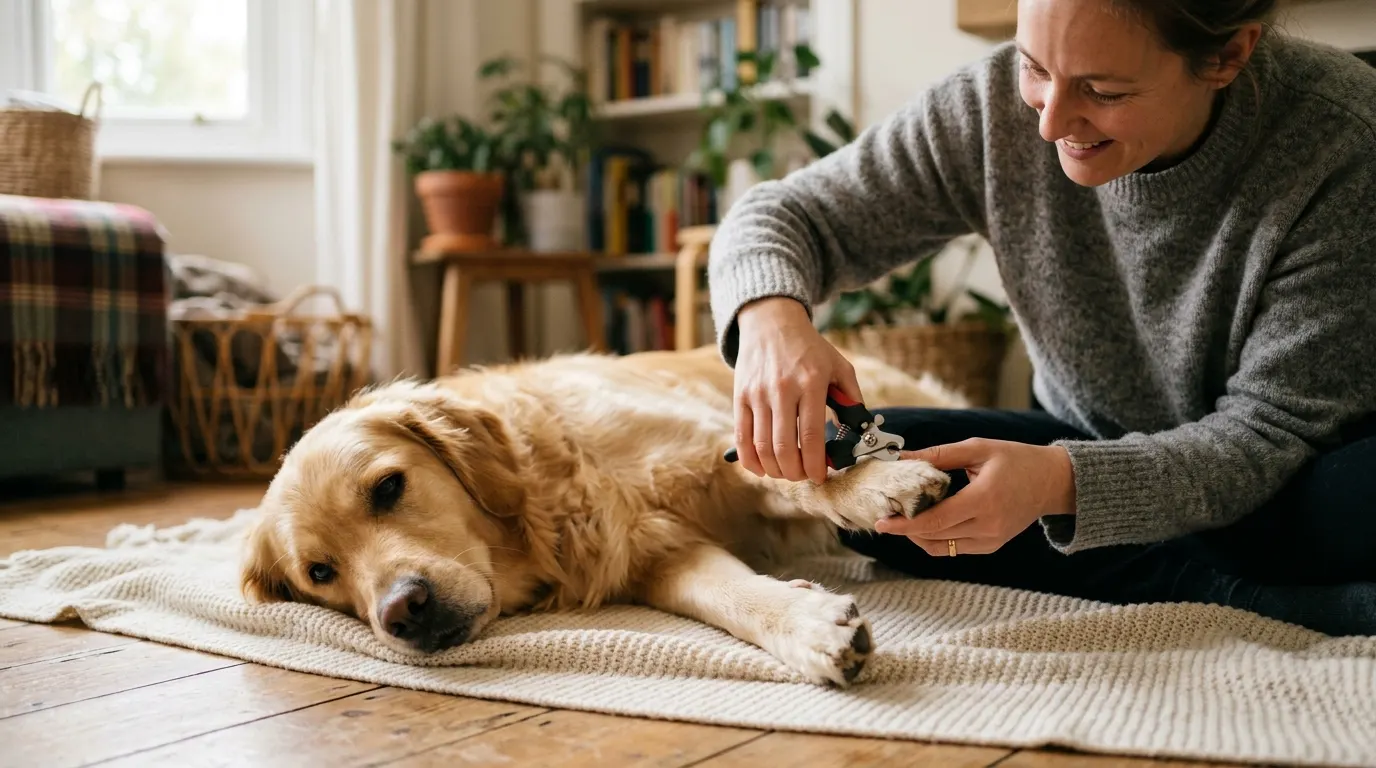
Styptic powder is worth having if your dog breaks a nail or you trim too close. Torn nails bleed dramatically, and a small jar of powder can stop the panic. If the nail is hanging, deeply split, or your dog will not let you touch the foot, cover it gently and get veterinary help.
Also include disposable gloves, a small flashlight, a soft muzzle, and a spare leash. Even sweet dogs may snap when they are scared or hurting. A muzzle is not punishment. It is a safety tool for short, stressful moments when you must examine or move your dog.
Pack Medications Only With a Vet Plan
This is where dog first aid gets risky. Human medications can be dangerous for dogs, and doses depend on weight, health history, and what else your dog takes. Do not keep random pain pills in the kit and guess later.
Instead, create a medication card with your dog's weight, current medications, allergies, microchip number, regular vet, emergency vet, and poison-control number. The American Veterinary Medical Association recommends pet owners prepare for emergencies and contact a veterinarian when serious symptoms appear.
Ask your vet what, if anything, belongs in your specific kit. Some dogs may need prescribed anti-nausea medication, allergy medication, or wound-care products. Others should avoid common over-the-counter options because of kidney, liver, heart, or stomach issues.
For travel, keep copies of vaccination records and a recent photo of your dog. If you are separated during a road trip or evacuation, those boring documents suddenly matter.
Keep the Kit Easy to Grab
The best dog first aid kit is the one you can find fast. Use a waterproof pouch or tackle-style box with clear compartments. A waterproof first aid bag keeps supplies cleaner in the car, garage, or hiking pack.
Store one kit at home and a smaller version in the car if your dog hikes, travels, or visits dog parks. Check expiration dates twice a year. Replace used gauze, dried-out wipes, missing gloves, and anything that smells strange or looks damaged.
Add a card on top that says what to do first: stay calm, leash or contain the dog, check breathing and bleeding, call the vet, and do not give medication without approval. When adrenaline hits, a simple checklist beats memory.
If your dog is nervous, practice handling before there is an emergency. Touch paws, lift lips, look in ears, and reward calmly. A basic dog training treat pouch helps you make those short handling sessions easier.
FAQ
What should every dog first aid kit include?
Every kit should include gauze, nonstick pads, self-adhering wrap, saline rinse, antiseptic wipes, tweezers, tick remover, styptic powder, gloves, a thermometer, a leash, emergency contacts, and your dog's medical details.
Can I use a human first aid kit for my dog?
You can use some supplies, such as gauze and gloves, but a human kit is not enough by itself. Dogs need pet-safe wound products, a tick tool, styptic powder, vet wrap, and clear instructions about which medications are off limits.
When should I skip first aid and go straight to the vet?
Go straight to a vet or emergency clinic for trouble breathing, collapse, seizures, major bleeding, suspected poisoning, deep punctures, severe pain, pale gums, heatstroke signs, broken bones, repeated vomiting, or any injury you cannot assess safely.
A dog first aid kit is not dramatic. It is a quiet backup plan. Build it once, keep it stocked, and you will be much better prepared for the messy little emergencies that come with loving a dog.