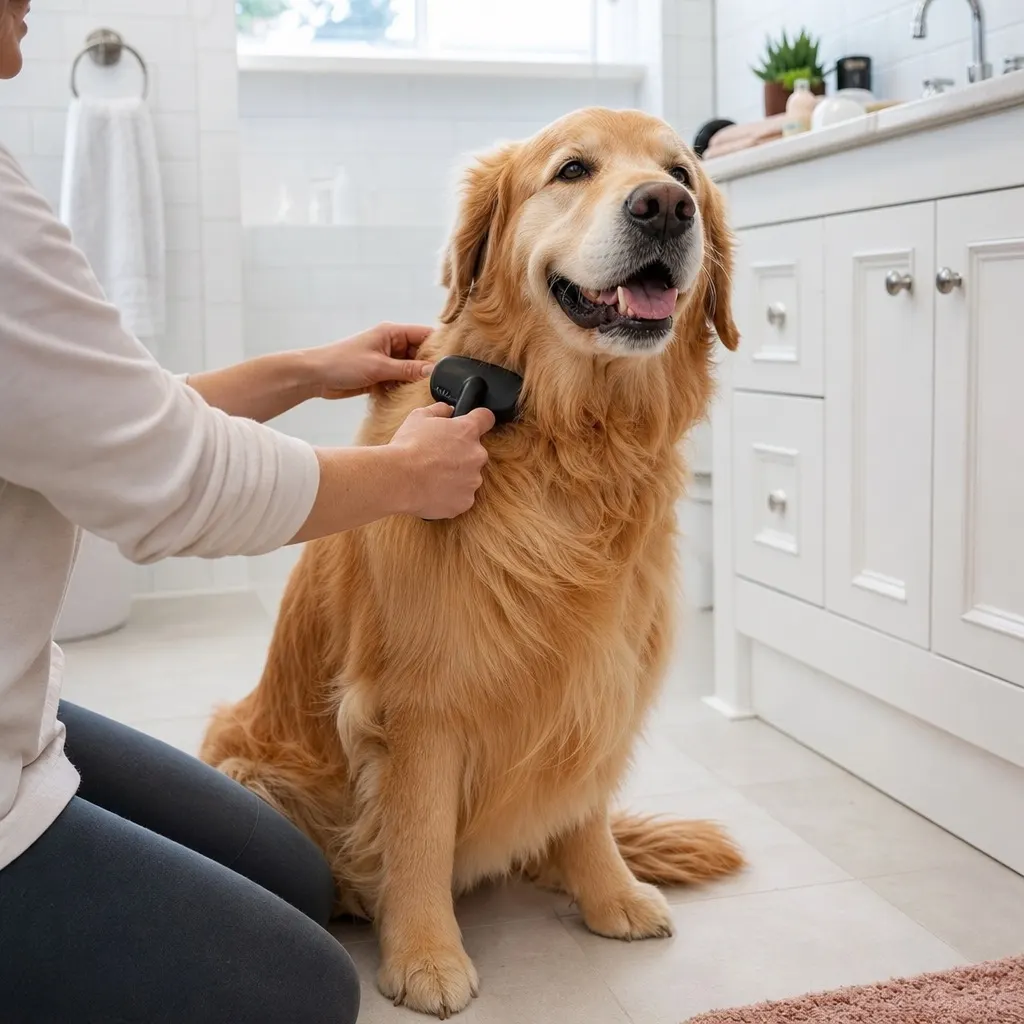
!A calm dog getting their ears gently cleaned at home
Most owners think about brushing and bathing but skip ears entirely — until the vet brings it up at the annual checkup, or something smells off. Dog ear cleaning at home is one of the simpler habits to build, but doing it wrong (or at the wrong frequency) can cause more problems than it solves.
TL;DR: Quick Answer
Clean your dog's ears only when they look dirty or waxy — not on a fixed schedule. Use a vet-recommended ear cleaner, flood the canal, massage, then let your dog shake. Never use cotton swabs inside the canal. Signs you need the vet instead: dark discharge, strong odor, redness, pawing at ears, or head shaking that won't stop.
This guide is for routine maintenance on healthy ears. If your dog already has symptoms, see your vet first — home cleaning on an infected ear can make things worse.
---
Why Ear Health Is Easy to Neglect
Ears are out of sight. Unlike matted fur or overgrown nails, a dirty ear canal doesn't announce itself visually until it's quite dirty — or infected. And unlike dental care, ear problems can escalate fast.
The anatomy matters here: dogs have an L-shaped ear canal, which makes it harder for debris to exit naturally. Moisture and wax can accumulate in the lower part of the canal, creating a warm, dark environment that bacteria and yeast find very comfortable.
Certain dogs are higher-risk. Floppy-eared breeds — Cocker Spaniels, Basset Hounds, Goldendoodles — trap moisture and reduce airflow. Dogs who swim frequently carry water into the canal. Dogs with lots of hair in the ear canal (common in poodle crosses) have reduced airflow by design. These dogs often need cleaning every 2–4 weeks; short-eared, active dogs might need it only a few times a year. For a broader look at caring for your senior dog, see our senior dog care essentials guide.
---
What You Actually Need
Keep it simple. Three items:
- A quality veterinary ear cleaner — the one product worth spending on. Look for EPIOTIC Advanced Ear Cleanser or similar alcohol-free, drying formulas. These break down wax, have mild antiseptic properties, and dry quickly. Avoid anything with hydrogen peroxide or alcohol — both irritate sensitive canal tissue.
- Cotton balls or gauze pads — for wiping the visible outer ear only. Never swabs inside the canal.
- Treats — high-value soft treats that your dog saves for special occasions. Ear cleaning should end with something your dog genuinely wants.
That's it. Skip ear powders unless your vet specifically recommends them.
---
The Cleaning Protocol: Step by Step
Step 1: Pick the right moment
Your dog should be calm, not post-walk amped up. Some dogs handle ear cleaning fine before dinner when they're naturally relaxed. Others do better right after a walk when their muscles are tired. Find the timing that works for your dog.
Step 2: Inspect first
Before adding any product, look at the outer ear and visible canal entrance. What you want to see: pale pink skin, minimal wax, no redness, no discharge, no smell. If anything looks inflamed, red, or smells significantly off, stop — this is a vet visit, not a home cleaning session.
Step 3: Flood the canal
Hold the ear flap up gently to straighten the canal. Insert the tip of the ear cleaner bottle just into the ear canal opening — don't push deep. Squeeze enough solution to visibly fill the canal. You'll hear a squishing sound when you get this right.
This surprises many owners: you're supposed to flood it. The ear cleaner works by dissolving debris and then floating it out. A small dab does nothing.
Step 4: Massage the base
Hold the ear flap up with one hand and use the other to firmly massage the base of the ear — the thick area where the ear meets the skull. Massage for 20–30 seconds. You should hear a wet, squelching sound. This loosens the debris inside the canal so it can travel upward.
Step 5: Let them shake
Step back and let your dog shake. This is the system working — the loosened debris and excess solution comes out with the shake. It will get on you if you're not ready. Keep a towel handy.
Step 6: Wipe what you can see
Use a cotton ball to gently wipe the visible parts of the outer ear and the ear canal entrance — anything you can see without inserting your finger. Remove the brown waxy material that has worked its way up. Do not probe deeper.
Repeat on the second ear.
Step 7: Treat generously
Finish every session with treats regardless of how it went. This is your dog's lasting impression of the experience. You're building a long-term association, not just cleaning ears.
---
How Often Is Right?
There is no universal schedule. Cleaning too often strips the natural protective layer of the ear canal and can cause irritation. The right cadence depends on your dog.
Start with a visual check once a week — it takes ten seconds. If you see wax buildup or any darkening, clean. If ears look clear and smell normal, leave them alone.For dogs prone to buildup (floppy ears, swimming dogs, dense ear hair), once every 2–3 weeks is a reasonable starting point. Adjust based on what you see.
---
Warning Signs That Mean the Vet, Not the Bottle
Home cleaning is for maintenance. These signs mean a vet visit, not a home fix:
- Dark brown or black discharge — could be ear mites or yeast infection
- Strong, sweet, or "yeasty" odor — yeast overgrowth requires antifungal treatment
- Redness or swelling — inflammation needs diagnosis before you add any product to it
- Head shaking or ear pawing that continues after cleaning — sign of ongoing pain or infection
- Crusting or scabbing on the inner ear flap — can signal mites or allergic reaction
The risk of cleaning an infected ear is real: you can push bacteria deeper into the canal, or the solution can sting inflamed tissue badly enough to cause a reaction. When in doubt, skip the home clean and call the vet. See our dog grooming at home guide for other grooming tasks where the same "vet first" logic applies.
---
Hair in the Ear Canal
Some dogs — particularly poodle crosses, schnauzers, and terriers — grow hair down into the ear canal. The conventional wisdom used to be to pluck it. Most veterinary dermatologists now recommend against routine plucking in dogs without ear problems, as plucking creates tiny abrasions that can invite bacteria.
If your dog has chronic ear infections and your vet identifies ear canal hair as a contributing factor, they may recommend plucking — ideally done by a groomer or vet who knows what they're doing. For most dogs, leave it.
---
FAQ
Can I use water instead of ear cleaner?
Not recommended. Plain water doesn't break down wax effectively and doesn't dry quickly — it can leave residual moisture in the canal, which is exactly the environment you're trying to avoid. Proper ear cleaner is worth the cost.
My dog hates having their ears touched. How do I start?
Same approach as dental care: build up in tiny steps over two weeks. Start by touching the outside of the ear for one second, treat. Then touching the ear flap, treat. Then folding the flap back briefly, treat. Don't add product until your dog is comfortable with the handling itself. For anxious dogs in particular, pairing with calming aids before grooming can take the edge off.
How do I know if my dog has ear mites vs. a yeast infection?
Both cause dark discharge and head shaking, but ear mites tend to produce a drier, more coffee-ground-like debris, while yeast produces a darker, wetter discharge with a distinctive smell. The only reliable way to tell is a vet's microscopy — and the treatments are completely different, so don't guess.
---
Dog ear cleaning at home is a short routine that prevents real problems from developing quietly. The technique matters more than frequency: flood, massage, shake, wipe. Let the anatomy do the work, stay out of the deep canal, and watch for warning signs. Keep it calm, keep the treats flowing, and your dog's ears stay healthy between vet visits.
🐾 Which ear cleaner does your vet recommend? Drop it in the comments — the community list grows every month.