Groomer appointments add up fast — $60 to $120 every 6–8 weeks is real money. Dog grooming at home is totally doable once you have the right routine and a few key tools. The best part? Most dogs become calmer and more comfortable over time when grooming happens at home, in a familiar environment, with someone they trust.
TL;DR: Quick Answer
Dog grooming at home means brushing before bathing, using dog-safe shampoo, drying thoroughly, trimming nails every 3–4 weeks, and cleaning ears monthly. Start slow, use treats generously, and keep sessions short until your dog associates grooming with good things.
Here's the full, no-stress routine broken into manageable steps.
What You Need Before You Start
You don't need a professional setup, but having the right tools makes everything easier — and safer.
The Essential Toolkit
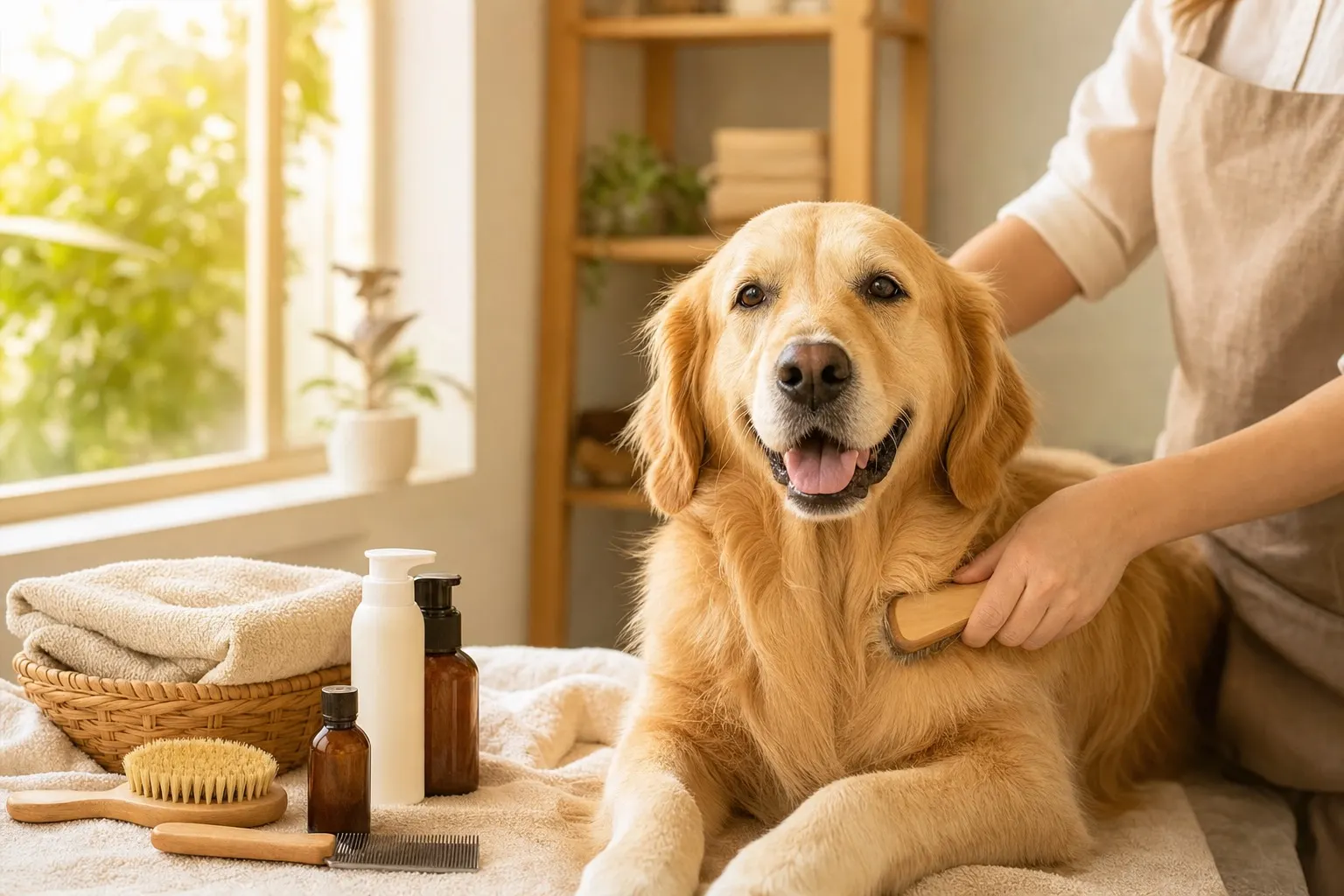
A good dog grooming kit covers most of the basics: a slicker brush, a metal comb, nail clippers, and scissors. Beyond that, pick up a dedicated dog shampoo — human shampoo disrupts the pH balance of a dog's skin and can cause dryness or irritation.
For nail trimming, a dog nail clipper with a safety guard is worth the few extra dollars, especially if you're new to it. Keep styptic powder nearby in case you nick the quick.
Set up in a bathroom or outside on a warm day. A non-slip mat in the tub or on the floor makes a big difference — dogs feel much more secure when they aren't sliding around.
Step 1: Brush First, Bathe Second
Always brush your dog before getting them wet. Water causes mats to tighten, making them nearly impossible to remove without cutting them out.
Brushing by Coat Type
Short-haired dogs like Beagles or Boxers only need a rubber curry brush or a soft bristle brush. Medium and long-haired breeds need a slicker brush to work through the top coat and a metal comb to check for mats underneath.
Start at the rear and work toward the head. Section the coat if it's thick and work in the direction of hair growth. Be gentle around sensitive areas — the belly, armpits, and behind the ears mat most easily. A good deshedding brush works wonders for double-coated breeds like Huskies or Labs during shedding season.
Brush sessions should end with treats and praise. This builds positive associations before the more stressful parts of grooming begin.
Step 2: Bath Time Done Right
Most dogs only need a bath every 4–6 weeks, unless they've rolled in something or have a skin condition requiring more frequent washing. Over-bathing strips the natural oils from their coat.
Getting the Bath Right
Wet your dog thoroughly with lukewarm water — never hot. Apply a generous amount of dog-safe shampoo and work it in from the neck back, avoiding the eyes and ears. Use a washcloth for the face.
Rinse completely. Shampoo residue left in the coat causes itching and dull fur. When you think you've rinsed enough, rinse again for 30 more seconds.
Towel dry first, then use a hairdryer on a low, cool setting if your dog will tolerate it. Keep the dryer moving and never hold it too close to the skin. Dogs with thick double coats especially need to be dried all the way down to the skin to prevent hot spots.
According to the American Kennel Club, having a helper to hold your dog steady can make bath time significantly easier — especially for anxious or large dogs.
Step 3: Nail Trimming Without the Drama
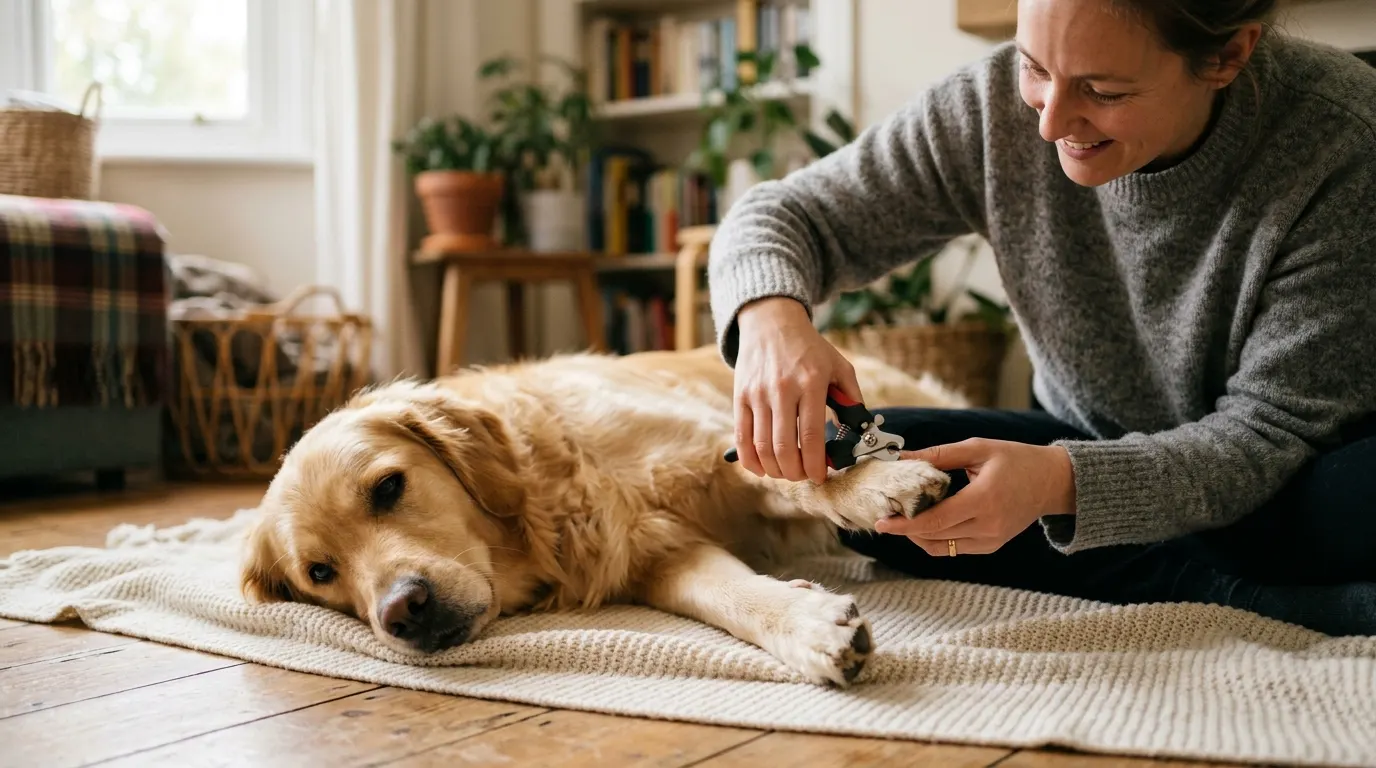
This is the step most dog owners dread. The trick is frequency — nails trimmed every 3–4 weeks stay at a manageable length, which means each trim removes less nail and carries less risk of hitting the quick.
How to Clip Safely
Hold each paw firmly and clip small amounts at a time. On light-colored nails you can see the pink quick — stay well short of it. On dark nails, look at the cut end: when the cross-section shows a small dark oval in the center, you're close to the quick and should stop.
If your dog is very resistant, try touching and handling the paws daily for a week before you attempt a clip. Pairing paw handling with high-value treats makes a real difference.
Step 4: Ears, Eyes, and the Finishing Touches
Check ears once a week. A healthy ear should smell neutral and look light pink inside. Wipe the outer ear canal gently with a cotton ball moistened with dog ear cleaner — never insert anything into the ear canal.
Eyes and Face
Wipe discharge from the corners of the eyes with a damp cloth. Dogs with facial folds (like Bulldogs or Pugs) need daily fold cleaning to prevent yeast infections.
Trim any fur that falls over the eyes with blunt-tipped scissors. If your dog has heavy face fur, a professional trim every couple of months keeps things manageable between at-home sessions.
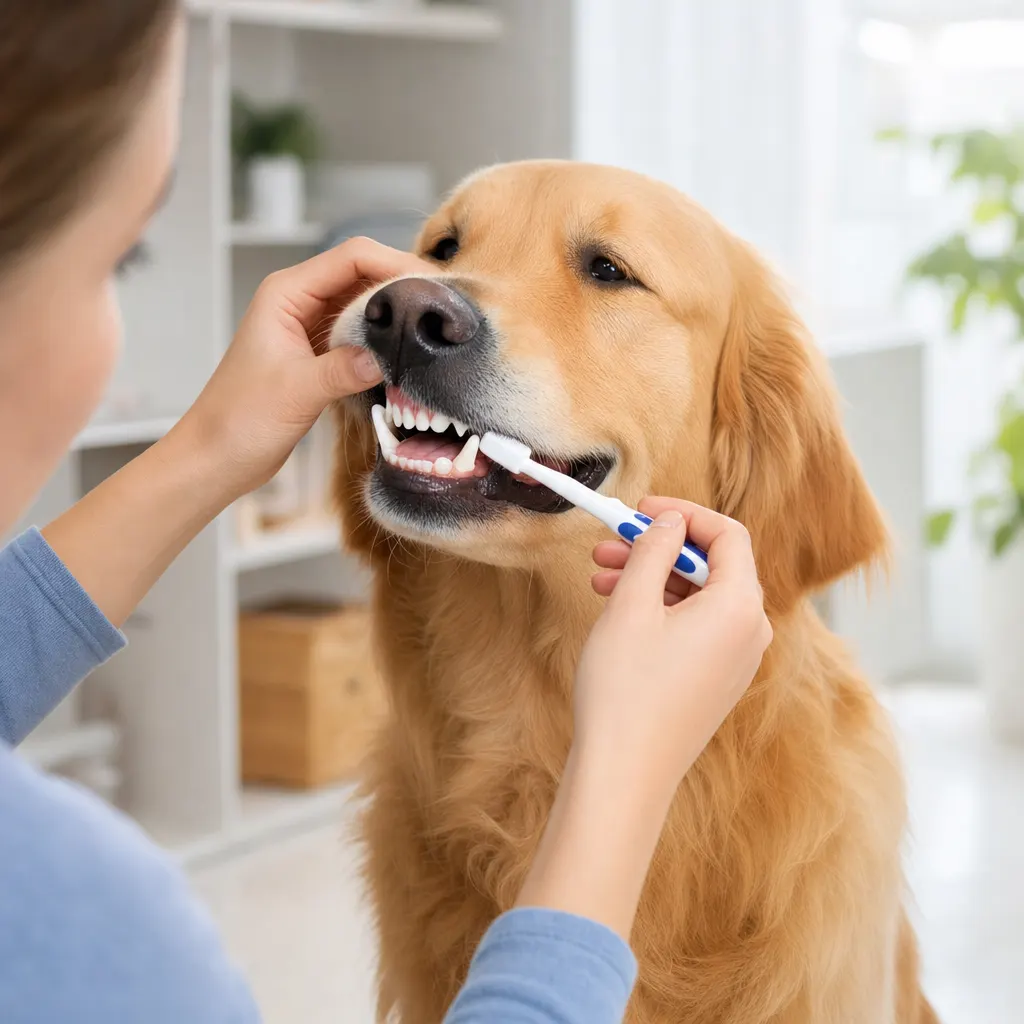
For dogs who also need dental care between grooming sessions, check out our complete guide to dog dental care — it pairs well with this routine.
FAQ
How often should I groom my dog at home?
Brush short-haired dogs weekly and long-haired dogs every 2–3 days. Bathe every 4–6 weeks, trim nails every 3–4 weeks, and clean ears monthly — or anytime they look or smell off.
What if my dog hates being groomed?
Go slowly and use high-value treats at every step. Keep initial sessions to just 2–3 minutes and build up over time. If anxiety is severe, consult your vet — sometimes a mild calming supplement or anxiolytic can help during the adjustment period.
Can I use human shampoo on my dog in a pinch?
It's best to avoid it. Human shampoo is formulated for human skin pH (around 5.5) while dogs need a neutral pH of around 7.0–7.5. Using human products regularly can lead to dry, flaky skin, dull coat, and increased susceptibility to infection. Keep a bottle of dog shampoo on hand so you're never caught without it.