Your dog's dental health is a cornerstone of their overall well-being, yet it's an area that's often overlooked. Poor oral hygiene can lead to painful gum disease, tooth loss, and even impact their heart and kidneys. But don't worry—starting a dental care routine is easier than you think.
This post contains affiliate links. We may earn a small commission at no extra cost to you.TL;DR: Quick Answers for a Sparkling Smile
For busy dog parents, here's the bottom line: The single most effective thing you can do for your dog's dental health is to brush their teeth regularly with a dog-specific toothpaste. Supplement this with dental chews and regular vet check-ups. This combination is the gold standard for preventing painful and costly dental issues down the road.
This guide will walk you through the essentials of dog dental care, from the right tools to the best techniques.
Getting Started: Brushing Your Dog's Teeth
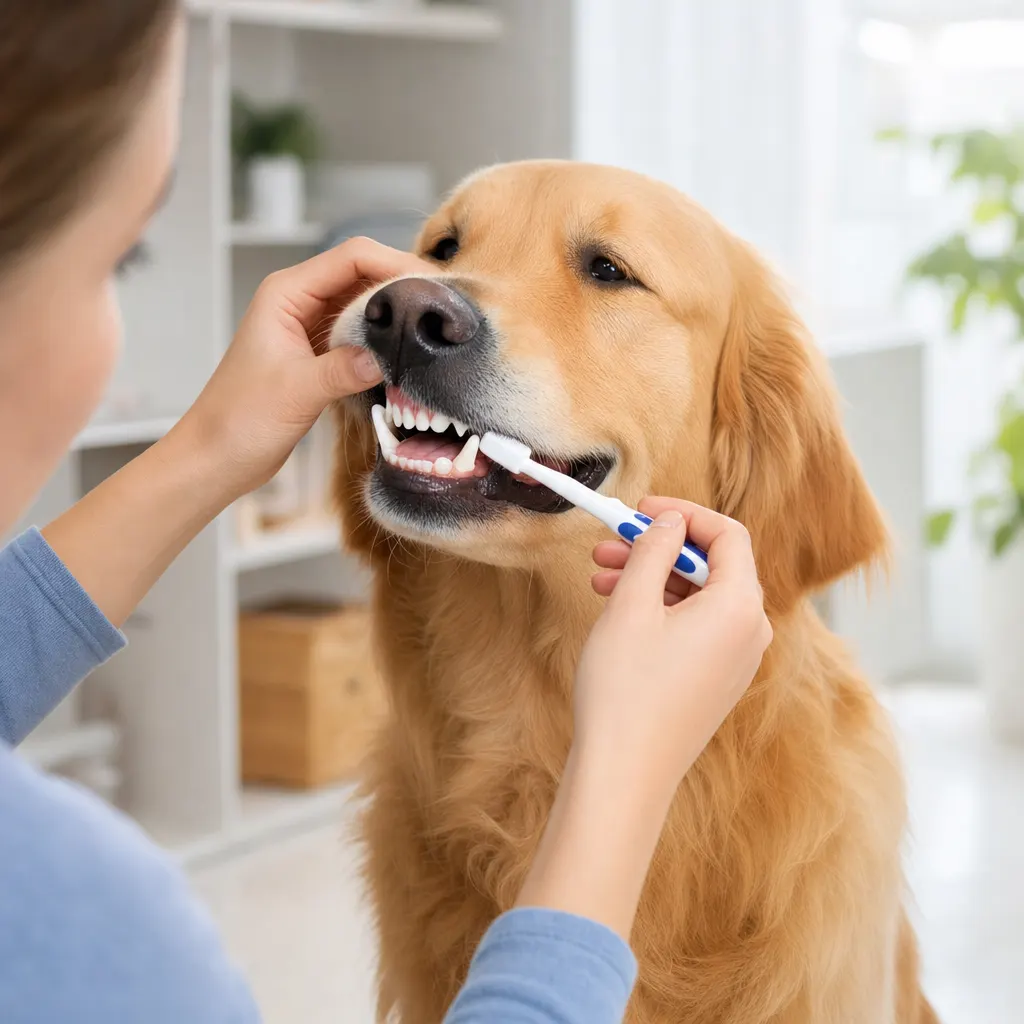
The idea of brushing your dog's teeth can be intimidating, but with patience and the right approach, it can become a positive bonding experience.
- The Right Tools: You'll need a toothbrush designed for dogs and a pet-safe toothpaste. Human toothpaste is toxic to dogs. For beginners, a finger brush can be less intimidating for your pup. We recommend the Virbac C.E.T. Pet Toothbrush, which has a dual-head for all mouth sizes.
- Introduce it Slowly: Start by letting your dog lick the toothpaste off your finger. Then, introduce the brush by letting them sniff and lick it. Gradually move to touching the brush to their teeth for a few seconds.
- Make it Positive: Keep sessions short and praise your dog enthusiastically. A small treat after a successful session can build a positive association.
Beyond the Brush: Other Dental Health Boosters
Brushing is king, but other products can supplement your efforts and help maintain oral hygiene between brushing sessions.
Dental Chews and Treats
Dental chews are designed to scrape away plaque and tartar as your dog chews. They're a great way to support dental health while giving your dog a satisfying treat.
- What to Look For: Look for products with the Veterinary Oral Health Council (VOHC) seal of approval. This means they've been proven to reduce plaque or tartar.
- Our Pick: Greenies Original Dental Chews are a VOHC-accepted favorite that dogs love.
Water Additives and Food
Certain dog foods are formulated with a kibble texture that helps scrub teeth. There are also additives you can put in your dog's water bowl to help reduce bacteria.
- How They Work: These products work passively to reduce the buildup of plaque in the mouth. They are not a substitute for brushing but can be a helpful addition to your routine. For more on canine health, check out the resources at the American Veterinary Medical Association (AVMA).
We also have a great article on the best dog food bowls for 2026 that can help make mealtime cleaner and healthier.