Most "how to brush your dog's teeth" advice assumes you have a saintly Labrador who lies still for a spa treatment. Most dogs don't, and most owners give up by week two. This post is a calmer, slower protocol for dog dental care at home that meets your dog where they actually are — wiggly, suspicious, and food-motivated.
TL;DR: Quick Answer
Skip the wrestle. Build dog dental care up over 14 days: start with a finger-rub, add flavor, add toothpaste, then a brush, then full-mouth coverage. Brushing 3–4 times a week beats a heroic Sunday-only session. Pair with VOHC-approved chews and a water additive, and most healthy dogs go years between vet cleanings instead of every 12 months.
This is for owners of healthy adult dogs. If your dog already has visible tartar buildup, red gums, or smelly breath that doesn't improve in two weeks of at-home care, see your vet — at-home protocols are for maintenance, not for reversing established disease.
Why Dental Care Matters More Than Most Owners Realize
By age three, a majority of dogs show signs of periodontal disease. Bacteria from inflamed gums circulate through the body and have been linked to heart, kidney, and liver issues. A senior dog with bad teeth is a senior dog with a worse prognosis on a lot of fronts. See our senior dog care essentials for the broader context.
The good news: regular at-home dental care genuinely works. A 2018 review in the Journal of Veterinary Dentistry found that daily brushing reduces plaque accumulation by up to 80% compared to no brushing. Three-times-weekly brushing captures about 60% of that benefit. Anything is better than nothing, and consistency beats intensity.
The 14-Day Calm Introduction Protocol
Don't start with a toothbrush. Start with the part your dog can already tolerate: your hand.
Days 1–3: Lip lift, no contact
Once a day, when your dog is calm (not after walks, not during play), lift their upper lip gently and just look at their teeth for 3 seconds. Treat. That's it. You are teaching the lip-lift = good thing association.
Days 4–6: Finger rub, no flavor
Same setup, but use your bare finger to gently rub one or two teeth on the outside (the part that faces the cheek). Three seconds. Treat. Stop while they're still calm.
Days 7–9: Add flavor
Now use a smear of dog-safe enzymatic toothpaste on your finger. Never human toothpaste — xylitol and fluoride are toxic to dogs. Most dogs actively enjoy the chicken or beef flavored versions. Five seconds, then treat.
Days 10–12: Introduce the brush
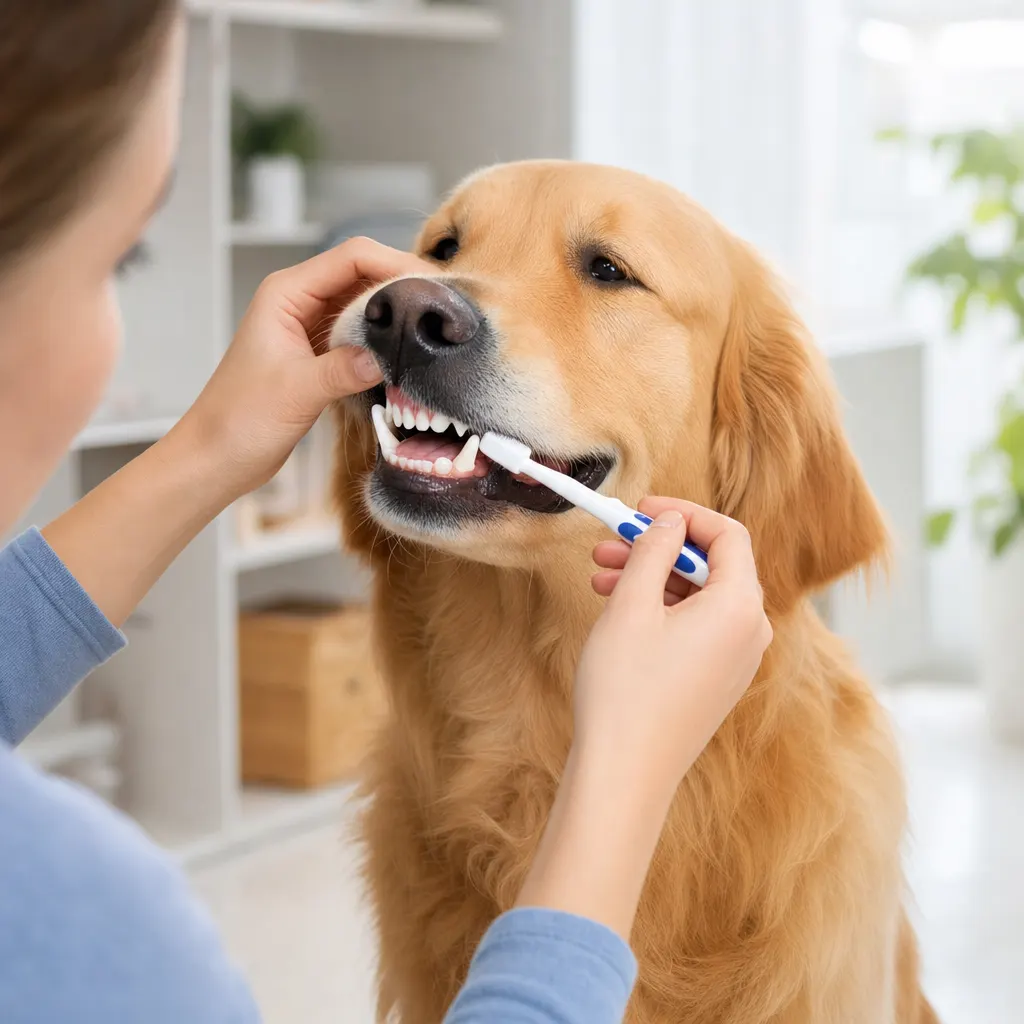
Switch from finger to brush — a dog-specific soft-bristled toothbrush or a finger brush, whichever your dog tolerates better. Start with just the canines (the long fangs) — they're the easiest to reach. Five to ten seconds total.
Days 13–14: Full-mouth pass
By now your dog should be calm enough that you can do a quick 30-second pass over the outside surfaces of all the teeth. You don't need to brush the inner surfaces — the tongue does a decent job there, and the outer surfaces are where 90% of the plaque actually lives.
After Day 14: The Maintenance Cadence
Aim for 3–4 brushings per week, not seven. The marginal value of daily over four-times-weekly is real but small, and the risk of you quitting from burnout is large. Pick days that align with your dog's calmest moments — for many people, that's right before bedtime when the dog is already winding down.
What to do when it goes sideways
It will. Your dog will move suddenly, you'll nick a gum, they'll back away. Don't escalate. Step back to the previous protocol level for 2-3 days and rebuild. Forcing the brush after a bad session is the single fastest way to lose months of progress.
The Supporting Cast: Chews, Water Additives, and Diet
Brushing is the foundation. These add real-but-smaller benefits.
VOHC-approved dental chews
The Veterinary Oral Health Council maintains a published list of products clinically shown to reduce plaque or tartar. The list is short and worth bookmarking. Some perennial members:
- Greenies Dental Treats. The most widely available VOHC-approved chew. Daily-use sizes for small/medium/large dogs.
- OraVet Dental Chews. Add a sealant layer; often used as the next step up.
- Virbac C.E.T. VeggieDent. Plant-based for dogs sensitive to common chew ingredients.
If a product isn't on the VOHC list, the dental benefit is unproven, regardless of the marketing. Note that chews are calorie-dense — adjust meal sizes if you use them daily. For training treats see our training treats guide.
Water additives
A reasonable adjunct, not a replacement. Look for a chlorhexidine or zinc-based water additive — these have actual evidence behind them. Skip the "enzyme-based" formulas with no published data.
Diet
Kibble vs. wet food matters less than most people think. Specific dental-formula kibbles (Hill's t/d, Royal Canin Dental) have larger, harder pieces that show modest plaque reduction. Good for dogs prone to dental issues; not a magic bullet.
What I'd skip
- Anesthesia-free dental cleanings. Cosmetic at best, potentially harmful at worst — they don't address subgingival plaque, where the real disease lives. Almost every reputable veterinary dentistry organization advises against them.
- Hard chew toys. Antlers, hooves, hard nylon bones, and ice cubes are the leading cause of fractured teeth. If you can't easily bend or dent it with a fingernail, it's too hard.
Tools You Actually Need
The shopping list is short:
- One dog toothbrush or finger brush (~$5)
- One tube of enzymatic dog toothpaste (~$10)
- A bag of VOHC-approved chews (~$15-25/month)
- Optional: water additive (~$15, lasts 2-3 months)
Total annual cost: roughly $200-300. Compare to one or two professional cleanings at $400-800 each with anesthesia. The math is on the side of consistent at-home care.
What to Look For Between Brushings
A weekly 10-second check during a calm moment. Pay attention to:
- Breath. Slight "dog breath" is normal. Significantly worse-than-baseline smell is a real signal.
- Gum color. Healthy gums are pink, not bright red or pale.
- Visible tartar. A thin yellow film at the gum line is early plaque — at-home care can manage this. Hard brown deposits mean it's time for a professional cleaning.
- Reluctance to chew on one side. A subtle but important sign of a painful tooth.
For other daily rituals with your dog that make care easier, the 10-second check fits well into an existing routine.
FAQ
Q: My dog absolutely will not let me touch their mouth. What do I do?Start even smaller than the protocol above. A week of just treats while your hand is near their face. Two weeks of touching the side of their muzzle. Some dogs need 6-8 weeks instead of 14 days. Patience compounds.
Q: How often should my dog get a professional cleaning?With consistent home care, many dogs go 2-3+ years between cleanings. Without home care, annual cleanings are common. Your vet's judgment on your specific dog beats any general schedule.
Q: Can I use baking soda or coconut oil instead of dog toothpaste?Baking soda is mildly abrasive and not ideal long-term. Coconut oil is fine but does little. Dog-specific enzymatic toothpaste actually has measured antibacterial effects — it's $10, just use it.
Q: My puppy is teething. Should I brush their teeth?Skip active brushing during heavy teething (3-6 months). Use the time to practice the lip-lift and finger-rub steps so they're comfortable with mouth handling by the time their adult teeth are in.
Q: What about toy breeds — they seem to have worse teeth.They do. Small mouths crowd teeth and accumulate plaque faster. The same protocol applies, but the cadence matters more — toy breeds benefit most from genuinely consistent 4x/week brushing.
---
Dog dental care at home is one of those small habits that quietly extends a dog's healthy years. The trick isn't motivation; it's pacing. Build it up in 14 calm days, brush 3-4 times a week, support with VOHC chews, and your dog's teeth will outlast most owners' expectations.