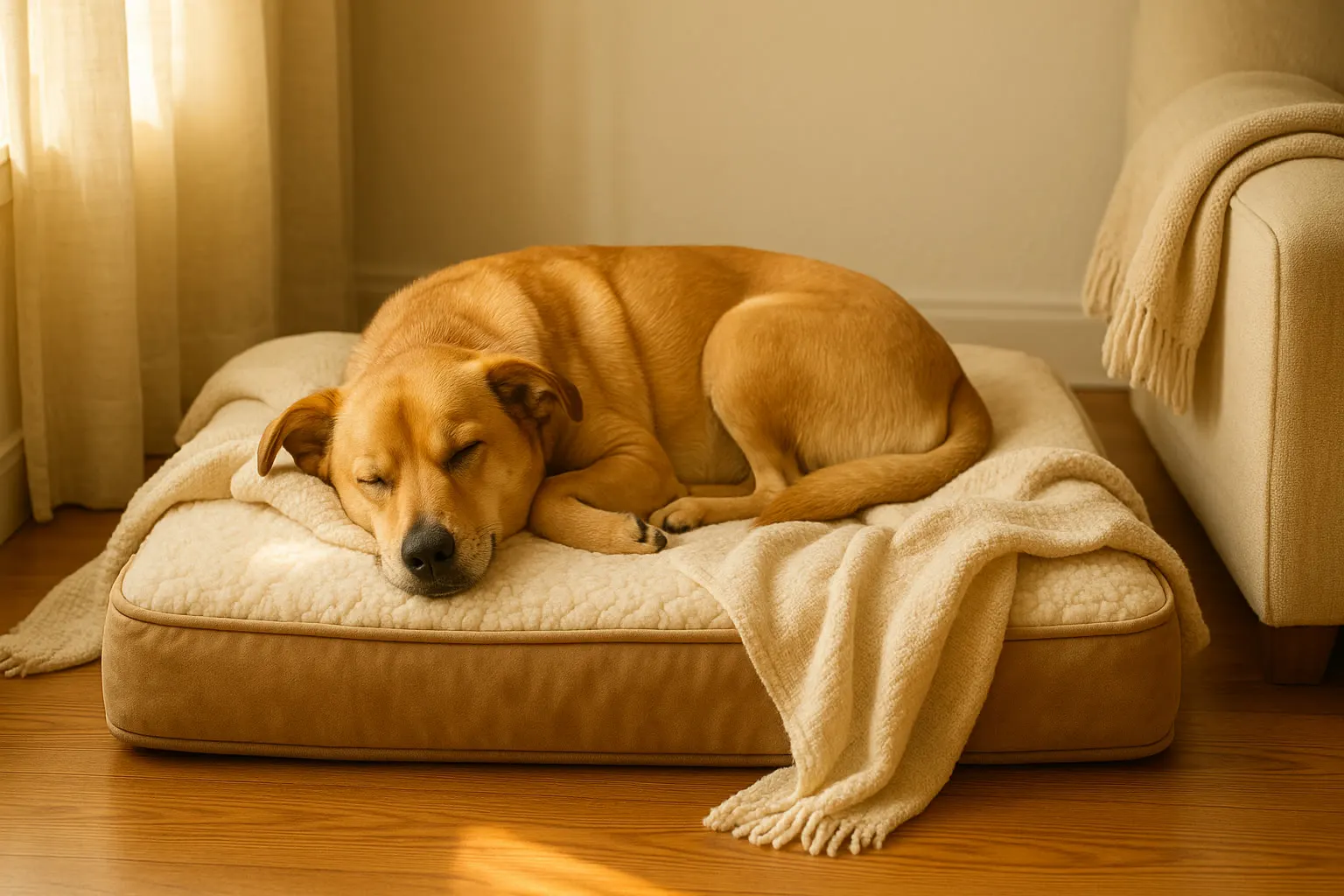
!The right bed makes rest actually restful
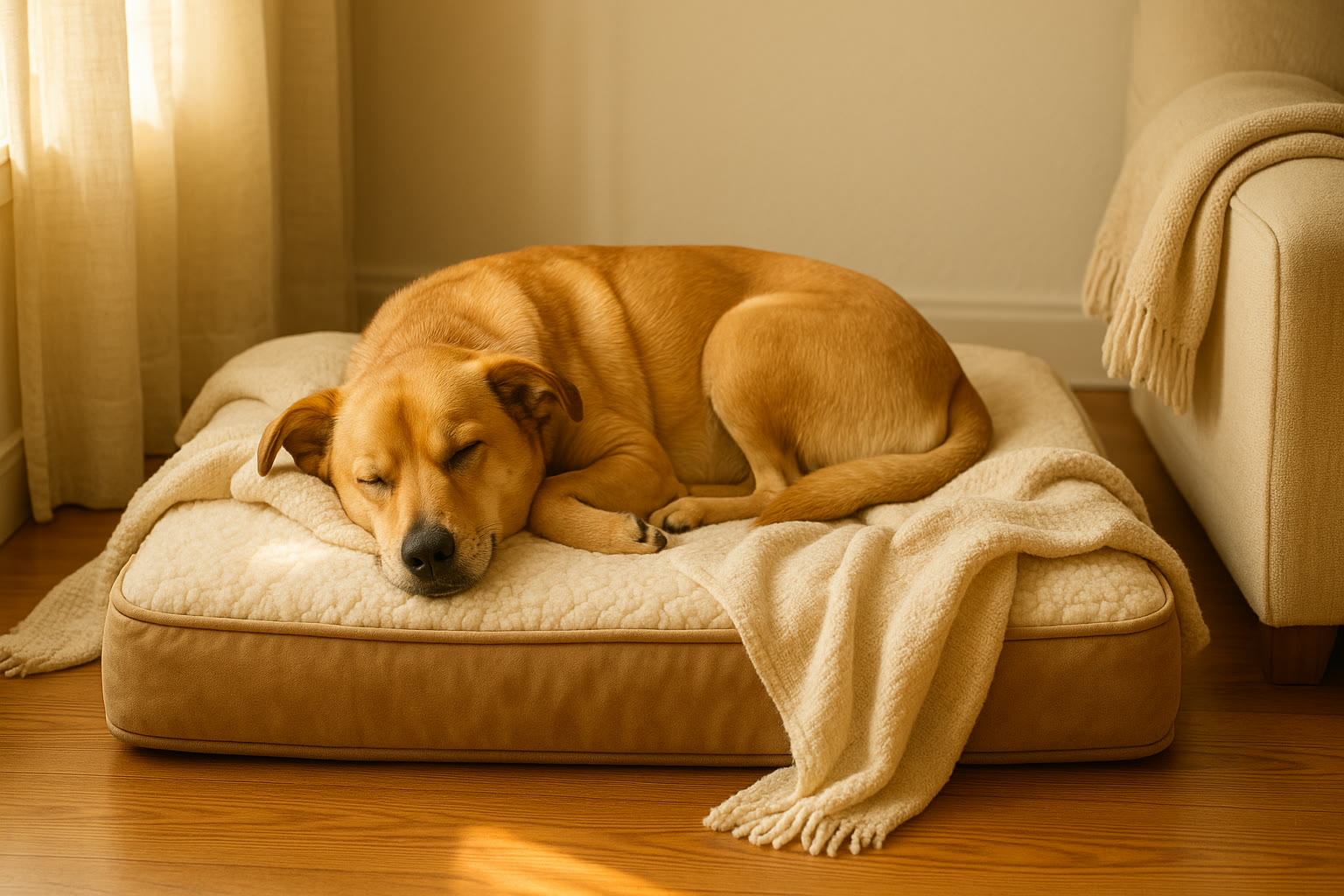
Dogs spend roughly half their lives sleeping. That's not hyperbole — it's literally 12+ hours a day for adult dogs. If they're spending that much time on a bed, it better be a good one. The right bed changes everything: better sleep, better joint support, better behavior, better health over time.
But "best dog bed" isn't a universal answer. What works for a senior Labrador is different from what works for a young Border Collie in an Arizona summer. Let's break down every option so you can choose what actually fits your dog's life.
Orthopedic Memory Foam: The Joint Support Standard
Orthopedic beds with memory foam are engineered specifically to support joints and reduce pressure points. The foam conforms to your dog's body, distributing weight evenly and taking stress off hips, elbows, shoulders, and spine.
Who benefits most: Older dogs, large breeds prone to joint issues, dogs with arthritis, any dog experiencing stiffness or soreness after activity.The science checks out: memory foam reduces pressure compared to standard cushioning, which means less joint stress and potentially better sleep quality. Owners of senior dogs report noticeable improvement in morning stiffness and overall mobility after switching to orthopedic beds.
Orthopedic memory foam dog beds come at various price points. Quality varies wildly — cheap knockoffs use thin foam that compresses quickly, while good ones use substantial memory foam that lasts years. Invest in thickness and density over size; a smaller bed with quality foam beats a huge bed with mediocre cushioning.The trade-off: memory foam retains heat (which some dogs love in winter, hate in summer) and the covers often aren't washable (though you can get fitted mattress covers separately).
Bolster Beds: Sides for Security
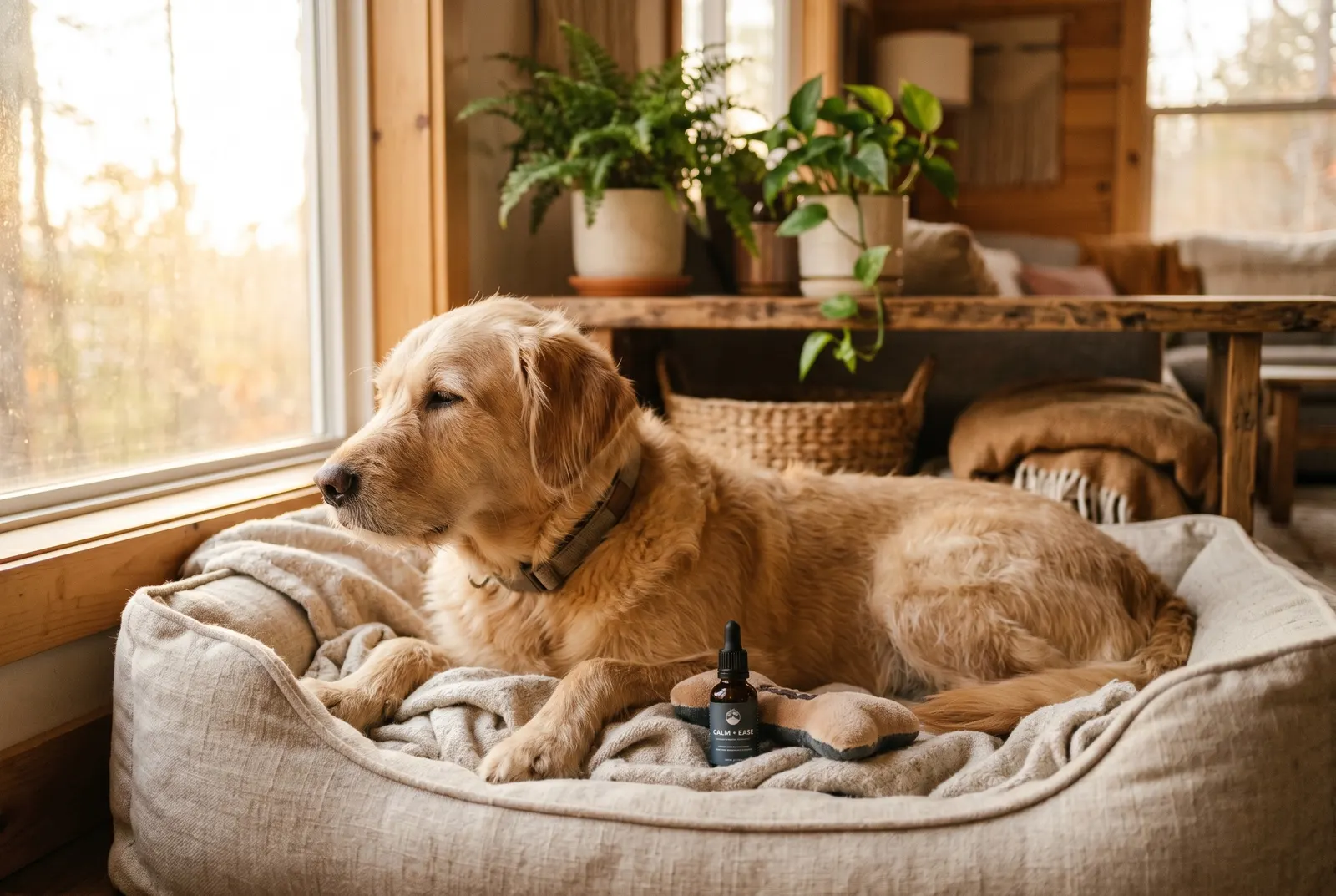
Bolster beds have raised sides all around, creating a nest-like feeling. Dogs find the containment psychologically calming, and the raised edges give them somewhere to rest their head.
Who benefits most: Anxious dogs, small dogs, dogs who like cocooning, puppies adjusting to new homes.There's something about those sides that makes dogs feel safer. It's like being hugged while they sleep. You see dogs sink into bolster beds with visible relief — they get to relax, they feel contained, they sleep better.
The practical upside: bolster beds help contain shedding and keep bedding off your floors. The frame protects the main cushioning from wear. They're available in tons of styles and fabrics.
The downside: dogs with hip or mobility issues sometimes struggle to get in and out, and if your dog likes to sprawl, the sides feel limiting.
Bolster dog beds range from basic to fancy. For anxiety-prone dogs, even a basic one makes a difference. If you've got a dog that's struggling with stress, this is worth trying.Elevated Cots: The Hot-Weather Secret Weapon
Elevated cots are basically fabric stretched over a metal frame, with the dog suspended above the ground. Zero insulation, maximum air flow.
Who benefits most: Dogs living in hot climates, heavy dogs that overheat easily, dogs with mobility issues (no low bending to get in/out), dogs in homes with poor air conditioning.On a hot day, an elevated cot changes everything. Your dog gets air flow from all sides, can't burrow into hot padding, and stays significantly cooler than they would on any ground-level bed. If you're in Arizona, Florida, or anywhere hot, this is legitimately a game-changer.
The secondary benefit: dogs with joint issues actually find elevated cots easier to navigate. No low cushioning to sink into, just step up and settle. Much easier on hips and knees.
The downside: they're terrible for cold climates (no insulation, no warmth), they're noisier when the dog moves, and some dogs feel less secure on them than on cushioned beds.
Elevated dog cots are affordable and utilitarian. If you need the cooling function, get a quality one — the fabric will last longer and the frame will be more stable.Calming/Donut Beds: Anxiety and Sleep
Donut or calming beds are circular with raised sides all around, creating a cozy, enclosed shape. The circular design and enclosed feeling appeal to dogs' nesting instincts.
Who benefits most: Anxious dogs, dogs prone to stress, dogs adjusting to new homes, dogs that like curling up to sleep.These beds work because they provide both the security of bolster sides and the psychological comfort of circular containment. Dogs literally curl up in them and disappear. The effect on anxiety is noticeable — you see tangible relaxation and better sleep.
The upside: they're great for anxious or rescue dogs. The downside is they don't work for dogs that sprawl out, and they're harder to keep clean (lots of fabric creases where dirt hides).
Calming/donut dog beds often include soothing features like special fabrics or shapes engineered for anxiety. Some are gimmicky, but the concept itself is solid.Washable Covers and Waterproof Liners: Practical Reality
Here's something people don't think about until it's too late: dogs are messy. Paws track mud, accidents happen, shedding is real.
When choosing a bed, prioritize removable, washable covers. Not beds where you have to remove an entire cover that takes 20 minutes — covers that unzip and come off in seconds.
Waterproof dog bed liners go under the cover and protect the main cushioning from accidents, spills, and moisture. If you have an older dog or a dog with any health issues, a waterproof liner is non-negotiable. It extends the bed's life by years.For your sanity and the bed's longevity, get:
- Removable, machine-washable cover
- Waterproof liner underneath
- A backup cover if possible (so the bed stays in rotation while one cover washes)
This system keeps your bed fresh and functional for years instead of months.
Size Matters, but Not in the Way You Think
Most people size dog beds by their dog's size. But that's not actually the right metric.
The real calculation: Your dog should be able to stretch out fully, curl up, and change positions without feeling cramped. A bed that barely fits your dog is uncomfortable. A bed that's massive and empty feels less cozy.For small dogs: look for beds that let them stretch end-to-end with a bit of room.
For large dogs: medium-large beds are often better than extra-large. A large dog in a massive bed often doesn't feel contained, so they don't settle as well.
The rule: measure your dog stretched out, add 12 inches in both directions, and that's roughly where you want to be.
Breed-Specific Considerations
Double-coated or heavy-shedding breeds: Hot sleepers. They often do better on elevated cots or thin beds rather than thick memory foam that retains body heat. Small breeds: Bolster or donut beds provide security. They feel safer contained than sprawled out on a big open bed. Giant breeds (Great Danes, Mastiffs): Orthopedic beds are nearly essential for joint support. Elevated cots work well for cooling. Avoid beds that are too plush — they need proper support, not sinking comfort. High-energy young dogs: They don't care much about fancy beds yet. They want something durable and washable. Save orthopedic beds for when they slow down.The Budget Reality
You don't have to spend $300 on a bed. You don't have to spend $50 either. Here's where the money actually matters:
- Memory foam quality: Cheap foam compresses in weeks. Good foam lasts years.
- Washable covers: This saves money in the long run by extending bed life.
- Waterproof liners: Prevents replacing the whole bed after one accident.
- Size accuracy: Get the right size. Too big or too small means your dog won't use it, and it's wasted money.
A mid-range orthopedic bed with a good cover ($80-120) beats a fancy expensive bed with a non-removable cover every single time.
The Bottom Line
Your dog's bed is an investment in their comfort, health, and longevity. The right bed means better sleep, less joint stress, better behavior, and a happier dog.Match the style to your dog's age and sleeping personality. Prioritize washable covers and waterproof liners. Don't go for size as a substitute for actual comfort. Your dog will spend half their life on this thing — making it count is genuinely one of the smartest investments you can make.
🐾 What's your dog's preferred sleeping position, and does their current bed support it?