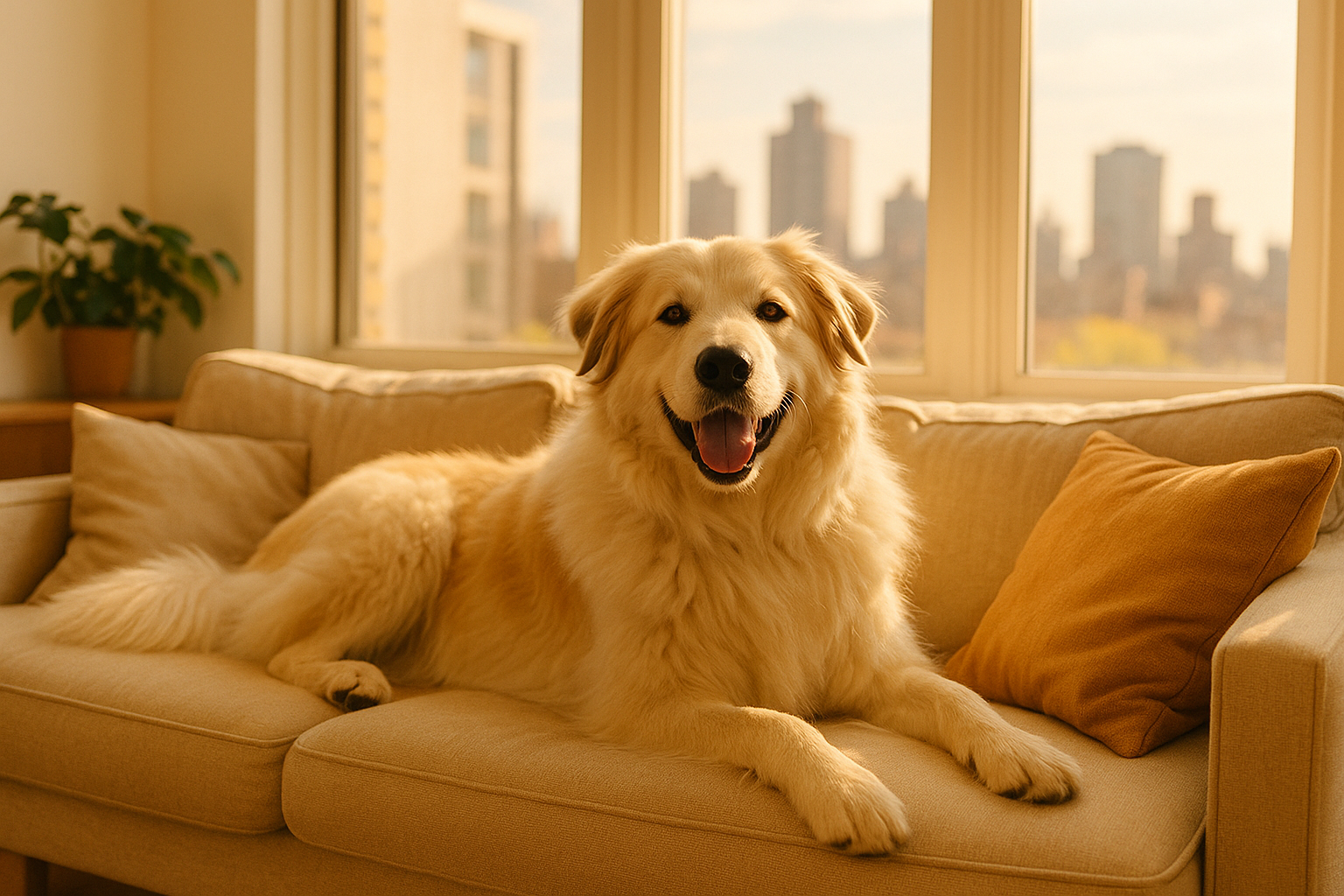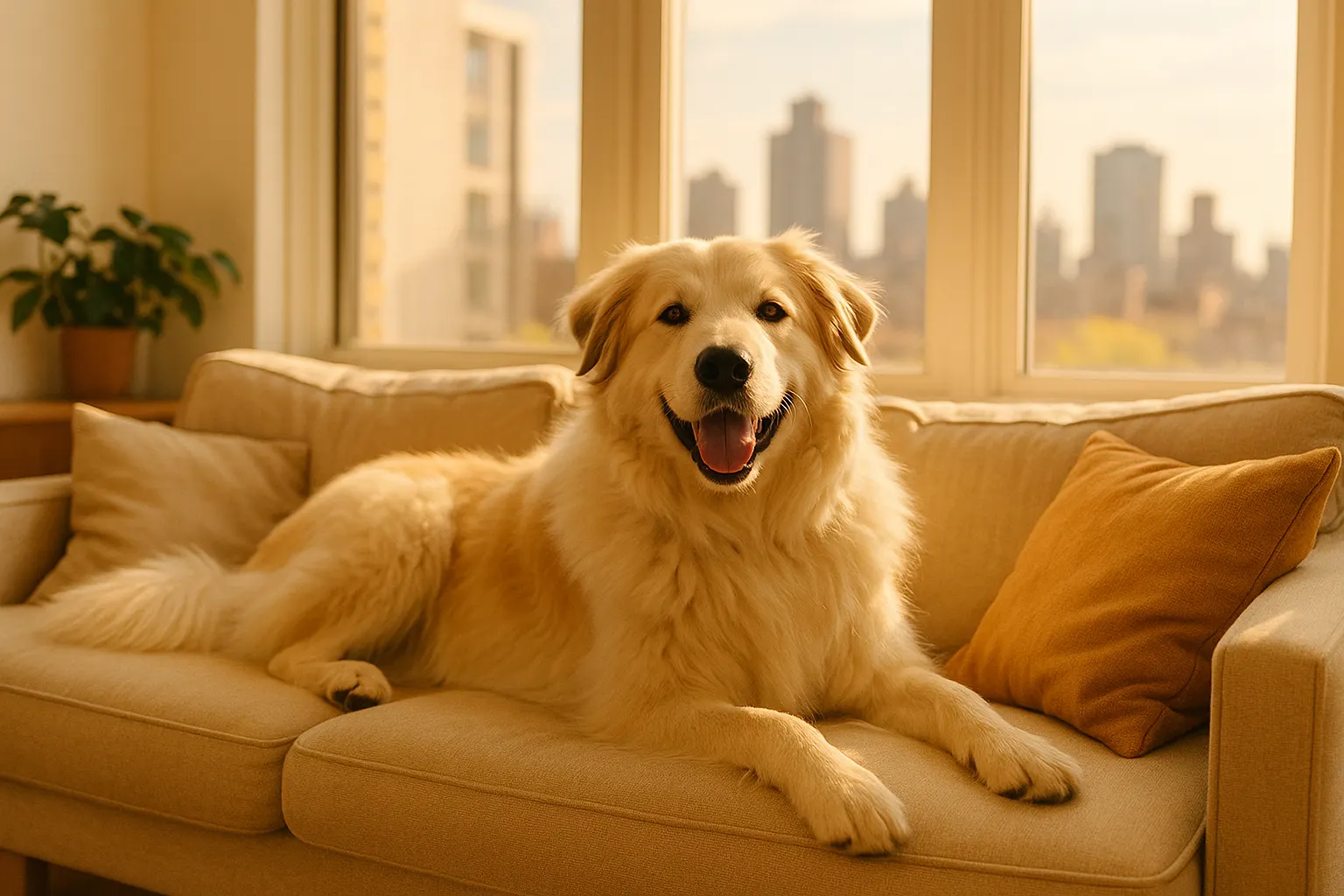
!Big dog, small space — no problem
This post contains affiliate links. We may earn a small commission at no extra cost to you.People act like living in an apartment with a big dog is some kind of irresponsible life choice. It is not. Some of the most relaxed, content large dogs we've ever met live in city apartments — because their people made it work with intention and creativity.
Here's the thing: space matters less than stimulation. A big dog with an active, engaged life will thrive in a smaller apartment. A big dog who's bored and under-stimulated will redecorate your living room with whatever's within reach.
Let's talk about how to make urban big-dog life genuinely great.
Rethink What "Exercise" Means
Physical exercise is important, but variety is more important than raw distance. The same 20-minute route every day gets stale fast (for you too, honestly). Mix it up:
- Sniff walks in new neighborhoods — new smells = huge mental workout
- Visit different parks — even one new location a week keeps things interesting
- Find a dog park for off-leash time — full-body running and social time is gold
- Swimming, if they love it — incredibly tiring and often available at dog-friendly spots or doggy daycares
A Chuckit! Ultra Ball at a park or open field means you can wear them out with fetch without running yourself ragged.
Make the Apartment Work Harder
Small space doesn't mean no space — it means using the space you have.
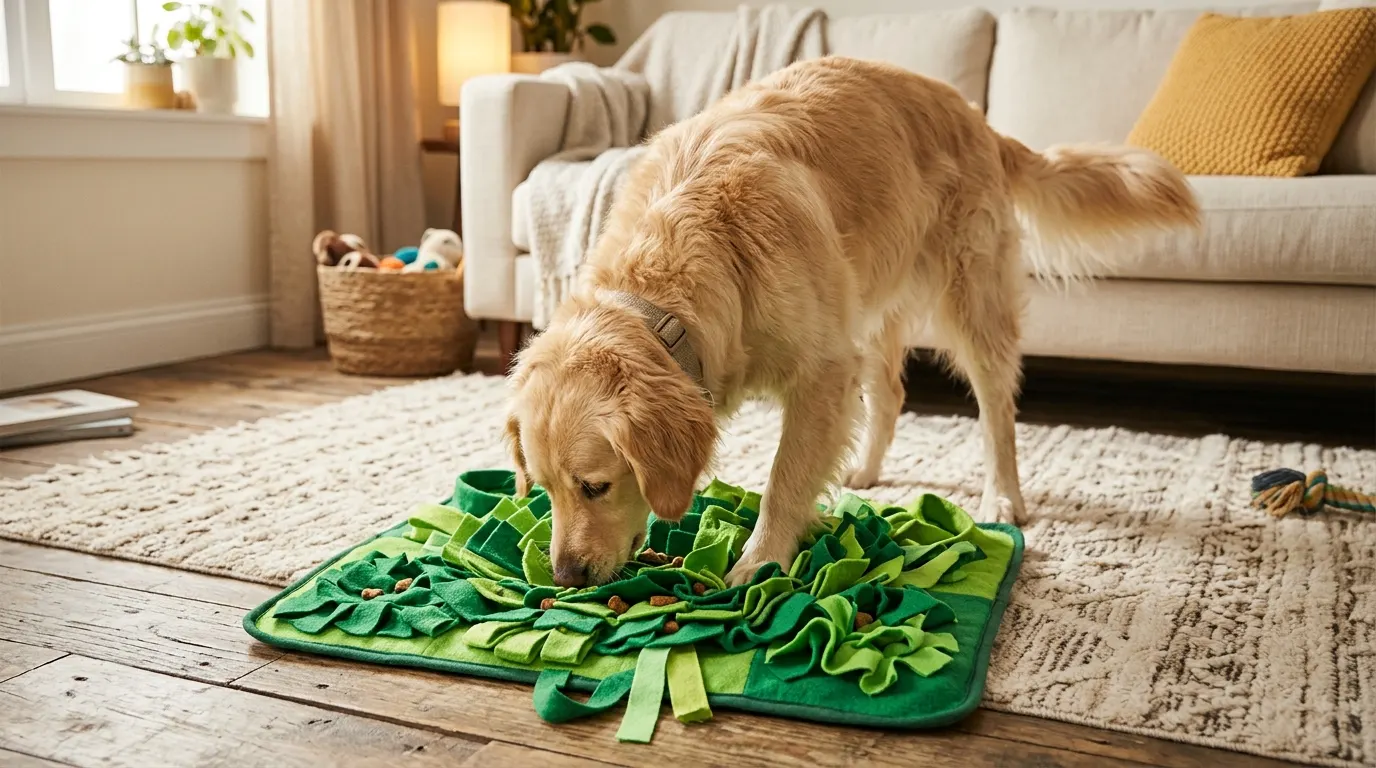
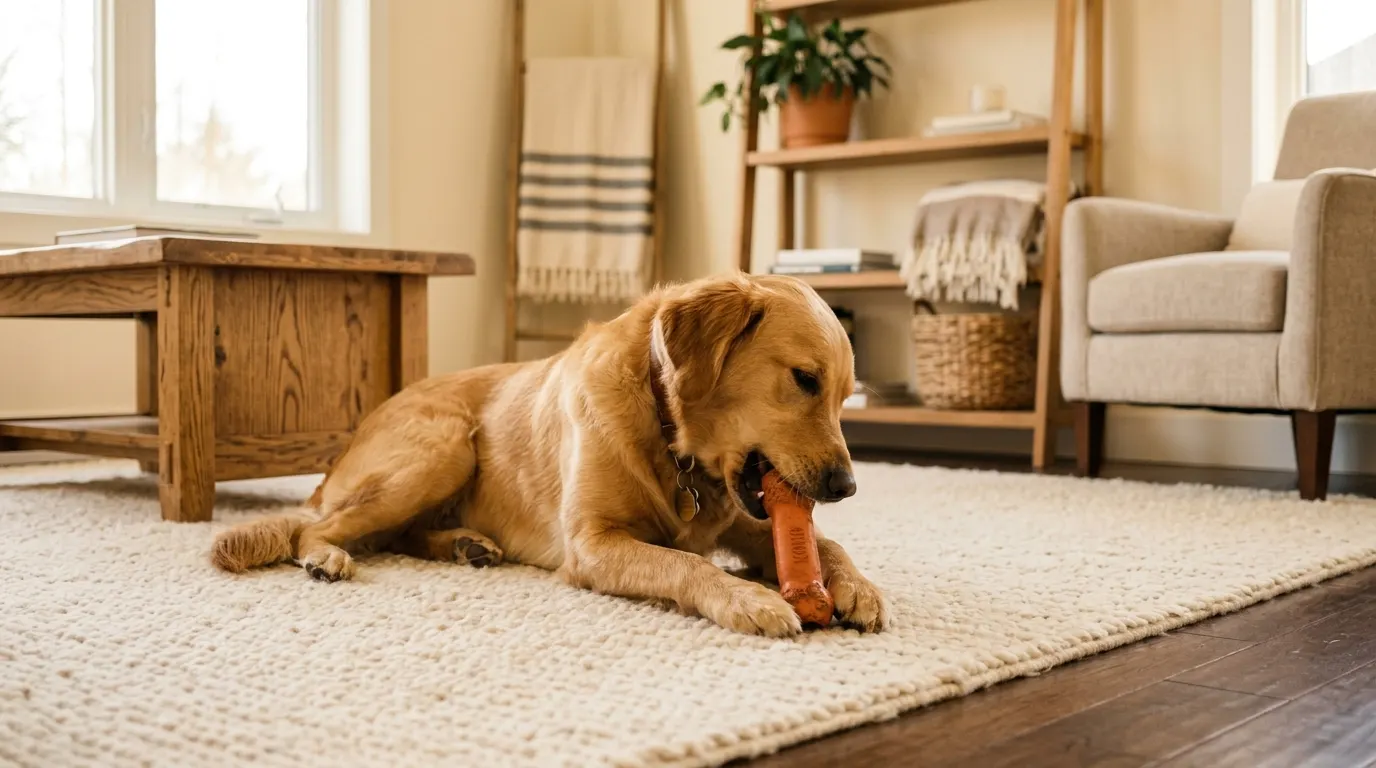
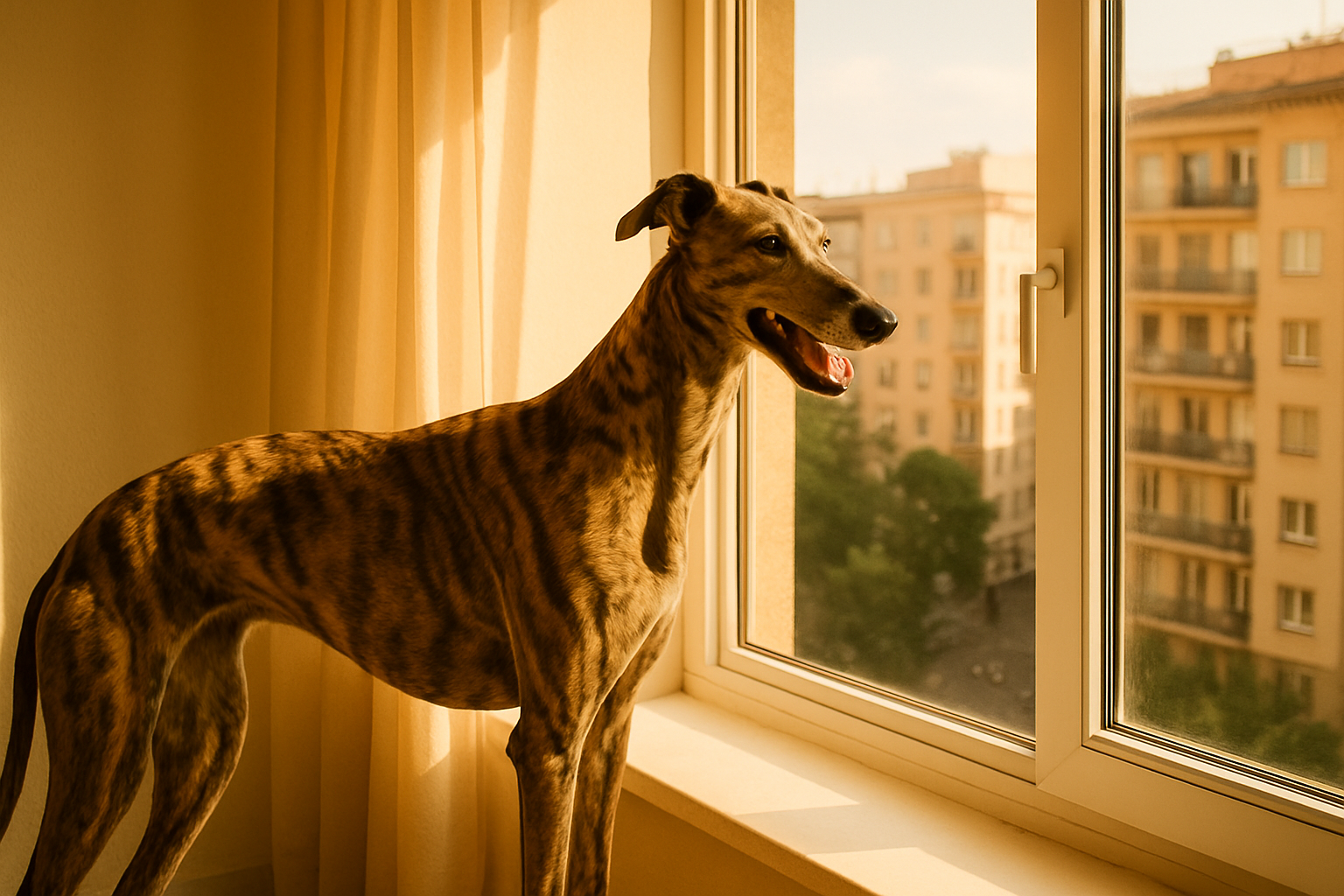
Vertical thinking: Dogs are curious about height and levels. A dog bed near a window (for watching the world go by) is endlessly entertaining. Window-watching is basically free dog TV. Define their zone: Give your dog a clear spot that's theirs — a bed, a mat, a cozy corner. Dogs who have "their place" tend to be calmer overall because they have somewhere to land. They're not drifting. Rotate toys: Keep a rotation system. Half the toys in the "on" pile, half in a cupboard. Swap every few days. Toys that have been "away" suddenly become exciting again. It's cheap magic. Use mealtime for enrichment: Skip the bowl a few days a week. Use a snuffle mat, a puzzle feeder, or a frozen Kong Classic instead. Feeding this way uses mental energy and slows them down — both good things in a smaller space.!Window watching is a full-time job
The Morning Walk is Non-Negotiable
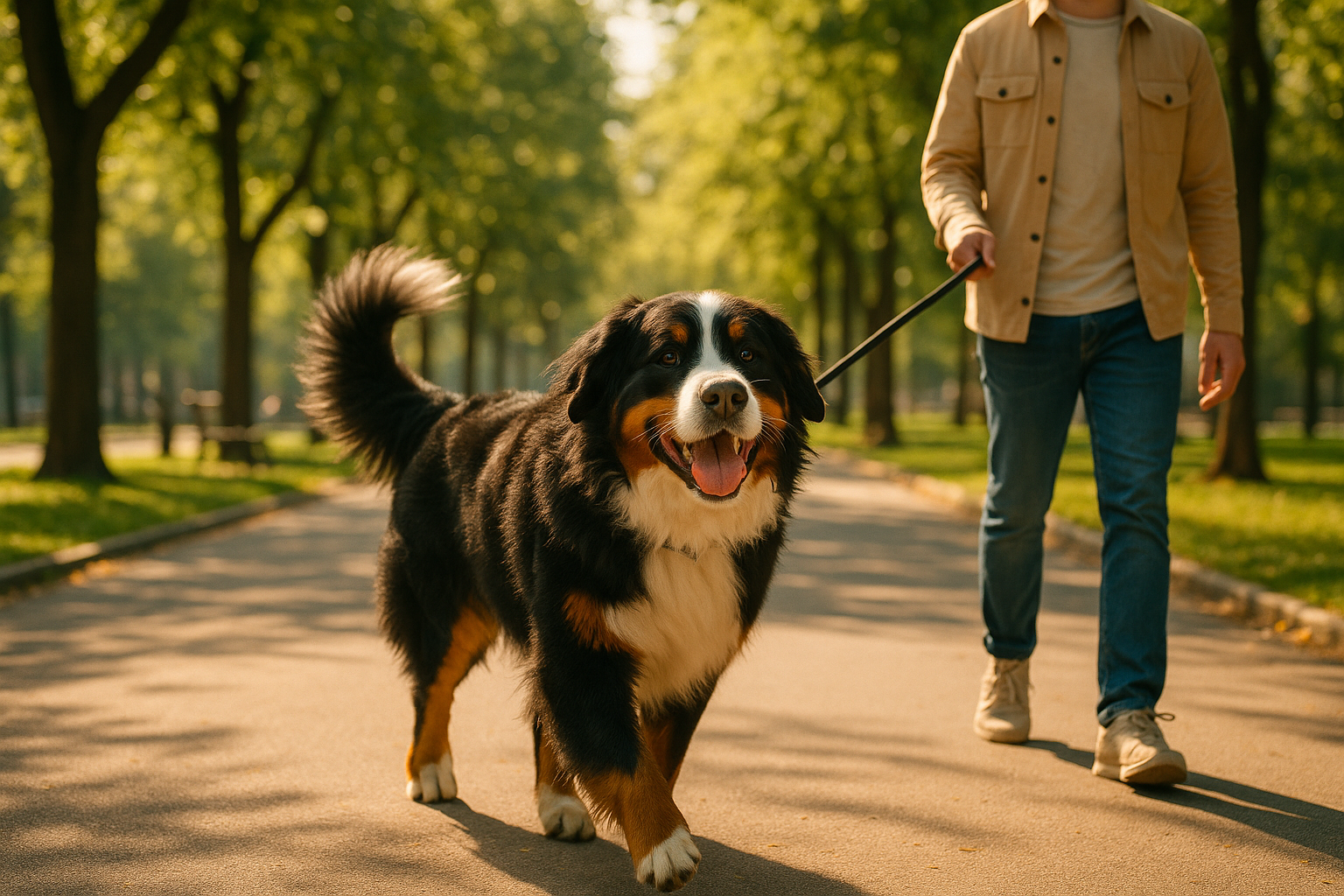
For big dogs in apartments, the morning walk is the cornerstone of a peaceful day. Before you start your work, before the day gets busy — a proper morning walk sets the tone for everything that follows.
If you can do 30-45 minutes in the morning, you'll have a much calmer dog for the rest of the day. If mornings are tight, even a brisk 20-minute walk plus a sniff break makes a difference.
This is the one habit worth protecting.
!City parks are their countryside
Manage Neighbor Relations Proactively
This is the thing people don't talk about enough. In an apartment building, your dog's behavior is everyone's business.
Reduce separation anxiety sounds: Dogs who bark or whine when alone are the #1 source of neighbor complaints. Work on alone time gradually, use a white noise machine, give them a stuffed Kong when you leave, and consider a pet camera so you can check in. Nail-click management: Big dog nails on hardwood floors can be genuinely disruptive to downstairs neighbors. Keep nails trimmed, add a rug or two, and use paw wax on smooth floors — it reduces sliding and sound. Building courtesy: Know your building's dog elevator/stairwell norms. Keep a solid "wait" and "let's go" so your dog isn't sprawled across the lobby when someone needs to pass.Being the "great dog neighbor" builds goodwill that matters when your dog has an off day.
Training Is Your Best Space Saver
A well-trained dog takes up less psychological space even if they take up the same physical space. The behaviors that make apartment life smooth:
- Settle/go to your mat — on cue, they go to their spot and chill. Life-changing.
- Leave it — for the moment they find something they shouldn't have
- Wait — doorways, elevators, before meals
- Quiet — for alert barking at hallway sounds
You don't need a huge yard to practice any of these. Five minutes of daily training in your living room, and within weeks you'll have a dog who's a genuinely easy roommate.
Indoor Enrichment on Bad Weather Days
Rain, snow, too hot, too cold — big dog apartment life needs an indoor enrichment playbook for when going outside just isn't happening.
Hide and seek: You hide (in a closet, behind a door), they find you. They love this. It's free, it's fun, and they're so proud when they locate you. Tug sessions: In the hallway or living room, a good tug game is a real workout. Keep sessions short and high-energy. Stairwell sprints: If your building allows it, the building stairs are a secret exercise goldmine. Up-down repetitions tire out a big dog faster than you'd think. Training marathons: Pick five behaviors and cycle through them for 20 minutes with treats. Mental workout + bonding time.The Truth About Big Dogs in Apartments
The dogs who struggle aren't big dogs — they're under-stimulated dogs. And you can fix that regardless of your square footage.
The big dogs who thrive in apartments have owners who prioritize their walk, get creative with enrichment, and treat training as a lifestyle rather than a phase. In return, they get a dog who's calm, content, and — honestly — often better behaved than some dogs in houses with big backyards who get less attention.
Small space. Big love. Absolutely works.
🐾 What's your best tip for big-dog apartment life? Drop it in the comments — we want to hear from you.