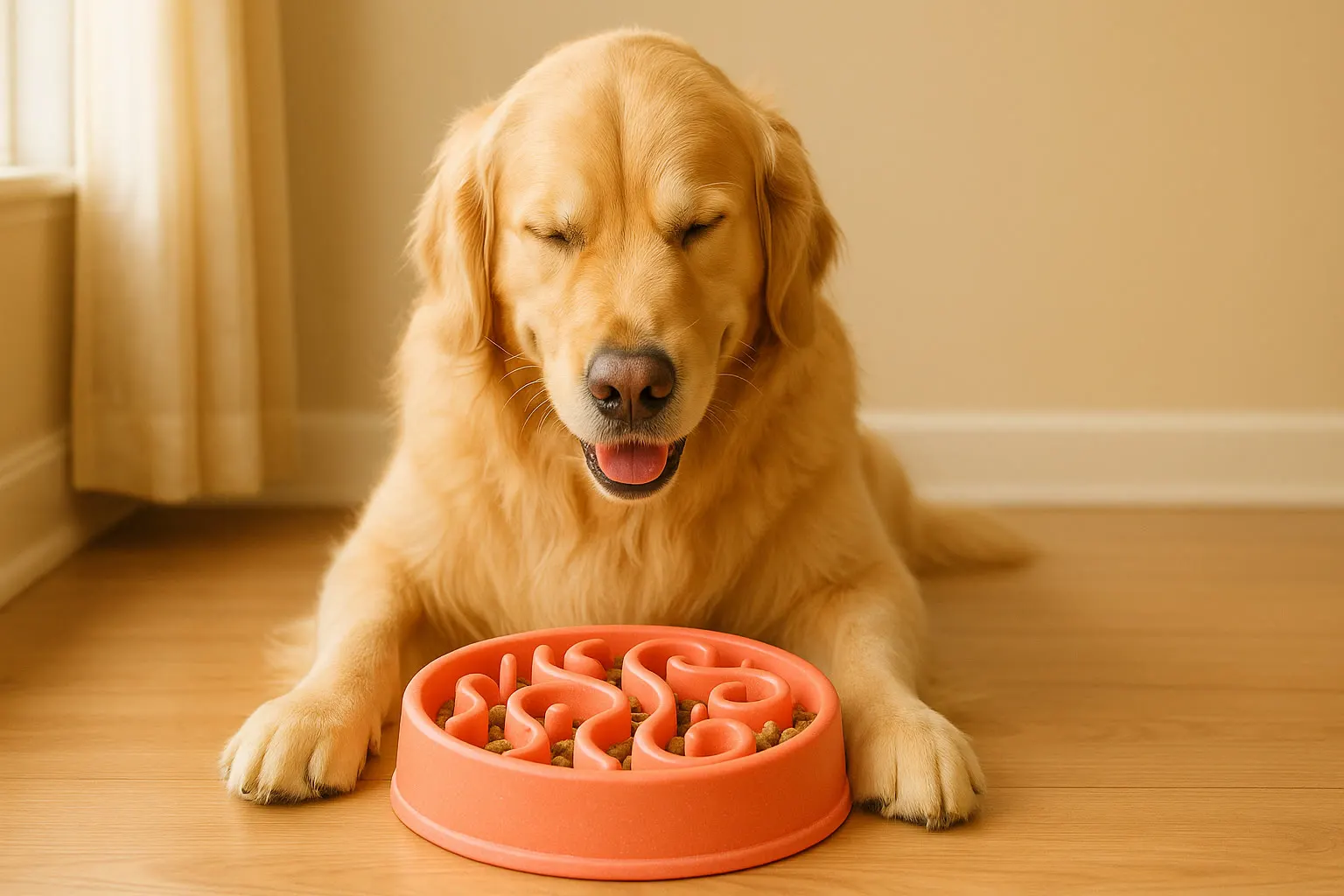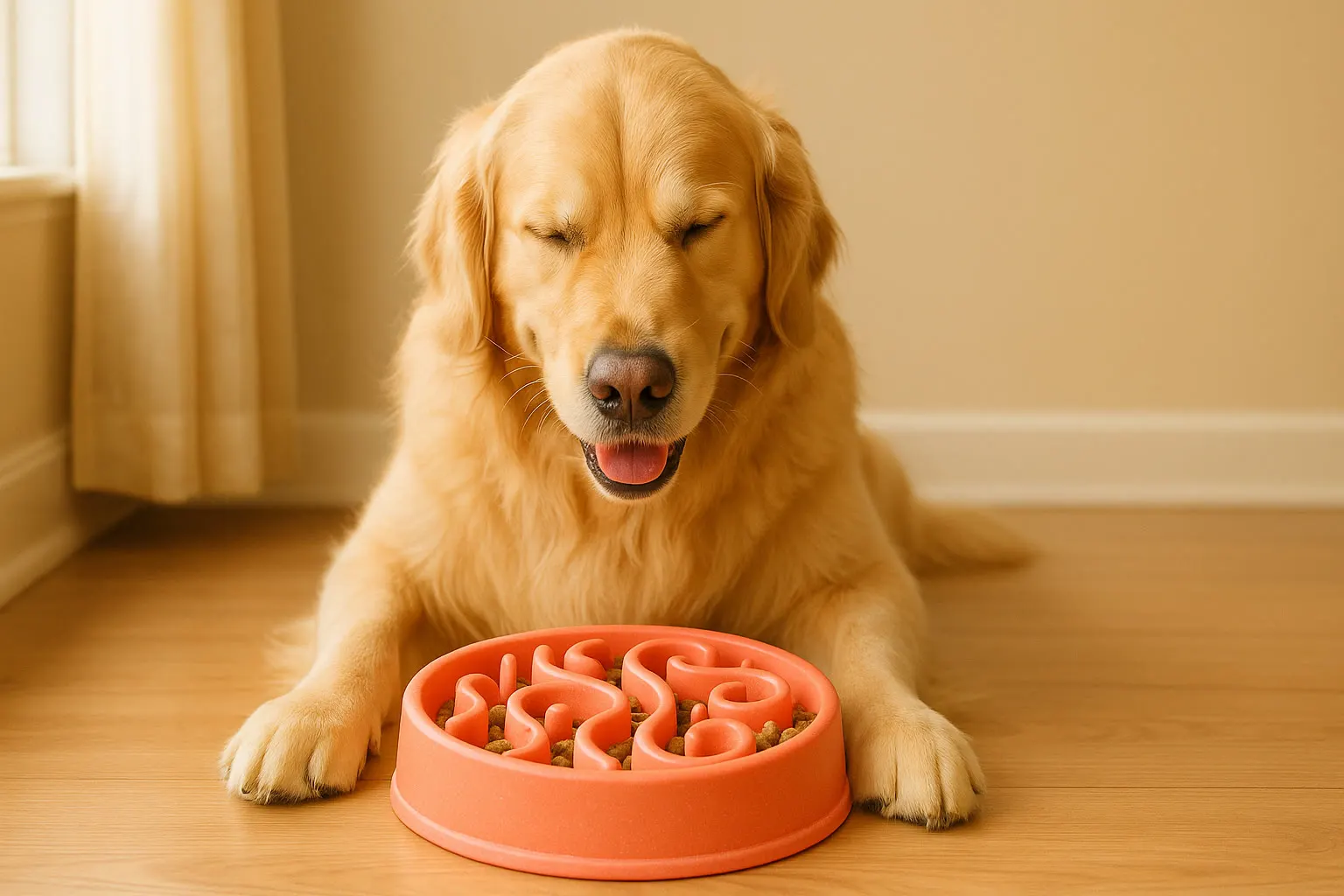
Slow feeder dog bowls help dogs eat more slowly by adding ridges, mazes, or raised patterns that make every bite take a little more work. Quick answer: the best slow feeder dog bowl is wide enough for your dog's muzzle, easy to clean, stable on the floor, and challenging without being frustrating. For most dogs, a dishwasher-safe bowl with gentle maze ridges is the safest starting point.
This post contains affiliate links. We may earn a small commission at no extra cost to you.Fast eating can lead to coughing, vomiting, discomfort, and messy mealtimes. A slow feeder will not solve every digestive issue, and it is not a substitute for veterinary advice if your dog has bloat risk or recurring stomach trouble. But for everyday gulpers, it is one of the simplest upgrades you can make.
Here is how to choose one that actually fits your dog instead of just looking clever online.
Why Slow Feeder Dog Bowls Work
Dogs gulp for a lot of reasons. Some learned to compete for food as puppies. Some are simply excited. Some inhale dinner because kibble is easy to scoop up from a smooth bowl. A slow feeder changes the mechanics of eating.
Instead of taking huge mouthfuls, your dog has to move around raised sections, lick food from corners, or nudge kibble through shallow channels. That extra effort stretches a two-minute meal into five, ten, or even fifteen minutes depending on the design.
The bonus is mental enrichment. Mealtime becomes a small puzzle rather than a pile of food. If your dog gets bored indoors, slow feeders pair nicely with other low-effort activities like the ideas in our guide to apartment dog exercise.
For medical context, the American Kennel Club has a helpful overview of bloat signs and risk factors. If your dog is a deep-chested breed, has a history of bloat, or suddenly shows distress after eating, call a vet instead of trying to manage it with gear alone.
Pick the Right Bowl Shape
Start with your dog's face, not the prettiest product photo.
Short-muzzled breeds such as bulldogs, pugs, and Boston terriers usually need shallow, open patterns. Tall, tight spirals can make eating uncomfortable and may rub the nose. Look for a slow feeder bowl for flat faced dogs with low ridges and a wide base.
Long-nosed dogs can handle deeper mazes, but harder is not always better. If a bowl turns dinner into frustration, your dog may paw at it, flip it, chew the ridges, or give up. A good slow feeder should make eating slower, not stressful.
Size matters too. The bowl should hold the full meal without piling kibble above the ridges. If food sits on top, the design will not do much. For large breeds, search for a large slow feeder dog bowl rather than squeezing dinner into a small maze.
Materials and Cleaning Matter
Plastic slow feeders are common because they are affordable and come in many patterns. Choose BPA-free, food-grade plastic and replace the bowl if it gets deep scratches. Scratches can trap grime and make cleaning harder.
Stainless steel is tougher and often easier to sanitize, but the patterns are usually simpler. It is a good option for strong chewers or dogs who destroy plastic bowls. Ceramic can look nice and feel sturdy, but check for lead-free glazing and avoid chipped pieces.
Dishwasher-safe is worth prioritizing. Wet food, softened kibble, and raw-coated toppers can cling to maze corners. If hand-washing is annoying, the bowl will quietly become one more chore you avoid. A simple dishwasher safe slow feeder dog bowl is often better than a complex one that never feels clean.
Also check the bottom. Rubber grips help keep the bowl from sliding across tile. For enthusiastic eaters, a heavier base or a feeding mat can save your floor and your patience.
How to Introduce a Slow Feeder
Do not switch from a plain bowl to the hardest maze overnight. Start with a small portion and watch how your dog handles it. If they eat calmly and keep trying, great. If they bark, paw aggressively, or look confused, pick an easier design.
For nervous dogs, scatter a few pieces on top before filling the channels. You can also hand-feed the first bites from the bowl so they understand food is available. Keep the first session low pressure.
Puppies and seniors may need easier patterns than young adult dogs. Puppies can chew the bowl if it feels like a toy, while older dogs may need a shallow design that does not strain the neck.
Clean the bowl after every wet or mixed meal. For dry kibble only, daily washing is still smart. Dog saliva plus food dust can build up faster than it looks.
FAQ
Are slow feeder dog bowls safe?
Yes, for most healthy dogs when the bowl fits their size and muzzle. Avoid designs that force painful reaching, and supervise dogs who chew plastic. Ask your vet first if your dog has medical eating restrictions.
Can a slow feeder prevent bloat?
A slow feeder may reduce gulping, but it cannot guarantee protection from bloat. Bloat is a medical emergency with multiple risk factors. Know the signs and talk with your vet if your dog is in a higher-risk breed group.
What is better, a slow feeder bowl or a puzzle toy?
For daily meals, a slow feeder bowl is usually easier to clean and portion. Puzzle toys are better for occasional enrichment. Many dogs benefit from both: the bowl for routine meals, the puzzle for bored afternoons.
The right slow feeder dog bowl should make dinner calmer, cleaner, and a little more interesting. Choose by muzzle shape, material, stability, and cleaning effort, then let your dog's behavior tell you whether the design is the right difficulty.