Keeping your dog's teeth clean is one of the most important and overlooked aspects of their overall health. Good dental hygiene can prevent painful issues like periodontal disease, tooth loss, and can even protect their heart and kidneys from bacteria that originate in the mouth. The best part? You can do most of it right at home.
This post contains affiliate links. We may earn a small commission at no extra cost to you. The quick answer: For effective at-home dog dental care, aim to brush your dog's teeth 3-4 times a week using a dog-specific toothbrush and toothpaste. Supplement daily with dental chews or toys designed to reduce plaque and tartar. This simple routine can prevent major health problems down the line.Why Dog Dental Health Matters
It's easy to forget about what's going on inside your dog's mouth, but dental disease affects the majority of adult dogs. Plaque and tartar buildup can lead to gingivitis (inflamed gums) and eventually periodontal disease, which can cause severe pain and tooth loss. Bacteria from infected gums can also enter the bloodstream and affect major organs. Regular cleaning is not just about fresh breath—it's about long-term health.
The Best Tools for At-Home Dental Care
Getting started is easy and doesn't require a huge investment. You just need a few key items specifically designed for canines.
- Dog Toothbrush: Look for a brush with soft bristles and an angled head to make it easier to reach back molars. Finger brushes are also a great option for getting your dog accustomed to the sensation.
- Dog Toothpaste: Never use human toothpaste! It contains ingredients like xylitol and fluoride which are toxic to dogs. Pet-safe toothpaste comes in dog-friendly flavors like poultry or beef. You can find a great dog toothbrush and toothpaste kit online to get started.
- Dental Wipes: If your dog is resistant to brushing, dental wipes can be a good alternative for wiping away plaque from the surface of their teeth.
- Water Additives: These products are added to your dog's drinking water to help reduce plaque and freshen breath with zero effort.
How to Brush Your Dog's Teeth: A Step-by-Step Guide
The key to success is to be patient and make it a positive experience.
- Introduce the Tools: Let your dog sniff the toothbrush and taste a small amount of the toothpaste. Reward them with praise.
- Start Slow: For the first few sessions, just gently rub the toothpaste on their teeth and gums with your finger.
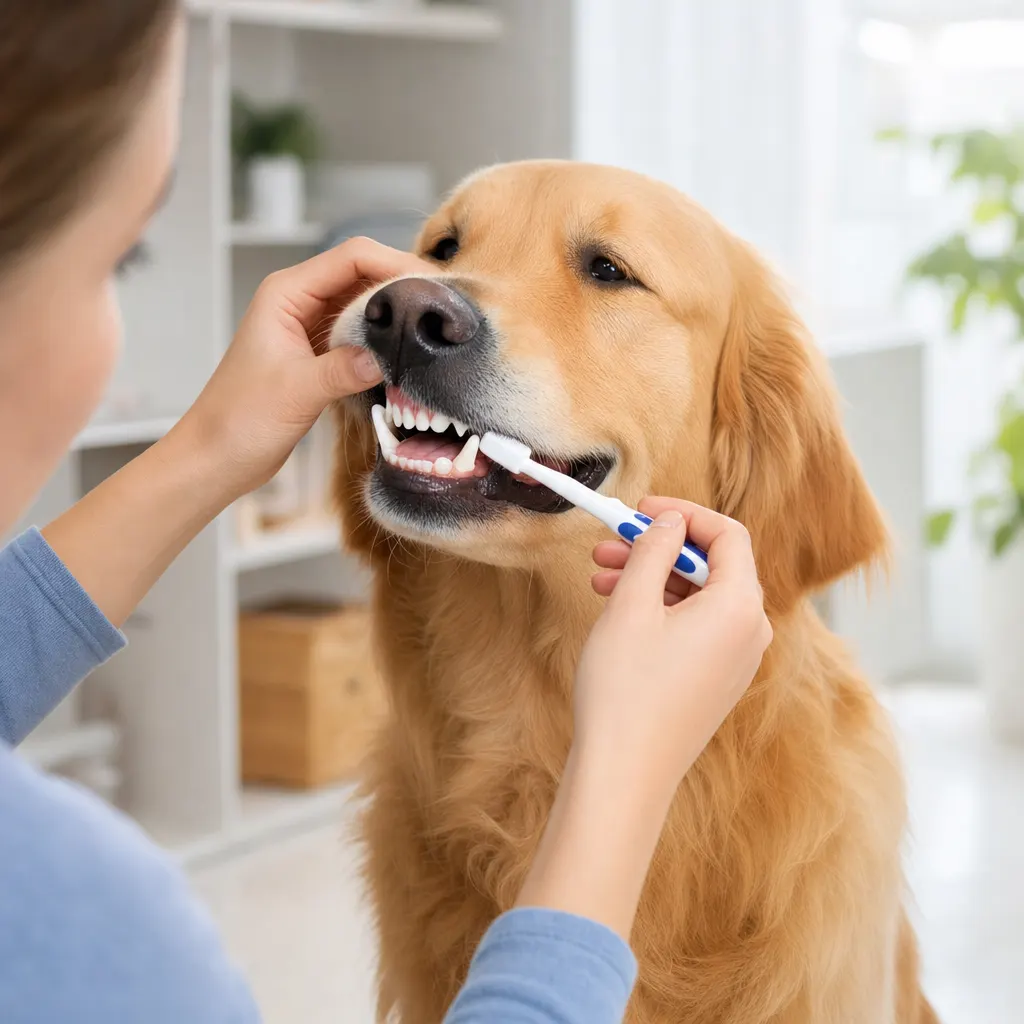
- Introduce the Brush: Once they are comfortable, introduce the toothbrush. Lift their lip and brush the outer surfaces of the teeth in a gentle, circular motion. Focus on the outside surfaces, as that's where most tartar accumulates.
- Keep it Short and Sweet: Aim for about 30 seconds on each side. End the session with a treat or a favorite game to build a positive association.
Dental Chews and Toys: A Fun Way to Clean Teeth
Brushing is the gold standard, but dental chews and toys are a fantastic supplement. The mechanical action of chewing helps scrape away plaque.
Look for products approved by the Veterinary Oral Health Council (VOHC) to ensure they are effective. Pairing a good dental chew with one of their favorite indestructible dog toys can keep them engaged and their teeth clean. For heavy chewers, a durable option like a Greenies Dental Treat can be both a treat and a dental tool.
For more information on the importance of your pet's oral health, you can read the guidelines from the American Veterinary Medical Association (AVMA).
FAQ: Dog Dental Care
How often should I brush my dog's teeth?
Ideally, you should aim for daily brushing. However, even 3-4 times a week will make a significant difference in preventing dental disease.
What can I do if my dog hates having its teeth brushed?
Start slowly and make it a positive experience with lots of praise and treats. Try different toothpaste flavors or use a finger brush. If brushing is a non-starter, focus on alternatives like dental wipes, gels, water additives, and VOHC-approved dental chews.
Are professional cleanings necessary?
Yes. At-home care is for maintenance, but most dogs will still require professional cleanings under anesthesia at some point. Your vet can remove tartar below the gumline that you can't reach at home. Regular vet check-ups will determine when a professional cleaning is needed.