Just like us, our dogs need regular dental care to stay healthy and happy. Ignoring your dog's oral hygiene can lead to painful gum disease, tooth loss, and even more serious health issues down the line. The good news? You can do a lot at home to keep their pearly whites in top condition.
This post contains affiliate links. We may earn a small commission at no extra cost to you. TL;DR: The best way to ensure good dog dental health at home is through a combination of regular teeth brushing with dog-specific toothpaste, providing safe dental chews and toys, and recognizing the signs of dental problems early. This routine can significantly reduce the risk of painful dental disease.Why At-Home Dental Care Matters
Preventing dental disease is far easier (and cheaper!) than treating it. Periodontal disease is one of the most common clinical conditions in adult dogs, but it's largely preventable. A solid at-home routine helps remove plaque before it turns into hard-to-remove tartar, keeping gums healthy and breath fresher. Plus, it gets your dog comfortable with you handling their mouth, which makes vet exams much less stressful for everyone.
Getting Started: The Right Tools
You only need a few key items to build an effective dental care kit for your pup. Don't use human toothpaste, as it often contains ingredients like xylitol which are toxic to dogs.
- Dog Toothbrush: Look for one with soft bristles and a long handle, or a finger brush for smaller dogs or puppies. You can find great dog toothbrush kits online.
- Dog Toothpaste: It's designed to be safe to swallow and comes in dog-friendly flavors like poultry or beef. Enzymatic toothpaste is an excellent choice as it helps break down plaque with its active ingredients.
How to Brush Your Dog's Teeth: A Step-by-Step Guide
Patience is key. Introduce brushing slowly and make it a positive experience with lots of praise.
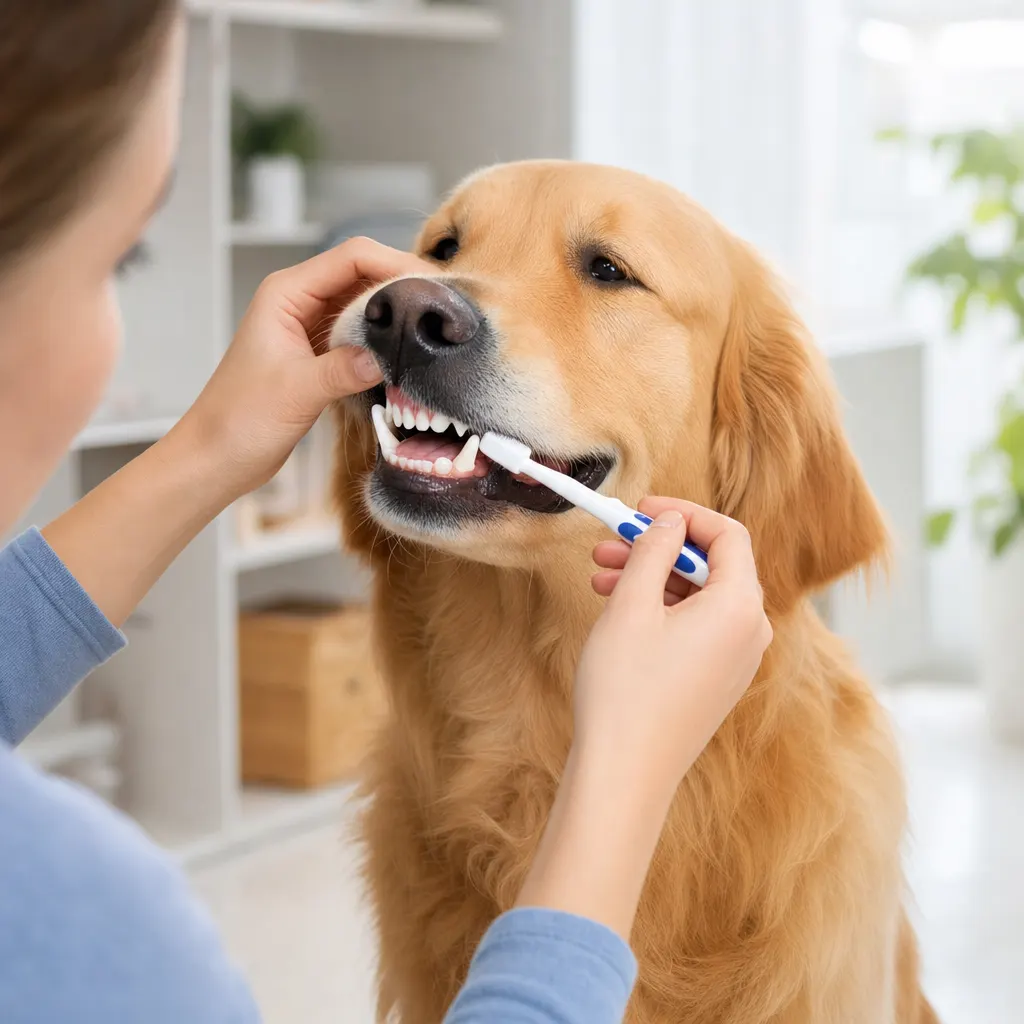
- Get Comfortable: Choose a quiet time when your dog is relaxed. Sit with them and gently handle their muzzle and lips. Reward them with praise.
- Introduce the Toothpaste: Put a small amount of dog toothpaste on your finger and let them lick it off. They'll see it as a treat.
- Introduce the Toothbrush: Let them lick the toothpaste off the brush.
- Start Brushing: Gently lift their lip and brush one or two teeth in a circular motion. Focus on the outside surfaces where plaque accumulates most.
- Build Up Slowly: Gradually increase the number of teeth you brush each session. Aim for two minutes of brushing 3-4 times a week.
Dental Chews and Toys: A Helping Hand
Brushing is the gold standard, but dental chews and toys are a fantastic supplement to your routine. The mechanical action of chewing helps scrape away plaque.
Look for products approved by the Veterinary Oral Health Council (VOHC) for the best results. Certain indestructible dog toys can also do double duty by providing enrichment and helping to clean teeth. A popular and effective option are Greenies Dental Treats, which many dogs love.